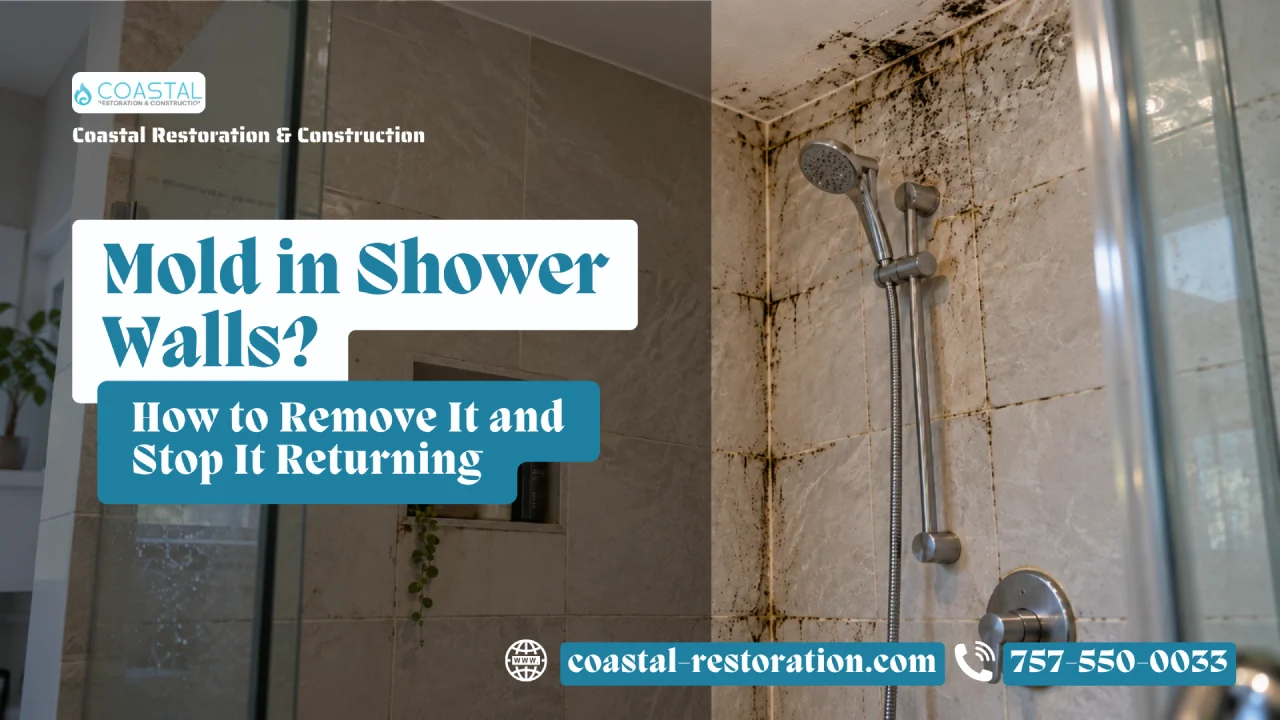
Almost every shower has a little of it somewhere. A gray line in the grout. Black dots in the corner behind the shampoo bottles. Plenty of tidy, well-kept bathrooms have mold in shower corners like this. A shower stays steamy and wet for part of every day, and mold asks for little more than that.
Spots like these come off with a brush. Water that sneaks behind the tile is another matter. Mold can live back there for months. And from the bathroom side, the wall looks fine the whole time.
Knowing which kind you’re looking at saves a lot of wasted scrubbing.
Why Does Mold Grow in the Shower?
Mold doesn’t need an invitation. Its spores come in through open windows and on shoes and clothing, then sit dormant until one reaches a damp surface with something to feed on. In a bathroom, that surface is never hard to find.
Run a finger along the grout an hour after a shower, and it’s still wet. The room runs warm. And that leftover film of soap, shampoo, and body oil? That’s the food.
Weak ventilation seals the deal, letting the air stay damp long after you’ve toweled off. That’s the short answer to ‘why does mold grow’ in shower spaces so easily.
What Mold in a Shower Looks Like
Black, dark green; now and then a muddy gray that passes for dirt. Look low first. The bottom grout lines and the caulk along the tub edge hold water the longest. So that’s where the first spots gather, some flat and some slightly fuzzy up close. Pair any of that with a musty smell, and you have the plain answer to ‘what does mold look like in a shower.’
Pink or orange, though? That’s usually not mold. It’s a type of bacteria, Serratia marcescens, living off soap residue around the drain. It wipes away easily, and it’s far less of a worry.
Mold is more stubborn. Clean a corner on Saturday, and by the following weekend the dots are back in exactly the same spots, as if nothing happened!
That return is one of the surest signs of mold in shower grout. A smell that outlasts the cleaning is another.

Surface Mold vs. Mold Behind the Wall
Where the mold is growing decides almost everything about the fix. Mold on the face of the tile, in the grout, or along the caulk is within reach of a brush. Mold inside the wall, living on wet backer board or drywall, is not. One is a chore. The other is a project.
Mold on Shower Walls, Tile, and Grout
Most mold on shower wall tile stays where you can see it, in the grout and caulk. It clusters in the bottom few rows, where water runs off last. And comes off without much trouble once the moisture feeding it is under control.
There is one catch. Grout is porous, and older caulk starts to crack. Mold settles into both, a few millimeters below anything a sponge can touch, which is why a spot you wiped clean can be back within the week.
If you scrub mold in shower wall grout while the spots are still pinhead-sized, a weekly clean is usually enough to keep it from spreading.

Mold Behind Shower Tile and Drywall
Now for the kind that costs money to fix. If there’s mold behind shower wall tile, water has been getting past the grout or the waterproofing membrane, likely for months, and collecting in the cavity behind it.
The entry point tends to be small: a hairline crack beside the shower valve, or a gap where the caulk let go of the tub. Each shower pushes a little more water through, and mold behind shower tiles can grow on the backer board long before a spot shows on the surface.
The signs of mold behind drywall and tile are mostly indirect. There’s the musty smell, for one, which no cleaner seems to touch. A tile near the floor that rocks under your thumb. Or sounds hollow when knocked, points to soft backing.
So does grout that keeps splitting along the same line. Dark patches bleeding through from behind. And surface mold that comes back to the very same spot, every time.
Black mold behind shower wall tile can also show up as staining that wanders across the ceiling or onto the next wall. See any of it, and the growth is inside the structure now, well out of a spray bottle’s reach.
Is Black Mold in the Shower Dangerous?
“Black mold” is a phrase that makes people nervous, and a few alarming headlines haven’t helped. Most dark shower mold is Cladosporium, a common type found in homes everywhere, not the Stachybotrys those stories have in mind. That one usually needs drywall or wood that has stayed wet for a long stretch.
Why does black mold grow in shower grout more than anywhere else in the house? Mostly because nowhere else stays wet, warm, and soapy for as many hours a day. The dark color is just a pigment in the mold’s cell walls. Clusters of dark dots in the corners, plus a stale smell, are the classic signs of black mold in shower areas.
It still needs to go. In a small, poorly ventilated bathroom, black mold in shower grout can set off a cough, a runny nose, or itchy eyes, especially for anyone with asthma or a mold allergy. The black mold removal cost depends on whether it is only on the surface or has spread behind the wall.

The CDC doesn’t ask you to identify the species first; it advises removing any mold and fixing the dampness behind it. So skip the color panic. The cleanup is the same whatever the shade.
How to Remove Mold in the Shower
Spots of surface mold in shower grout are something you can deal with in an hour or so, using supplies you probably already own, but deeper growth may require professional mold removal. Open the window before you start, and switch the fan on. A pair of rubber gloves and an N-95 mask are a good idea too, because a stiff brush sends spores into the air.
Cleaning Surface Mold and Grout
Spray the spot. Walk away for ten minutes; the cleaner needs that long to sink into the grout. Then work the long grout lines with a stiff nylon brush, using an old toothbrush for the corners. Finish with a warm rinse and towel every surface dry, because grout left damp grows mold again.
Start with plain white vinegar, undiluted, in a spray bottle. Its mild acid gets into the grout and kills a good share of bathroom mold. Can’t stand the smell? Use 3% hydrogen peroxide instead, and for stubborn lines, a thick baking soda paste.
Most people grab the bleach. The EPA doesn’t recommend it for routine mold cleanup, and grout shows why. The stain turns white almost on contact, but the roots survive, and within a few weeks the gray dots are back.

When to Cut Out and Replace the Caulk
Mold sitting on the caulk is easy to clean. Once it gets under the bead, no cleaner can touch it.
The giveaway is color that looks trapped inside the silicone, like ink under clear plastic. No amount of scrubbing fades it.
There’s no saving caulk like that. Run a utility knife along both edges and pull the old strip out. Then scrub the bare joint. Give it a night to dry before laying a fresh bead of mold-resistant silicone, and skip showers for a day while it cures. Twenty minutes of work that ends a problem you could scrub at forever.
Mold in the Bathroom Walls: When It’s a Bigger Problem
Mold that has moved off the tile and into the wall itself is past the point of a simple cleaning job, and the mold remediation cost depends on how far the damage has spread.
Mold in bathroom walls almost always has a water source behind it: a supply line weeping at a fitting, waterproofing that failed behind the tile, or, in older homes with no exhaust fan, years of steam soaking in. Size counts too.
The EPA’s guide for homeowners draws the line at about 10 square feet, roughly the area of a bath towel, and suggests professional help for anything larger.
The same goes for mold on bathroom walls that won’t stay gone, or that has crept past the edge of the tile into soft, stained drywall.
That’s the point to call for professional water damage restoration. A proper mold remediation process removes the mold under containment, and the leak behind it gets found and fixed. Skip that second part, and you’ll be cleaning the same wall again by spring.
How to Stop Mold From Growing in the Shower
Every shower gets wet. The trick is how fast it dries, because effective mold prevention starts with keeping bathroom moisture under control. These five habits cover most of how to stop mold from growing in shower spaces:
- Leave the exhaust fan running through the shower and for half an hour afterward
- Squeegee the tile and glass after every shower; it takes about a minute
- Keep bathroom humidity below 50%, and get drips at the valve fixed quickly
- Wash the curtain liner and bath mat every few weeks, then let them dry
- Reseal grout and swap tired caulk before water gets in behind it
Frequently Asked Questions About Mold in the Shower
Spot a moldy shower and two questions come up right away: is it even mold, and will bleach take care of it? A couple of others are worth knowing too. The answers below are short. If your case doesn’t quite fit, a professional inspection can settle it.
Is mildew on a shower tile alive?
Yes, and it’s growing every time the tile stays wet. Mildew is just the name people give the flat, powdery kind of mold that spreads across a surface instead of up from it. Wipe it off, leave the tile wet, and expect to see it again within two weeks.
Does bleach kill shower mold?
Not well. On glazed tile, it does the job, but grout and caulk hold most of the mold in a shower, and there, bleach only whitens the stain while the roots survive. For grout, vinegar or 3% hydrogen peroxide gets farther into the pores, and the EPA doesn’t recommend bleach for routine mold cleanup anyway.
What are the signs of mold behind the shower wall?
Your nose usually notices first: a closed-up, basement-like smell that hangs around even after a deep clean. Then check the other side of the shower wall. Bubbled paint or a soft, damp patch there means water has reached the cavity, and so do tiles near the shower floor that feel loose.
When should you call a professional for shower mold?
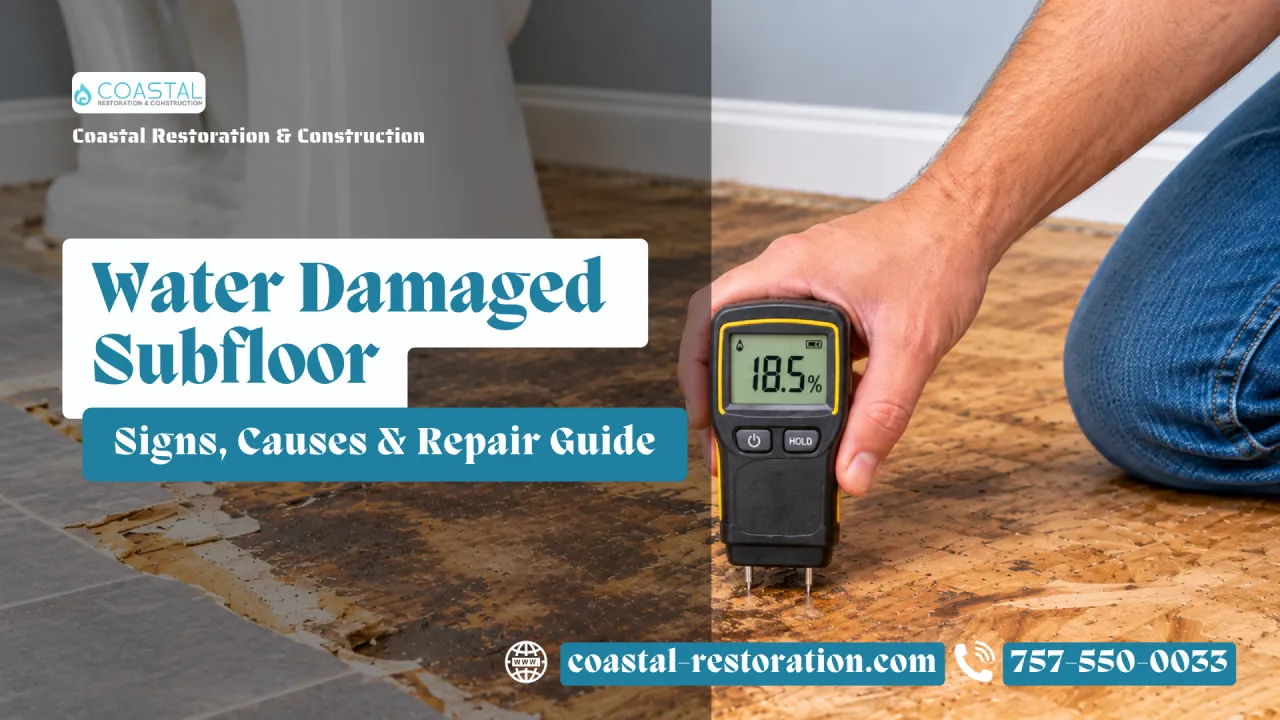
Start with size: past about 10 square feet of growth, the EPA suggests professional help. Mold that keeps coming back after a proper clean is another reason to call. Those cases almost always involve a leak, which professional mold remediation services can investigate with a moisture meter before removing anything.
What is the difference between mold and mildew?
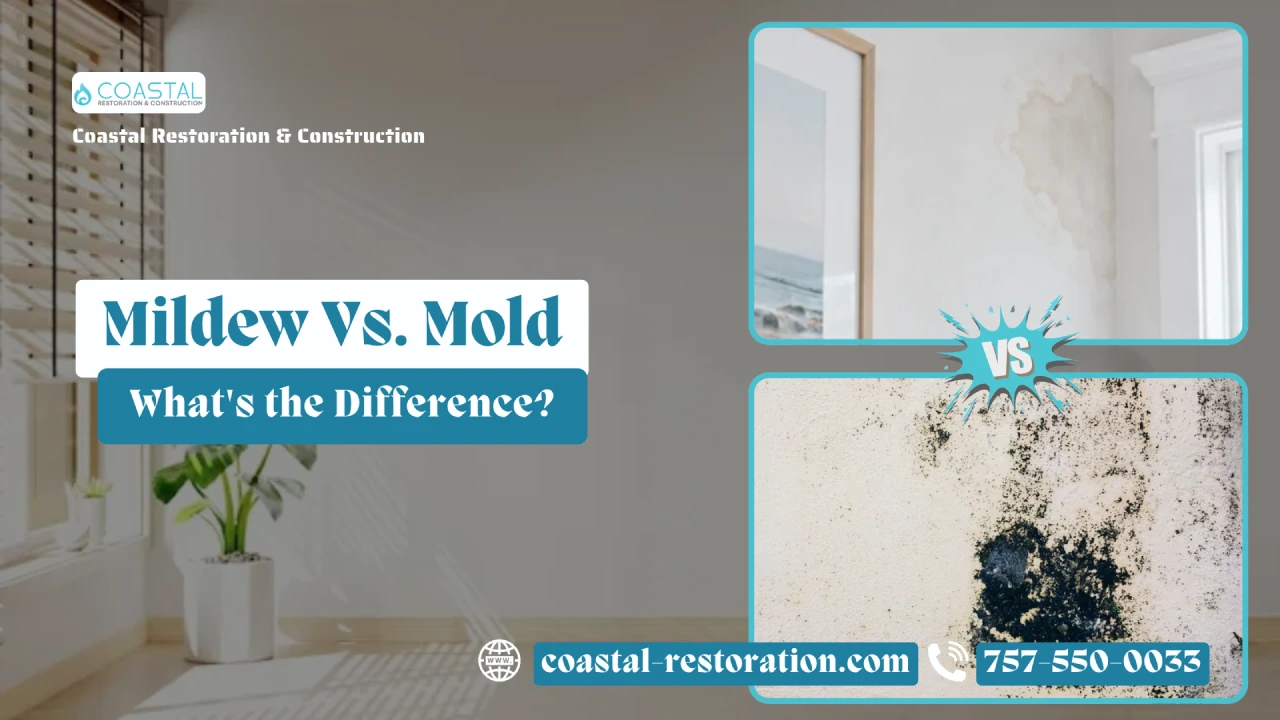
Mildew usually appears as flat, powdery patches on surfaces, while mold can grow in different colors and penetrate deeper into materials. Understanding the difference between mildew and mold helps you identify the growth and choose the right removal method.
Keeping Your Shower Mold-Free for Good
For most households, mold in shower grout stays a minor chore. Keep the fan running and scrub every week or two, and it never gets past a few dark dots.
The growth behind the tile is the one to watch. A slow leak or a cracked seal can keep it fed for years. Usually, the first clue is a smell or a tile that wobbles, and the stain comes much later.
Spots that come back after every clean deserve a closer look. So does soft drywall anywhere near the tub. Learn how to identify, remove, and prevent mold in the shower to keep your bathroom clean and reduce recurring mold growth.
Coastal Restoration & Construction can find where the water is getting in and remove the mold safely, so the problem stays fixed.