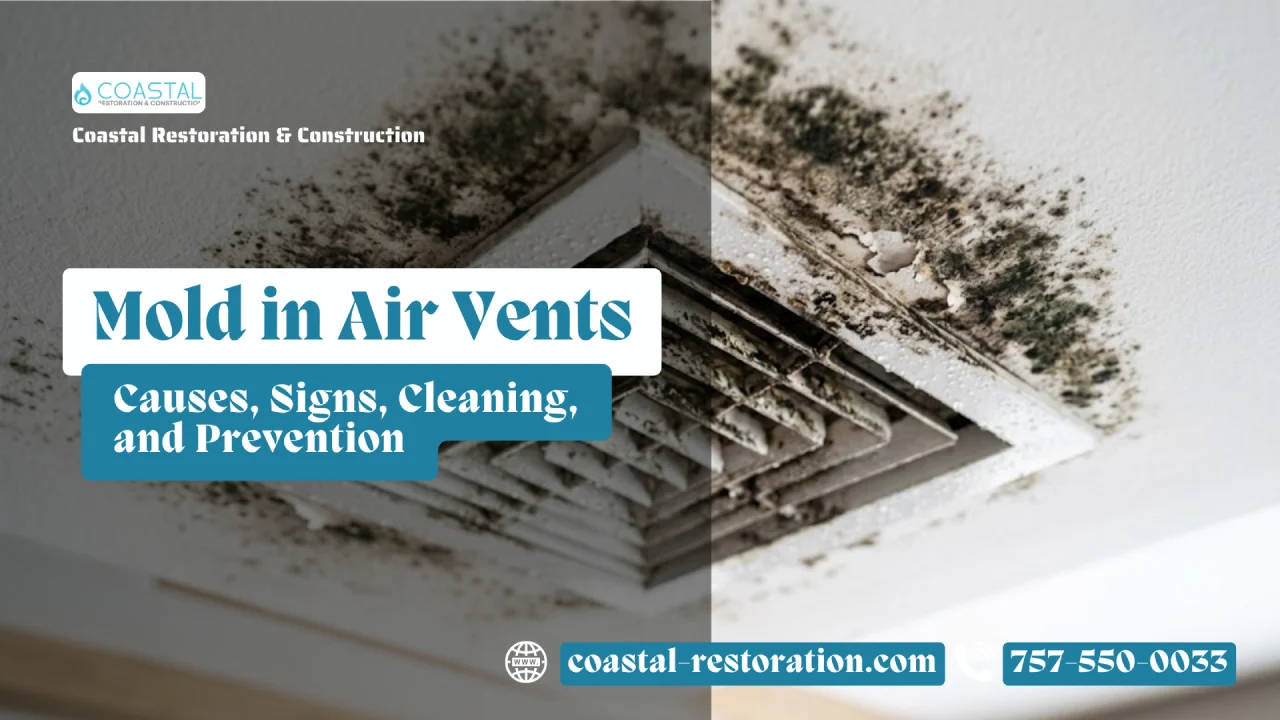
You spot dark marks around a vent. Or a musty smell hits you when the AC starts. Is it mold in air vents? It might be. Mold growth can show up around vent covers or inside ductwork when moisture and the right conditions let it take hold.
Dark marks and musty smells can have other causes, like dust or a damp spot nearby. Before you start air vent cleaning, find the moisture source and check the affected area. Wiping a cover will not help if the damp keeps coming back.
What Causes Mold in Air Vents?
Mold needs moisture. Without a damp spot that sticks around, it has a hard time getting started. Most cases trace back to excess moisture from one of a few sources.
Cleaning alone does not remove that source. A crew can clear dust and debris, and you can read about the professional air duct cleaning process to see how. Cleaning does not fix a leak or a humid room.
High Indoor Humidity and Condensation
Humid indoor air can turn to water on a cold surface. Think of a cold glass on a warm day. A cold vent cover or duct surface can do the same thing when its temperature drops below the air’s dew point.
One bout of condensation is not a mold problem. Moisture that keeps coming back is. When it sits on a surface day after day, mold growth becomes more likely. A humid indoor environment makes this worse.
Water Leaks and Moisture Intrusion
A plumbing leak, a roof leak, or water damage near a duct can soak materials around your vents. Water can also get in around the ductwork itself.
Fix the leak first. Cleaning mold off a surface that keeps getting wet only buys you a short break. Finding the moisture source comes before any cleanup.
HVAC Condensate and Drainage Problems
Your cooling system makes water as it works. A clogged condensate drain, an overflowing condensate pan, or a dirty evaporator coil can leave moisture around the equipment or nearby ducts.
These are HVAC maintenance issues, and they are easy to miss. Water in the wrong spot can keep materials damp for a long time.
Poor Ventilation, Restricted Airflow, and Duct Insulation Problems
Weak air circulation, restricted airflow, duct leakage, or thin duct insulation can contribute to moisture or condensation in some homes.
These problems do not cause mold by themselves. They can add to a damp setup that is already there. Treat them as clues, not proof.
Signs of Mold in Air Vents and HVAC Ductwork
Not every dark spot, smell, or sniffle points to mold. Look at the whole picture, not one clue. Here are the signs people notice most.
Visible Mold Growth or Dark Spots Around Vent Covers
Fuzzy or patchy growth, dark spots, or discoloration around a vent cover may be mold. Black spots around vents and dark stains on vent covers are common worries. Dust, soot, and old stains can look the same.

Color does not tell you what you have. Check the material and the moisture source before you clean anything.
Musty or Earthy Smells Coming From Vents
A musty odor or earthy smell that sticks around may point to a moisture problem or microbial growth. A moldy smell from vents does not prove that mold sits inside the ducts.
The smell could come from the HVAC equipment, nearby materials, or another damp area of the house. Treat the smell as a reason to look, not a verdict.
Condensation, Water Stains, or Damp Materials Near Vents
Condensation around air vents, water stains near registers, or damp ductwork point to a moisture issue. So does wet or soggy duct insulation.
Any of these is worth a closer look, even with no visible growth. Moisture is what lets mold start.
Indoor Allergy or Respiratory Symptoms
A damp or moldy indoor space may aggravate allergies or breathing trouble in some people. Sneezing, itchy eyes, coughing, and throat irritation are common examples.
These symptoms are not proof of mold, and they do not tell you where it is. Many things cause them. If symptoms worry you, talk to a doctor. Do not try to diagnose yourself from a vent.
Mold or Dust on Air Vents: How to Tell the Difference
Plenty of people see black dust around vents and assume mold. Often it is dust. Sometimes it is not.
Differences in Appearance and Texture
Dust accumulation tends to look loose and dry. You can often wipe it off in a layer. Suspected mold may look patchy or fuzzy, or it may seem attached to the surface.
Looks are not a reliable test. You cannot tell mold from dust with certainty by eye. Treat any of these as a guess until someone checks.
Why Moisture Clues Matter
Moisture is the clue that tips the scale. Condensation, water stains, damp materials, or a problem that keeps coming back all raise the odds that a dark mark is more than dust.
If you see dust and debris but no sign of moisture, read the signs your air ducts need cleaning. If you see dark marks and damp spots together, take it more seriously.
What to Do If You Find Mold in Air Vents
Your next step depends on where the problem sits. A small mark on a vent cover is one thing. Possible mold inside the ductwork is another.

Identify the Moisture Source Before Cleaning
Look for the cause first. Check for leaks, condensation, drainage problems, or damp spots near the vent.
If you clean visible growth and leave the moisture in place, the mold can return. Fixing the source is how you prevent mold from coming back.
When Limited Surface Cleaning May Be Appropriate
A small patch of suspected growth on an accessible, nonporous vent cover can sometimes be cleaned at home. Do it only if you can do it safely and the material allows it.
Keep these points in mind:
- Turn off the HVAC system before you remove an accessible vent cover, where that makes sense.
- Do not dry brush or sand. These can spread dust and suspected mold.
- Wear protective gloves and safety goggles, and follow the cleaning product’s label. A mild detergent works for many covers.
- Do not mix cleaning products. Do not apply chemicals inside the HVAC system.
This applies to the cover only. It is not a method for duct interiors, insulation, or equipment.
Why Mold Inside Ductwork Needs a Different Assessment
Suspected mold inside ductwork, on fiberglass duct insulation, or around HVAC parts needs a closer look from a trained professional. They can find the extent of the problem and the moisture source.
You cannot judge that from a vent opening. Do not poke into the system to find out.
What Not to Do When Mold Is Suspected
Avoid these moves:
- Spraying household chemicals or bleach into air ducts
- Running the HVAC system if it may spread material from a contaminated area
- Disturbing suspected mold on porous insulation, or extensive duct contamination
- Trusting an air freshener or antimicrobial spray to fix a moisture problem
A spray may cover a smell for a while. It does not remove the damp that fed the mold.
When to Hire a Professional for Mold in Air Vents
Surface cleaning has limits. Some situations call for a professional.
Mold Appears Inside Ductwork or HVAC Equipment
Suspected mold on inner duct surfaces, the air handler, the blower assembly, or the evaporator coils needs a professional look. The source and the extent should be clear before anyone picks a cleaning or mold remediation method.
HVAC mold removal is not a quick wipe-down. Equipment can hold contamination in places you cannot reach.
Mold or Moisture Problems Keep Returning
Growth that returns, damp spots that stay, or a musty smell that comes back after cleaning may mean the moisture source is still active. Affected materials may also need further work.
Repeat problems are a sign to stop cleaning and get help. If you plan to book a service, read how to prepare for air duct cleaning so the visit goes smoothly.
Contaminated Insulation or Extensive Ductwork Damage
Porous or mold-affected insulation may not be suitable for ordinary surface cleaning. Depending on its condition, it may need removal or replacement.
A professional can tell you which. If damage is bad, cleaning alone may not be the right fix.
How to Prevent Mold in Air Vents and HVAC Systems
Prevention comes down to moisture control and a well-kept HVAC system. No single step stops every case.

Control Indoor Humidity and Condensation
Watch your indoor humidity levels. A humidity meter is a cheap way to keep an eye on them. Cut down on excess moisture, and look into condensation on cold vent covers or ducts.
A dehumidifier helps in some homes. It is not the right answer for everyone. Match the fix to what is going on in yours.
Fix Water Leaks and HVAC Drainage Problems Quickly
Repair roof and plumbing leaks fast. Deal with condensate drain problems and any water damage before materials stay damp for long.
The longer something stays wet, the better the odds for mold. Quick repairs cut that risk.
Maintain Air Filters, Coils, and HVAC Equipment
Routine upkeep helps your system keep good airflow and drainage. Swap dirty HVAC air filters, keep the evaporator coil clean, and follow your system’s regular HVAC maintenance advice.
Maintenance helps, but it does not stop all mold on its own. Keep an eye out for damp spots, too.
Improve Ventilation and Address Duct Insulation Problems
Bathroom exhaust fans and good kitchen ventilation move damp air out of the house. Better air circulation can help manage moisture. So can proper duct insulation and duct leak repair.
Under the right conditions, these steps keep damp air from lingering.
Cleaning is part of upkeep, too. Read how often to clean air ducts to plan it. Cleaning has its place, but it is not a mold-prevention fix by itself.
Frequently Asked Questions About Mold in Air Vents
Here are quick answers to common questions about mold around your vents.
Why Is There Mold Around My Air Vents?
Moisture is the usual reason. Common causes include condensation on cold vent surfaces, high indoor humidity, and nearby leaks. Find which one fits your home before you clean.
Is Mold on Air Vents Dangerous?
Take possible mold growth seriously, especially if it is widespread, keeps coming back, or sits near damp materials. Not every dark spot is toxic mold, and no particular health outcome is certain. If you have symptoms or concerns, talk to a doctor.
How Do I Get Rid of Mold in Air Vents?
It depends on where the mold is. A small patch on a suitable vent cover can sometimes be cleaned carefully with the right protection. Suspected mold inside ductwork or HVAC equipment needs a professional. Fix the moisture source either way.
Can Mold in Air Ducts Affect Indoor Air Quality?
It can add to indoor air concerns. Mold or damp materials in an HVAC system may release airborne mold spores into the air. How much depends on where the contamination sits and what shape it is in.
Conclusion
Mold in air vents comes down to moisture. Find the source, fix it, and look at the affected area before you pick a fix. A small mark on a vent cover is a different job from mold inside your ductwork.
If you need duct cleaning or mold remediation, Coastal Restoration & Construction offers both. We can clean your air ducts and handle mold problems so you can get back to a healthy home.