Water damage can occur in different ways. However, one of the main differences between having a burst supply line under your kitchen sink versus having sewage back up in your basement is that the latter is category 3 water damage. This means that there are certain steps that need to be taken to properly clean it up.
This guide will explain what category 3 water damage is, what causes it, why it poses a health risk, and what a proper cleanup should look like.
What Is Category 3 Water Damage?
Water damage is categorized into three groups depending on how much contamination is present. This is based on the IICRC S500 standard, which is the industry standard for water damage restoration. The IICRC states that “Category 3 water is grossly contaminated and can contain pathogenic, toxigenic, or other harmful agents.” Category 3 water is sometimes referred to as black water.
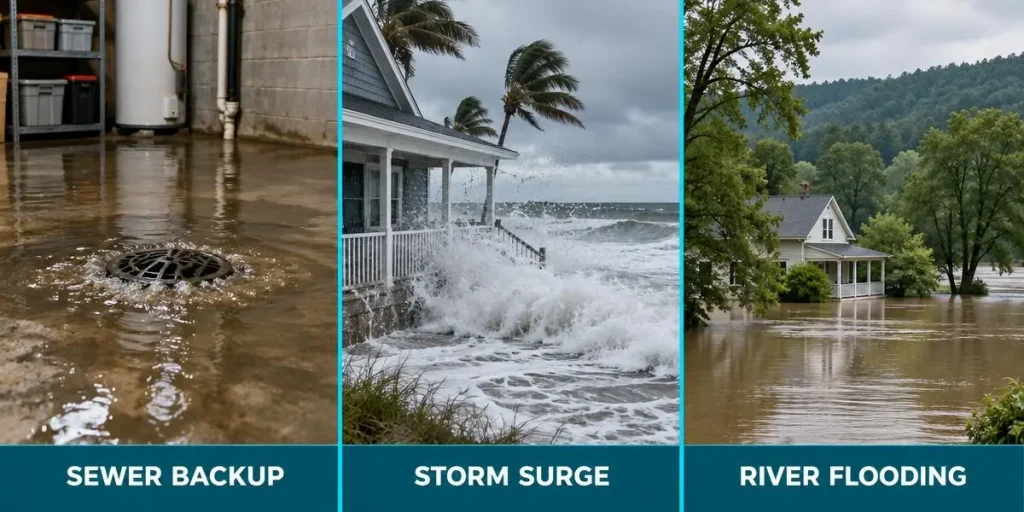
So to answer the question ‘what is category 3 water damage’, it is damage caused by highly contaminated water. This is typically caused by sewage, flooding, or other unsanitary water sources. The IICRC gives sewage, all forms of flooding from seawater, and rising water from rivers and streams as examples.
Breaking Down Categories 1, 2, and 3
To help explain category 3 water damage, here’s a breakdown of how category 3 compares to categories 1 and 2.
| Category | Alternative Name | Common Causes |
|---|---|---|
| Category 1 | Clean water | Broken supply lines, overflowing sinks, and rainwater |
| Category 2 | Gray water | Washing machine or dishwasher discharge, sump pump failure, and fire sprinklers |
| Category 3 | Black water | Sewage, flooding from seawater, and rising water from rivers or streams |
(Note: This is a general guide. The category of the water will depend on what the inspection finds.)
One thing many people don’t realize is that water can become more contaminated over time. Clean water can become more contaminated as it mixes with soil and other contaminants. Gray water can also be reclassified as category 3 if it is not removed in a timely manner, according to a Northern Arizona University water damage guideline.
Common Causes of Cat 3 Water Damage
Most cat 3 water damage within homes is caused by the following:
- Sewage backing up from a floor drain, toilet, or tub.
- An overflowing toilet that contains waste.
- Flooding from storm surge or tidal flooding (seawater).
- Rising water from rivers, creeks, or streams.
- Gray water left too long before being cleaned.
In Hampton Roads, coastal flooding from hurricanes and nor’easters can cause concern. Flooding from seawater is listed by the IICRC as an example of category 3 water. This means that homes hit by storm surge will usually require category 3 water damage cleanup. However, wind-driven rain and other weather-related water sources will not automatically be classified as category 3. Inspection of the water will be required. Understanding the difference between water damage and flood damage can help homeowners learn how different water sources affect their property and insurance coverage.
Why Category 3 Water Poses a Health Risk
The main reason category three water is treated differently is due to the health risks. According to the CDC, floodwater can contain waste from humans and livestock, plus other germs and contaminants. Contact with floodwater can cause wound infections, rashes, and stomach illness.
It is recommended to wear rubber boots, gloves, and goggles if entering floodwater. Children should be kept away from floodwater. Wash your hands after contact. If you have an open wound, avoid contact with the water.
What to Do If You Have Category 3 Water Damage
First, make sure nobody enters the area affected by the water. This includes pets. If the water is close to outlets, cords, or appliances, don’t enter the water. Switch off the power at the breaker, but only if you can access the panel without touching the water.
Once this is done, take photos and videos of the damage to provide to your insurance company. Don’t use household fans in the affected area, as this can cause the contaminants to spread throughout your home. The IICRC states that category 2 and 3 water should be remediated before drying.
Call a professional. We don’t recommend cleaning up category 3 water damage yourself due to direct contact with the contaminated water and materials.
Category 3 Water Remediation
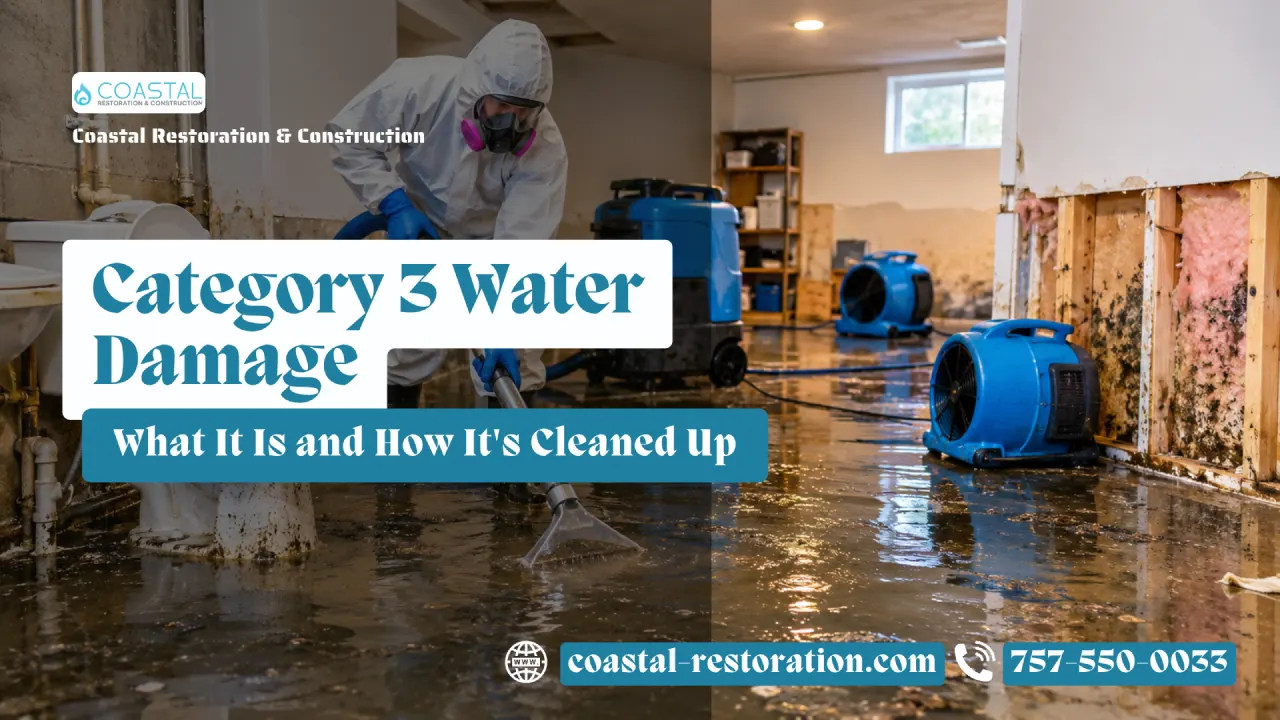
Different steps will be taken for category 3 water remediation. First, the team will set up containment and wear protective clothing. They will then extract the standing water using professional water extraction equipment.
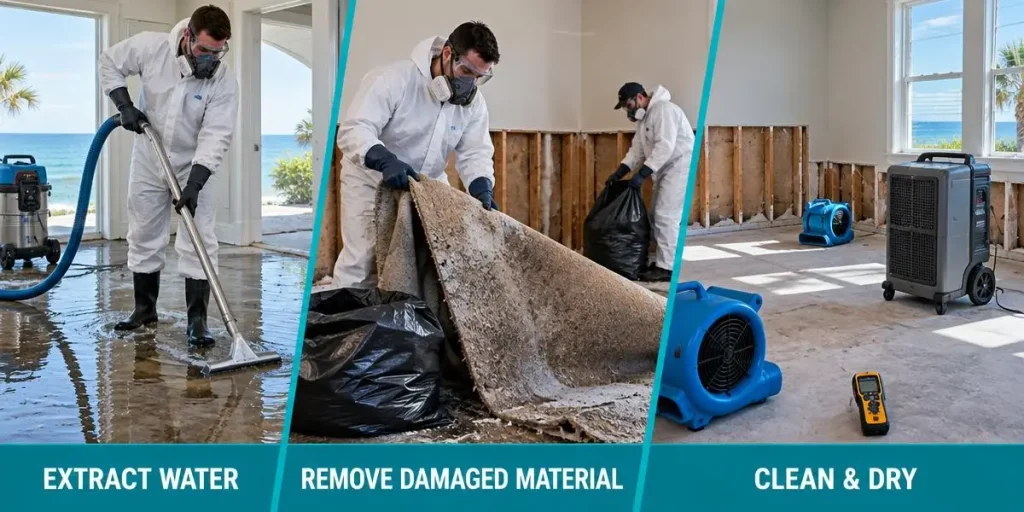
Porous materials will typically be removed. Any carpet that has been soaked by category 3 water will need to be removed and replaced. Wet insulation cannot be dried and used again. Drywall below the water line will usually be cut out. Once all contaminated items are removed, surfaces will be cleaned and disinfected. . You can also learn more about the water damage remediation process and the steps involved in restoring a property.
Finally, structural drying will begin. Air movers and dehumidifiers will be used to remove the moisture from the structure. Moisture readings will be taken to confirm everything is completely dry. This will also help prevent mold from forming.
Category 3 Water Damage Should Be Treated Quickly
Don’t attempt to clean up category 3 water damage yourself. The water will contain germs that could make people ill. The materials will usually need to be removed. The quicker a professional team can remove the water and disinfect the area, the less risk there will be to your family and home.
FAQs
Here you can find the answers to some of the common queries about category 3 water damage that people generally have, so have a look at them if you have the time.
What Is Cat 3 Water?
Cat 3 water is the most contaminated category of water damage. It can be caused by sewage, flooding from seawater, and rising water from rivers and streams. It can contain harmful germs.
Can My Carpet Be Saved From Category 3 Water Damage?
Usually not. Carpet and padding will be removed and replaced because they can’t be cleaned well enough to be safe.
Is Category 3 Water Damage Covered by Homeowners Insurance?
This will depend on the cause. Typically, standard homeowners insurance won’t cover flooding, which will require separate flood insurance through FloodSmart or a private insurer. Usually, sewage backup will only be covered with an additional endorsement. Check your policy and seek help with your insurance claim if required.
Sewage or Flooding? Seek Professional Help
If you have had a sewage backup or flooding in your home, it is best to seek professional help. Coastal Restoration & Construction can remove the contaminated water, clean and disinfect the area, and safely dry your home.