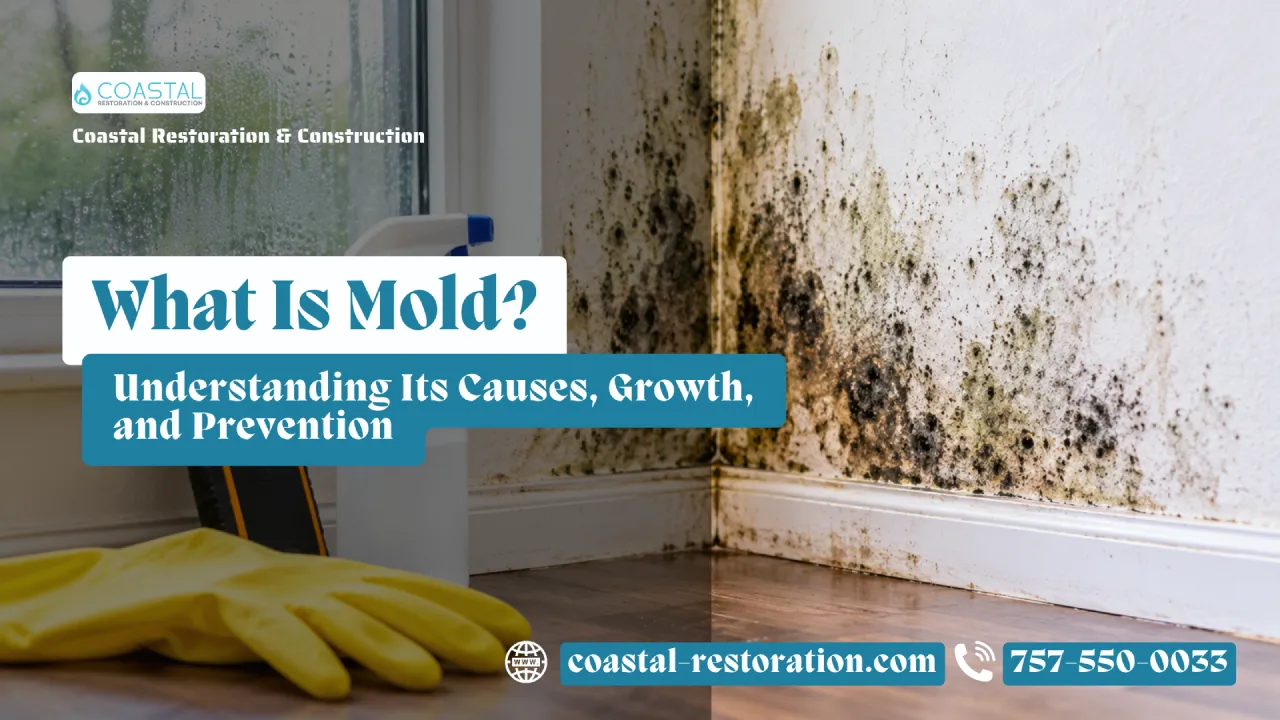
Many people will have come across mold, whether that is in the form of fluffy patches on old bread, black spots in your shower grout, or gray patches on your basement walls. Since mold can cause damage to materials and cause issues for some people when it starts to grow within your home, it is good to know what it is.
This guide will explain what mold is, where it comes from, how it grows, what causes it, and whether it is dangerous, including when professional mold remediation may be necessary.
What Is Mold, Exactly?
Mold is a type of fungus. As stated by the EPA, molds do not fall into the category of plants or animals but are in the kingdom Fungi, like mushrooms and yeasts. So, to answer the question, is mold fungal? Yes. Mold is a fungus. Molds spread by producing microscopic spores, and the EPA states that these spores are like the seeds of plants.
Sometimes people ask, is mold the same as fungi? While they are similar, you should note that mold is a type of fungus. Fungi is the general term. When people refer to mold and fungus within your home, they are usually referring to the same thing. Mold is usually found on damp surfaces such as walls, ceilings, wood, and fabrics.
Where Does Mold Come From?
In short, mold is everywhere. As stated by the EPA, mold spores can be found both inside and outside your home. You cannot fully eliminate mold spores from your indoor air. Many are very small and can float around.
As stated by the CDC, mold can enter your home through open doors, windows, vents, and heating and air conditioning systems. It can also enter via your clothing, footwear, bags, and pets. While it is normal to have a few spores around your home, the issue arises when they find somewhere to grow.
How Does Mold Grow?
The answer to how does mold form, or how does mold happen is usually down to moisture. When a spore lands on a surface, and there is a constant source of moisture and something to eat, the mold will begin to grow. As molds begin to grow, they will break down whatever they are growing on.
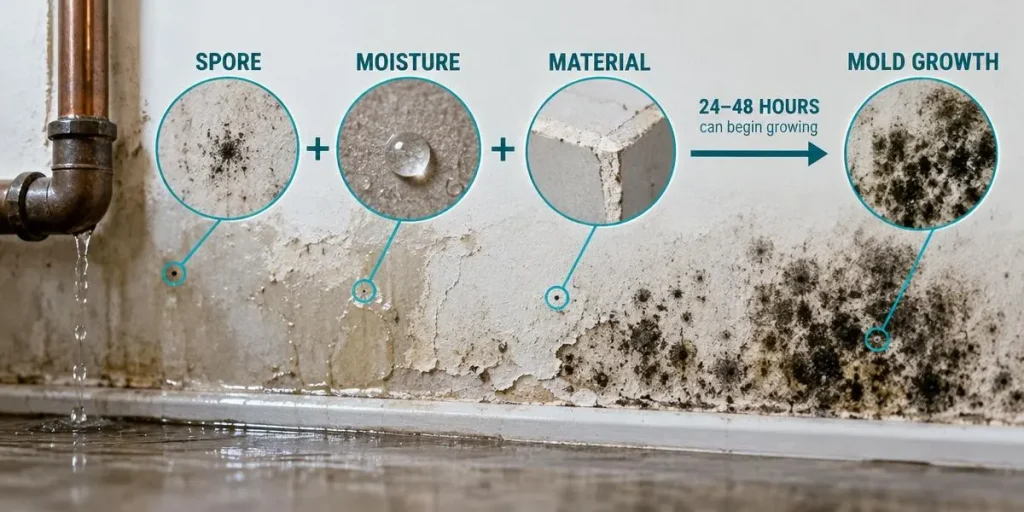
This can cause damage to your drywall, wood, ceiling tiles, and carpets over time. Mold can grow so quickly in some homes because it only needs moisture and something to eat. As stated by the EPA, moisture is the most important factor. Temperature will not usually be an issue, as most homes are warm. The CDC recommends you dry any wet areas within 24 to 48 hours. This is roughly how long it takes for mold to begin to grow.
You might also search how is mold formed. This is just the British spelling. The answer will be the same: spores, moisture, and something to eat.
What Causes Mold Growth in Homes?
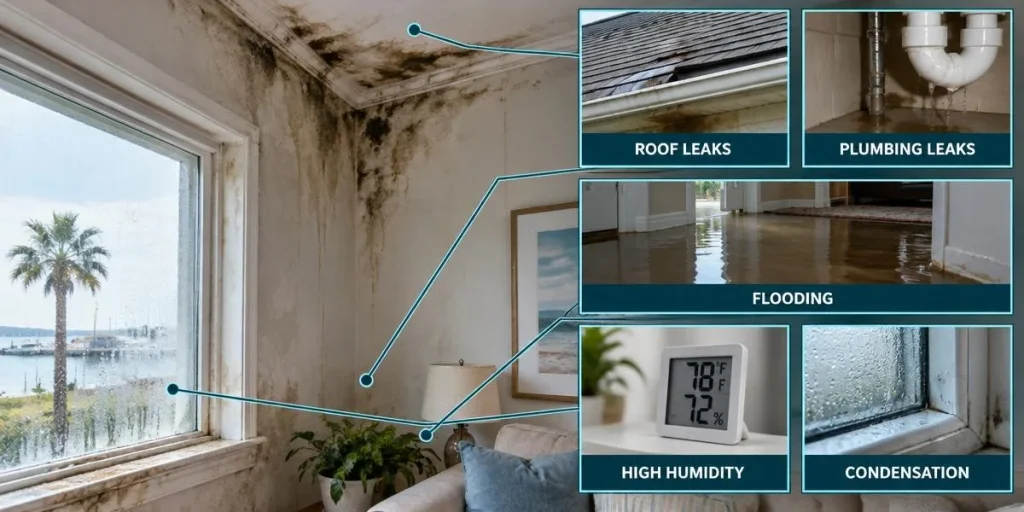
As there are already spores around, what causes mold growth will almost always be a moisture issue. Some of the most common reasons include:
- Roof leaks causing your attic, insulation, or ceiling to become soaked. See our guide on roof leak and mold.
- Leaky pipes, supply lines, or appliances.
- Flooding or water damage that was not dried quickly.
- High humidity within your home, especially during the summer months.
- Condensation on cold windows, pipes, and walls.
- Damp fabrics and furniture. See our article on mold on couch cushions for more information.
Hampton Roads has a humid climate, which means controlling moisture is even more important. Norfolk’s average morning relative humidity is around 78 percent, according to Current Results. The moist air means surfaces will not dry out on their own.
Mold or Mildew?
Many people use the terms mold and mildew interchangeably. But mildew is a type of mold. It is usually a thin layer on surfaces such as your shower walls and window sills. To learn how to tell the difference between the two, see our article on mildew vs mold.
Is Mold Dangerous?
While a small amount of mold will not cause any obvious issues for many people, mold can cause health issues. Some people will be more sensitive to mold. As stated by the CDC, some people can suffer from a stuffy nose, sore throat, coughing or wheezing, burning eyes, or a skin rash.
Why is mold bad for you? According to the EPA, molds can produce allergens and irritants. In some cases, they can also produce potentially toxic substances called mycotoxins. This is the main answer to the question ‘why is mold harmful’. Those with asthma or an allergy to mold may experience worse symptoms. Those with weak immune systems or chronic lung disease may also suffer from lung infections caused by mold, according to the CDC.
The EPA states that breathing in mold in your home can cause health effects for some people. Is mold harmful to breathe? Yes, it can be for some people. Is mold harmful to your health even when you cannot see it? It can be. This is why you should investigate any musty smell.
How to Prevent Mold
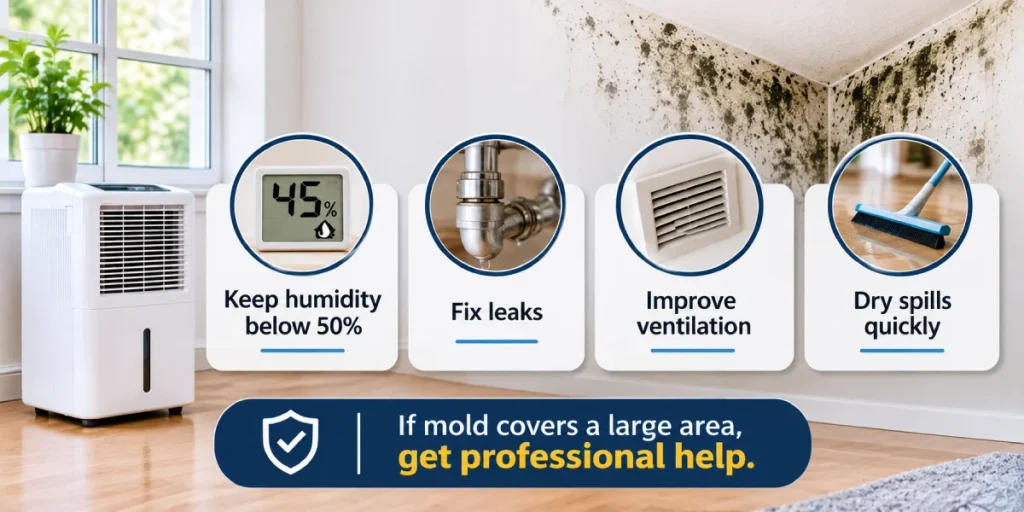
The best way to prevent mold is to reduce moisture. The CDC recommends:
- Keeping your humidity levels at or below 50% using an air conditioner or dehumidifier.
- Fixing any leaks within your roof, walls, or plumbing.
- Using exhaust fans that vent outside, and making sure your dryer vents outside.
- Drying any flooded areas within 24 to 48 hours.
If you have more than around 10 square feet of mold, the EPA recommends getting professional help. In that case, professional mold remediation is the safest way to remove the mold.
What Is Mold and Why It Matters in Your Home
Knowing what is mold will make it easier to deal with. Mold is a type of fungus and is already in the air. The issue is when there is moisture. Keeping your home dry, fixing any leaks quickly, and being aware of any musty smells will stop most mold from forming.
FAQs
If you don’t have enough time to read the full article, here are short answers to some of the most common questions that people ask about mold:
How Quickly Can Mold Grow?
Mold can begin to grow on damp materials within 24 to 48 hours. This is why the CDC recommends you dry any flooded or wet areas within this time frame.
Can Mold Grow Without Water?
No. Mold needs moisture to grow. While the spores can sit on dry surfaces, they will begin to grow when they become damp.
Does Mold Go Away on Its Own?
No. Once the mold has grown, it will remain. It will need to be cleaned or removed, and the source of moisture needs to be fixed.
Think You Have Mold? Let Us Take a Look
If you have noticed any musty smells, patches on your walls or ceiling, or water damage that has not fully dried, then it is best to get it checked out. Coastal Restoration & Construction can find the source of the moisture, safely remove the mold, and help prevent it from returning.