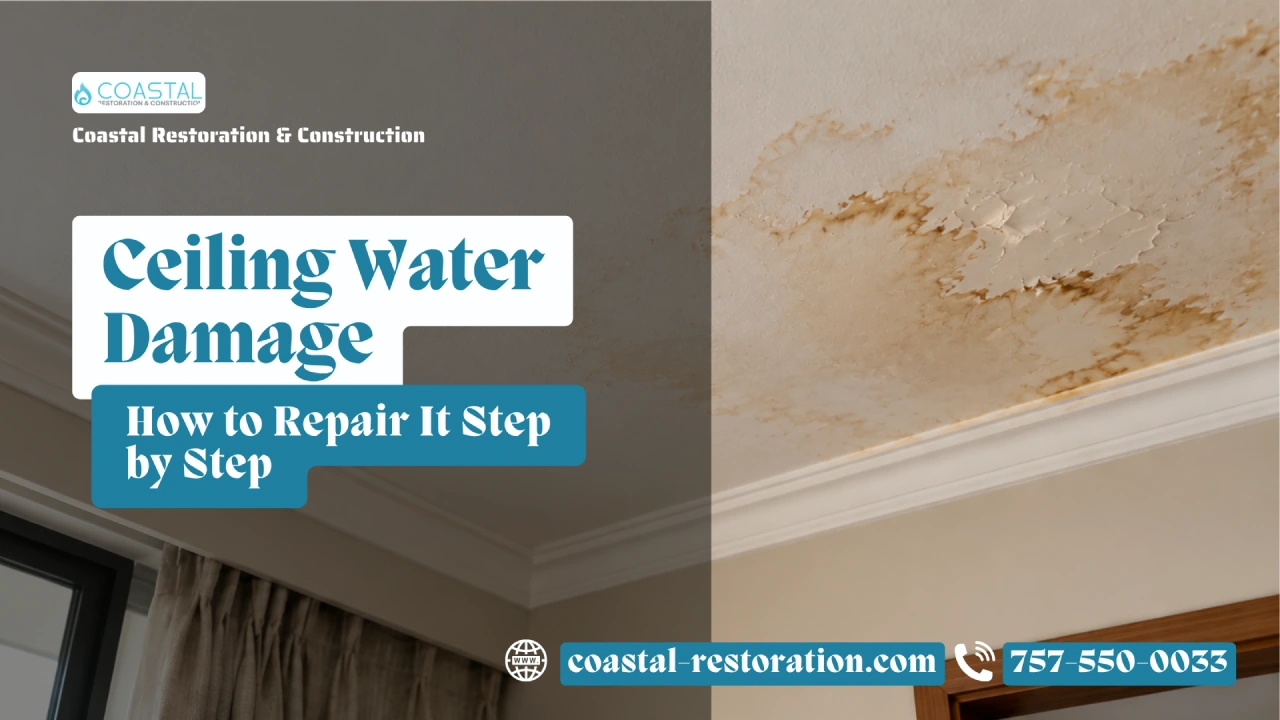
You glance up, and there it is: a brownish ring on the ceiling that wasn’t there last week. Maybe the paint has started to bubble. Or one corner feels soft when you poke it. A ceiling like that won’t sort itself out. Wait too long, and the mark spreads, the cost creeps up, and the drywall overhead starts to go.
Here’s the better news. Quite a bit of this you can handle yourself, if you work the problem in order rather than slapping paint on the stain and hoping. This guide takes you through ceiling water damage repair one step at a time, from catching the first warning signs to the last roll of paint.
What Causes Ceiling Water Damage
Water sitting on a ceiling has come from somewhere overhead, and finding that source is the first proper task. Since water tends to run along the joists before it finally drips, the stain you’re looking at is frequently a fair distance from the leak itself.
A few usual suspects explain most cases of ceiling water damage:
- A roof that’s let go somewhere, at cracked or missing shingles or worn flashing
- A supply line or drain line weeping inside the ceiling or attic
- A bathroom, kitchen, or appliance sitting right above the spot
- An overflow from a tub, a washing machine, or the water heater
- Cold attic pipes or ducts shedding condensation
Signs of Water Damage on a Ceiling
Catch it early, and you’re dealing with a cheap cosmetic fix. Let it run, and you’re cutting out sagging, moldy drywall instead.
A few of these you’ll spot right away, while others hide until things get worse, so it helps to know the full range of signs of water damage on ceiling surfaces to look for:
- Stains and rings in brown, yellow, or a rusty copper tone
- Paint that starts to peel, bubble, or crack
- A spot that feels soft or sags a little under light pressure
- A wet drywall ceiling patch that won’t dry out or feels spongy
- A musty smell, or mold edging its way around a stain
Is It a Leak or Just Condensation? Why Your Ceiling Is Sweating
A wet-looking ceiling isn’t always a leaking one. For the first day or two, ordinary condensation can be hard to separate from a genuine leak. And getting that call right changes everything you do next. Make that distinction before you open up any drywall.

What Makes a Ceiling Sweat?
Press a finger to the damp patch. If it smears into a thin, cool film instead of soaking a defined spot, you’re most likely looking at condensation, not a leak.
It builds up where a cooler ceiling meets humid household air, so the first places to blame are cold attic pipes overhead, a bathroom that vents poorly, and the sticky weeks of summer. That mismatch in temperature is the plain answer to ‘why is my ceiling sweating.’
How to Tell a Leak From Condensation
Track the pattern over a few days, and it gives itself away. A leak marks one fixed spot, keeps returning, and goes darker with every soaking, while condensation drifts across a wider area and dries off once the room’s air does.
The IICRC’s S500 water damage standard even logs steady high humidity as a water loss in its own right, since it feeds into drywall much like a slow drip. Fix the airflow, add a dehumidifier, and if the damp keeps returning, water has most likely gotten into the ceiling already.
How to Fix Ceiling Water Damage, Step by Step
Most ceiling repairs that come back failed in one of two places: the board got sealed while still wet, or plain paint went over the stain and it bled through. Avoid both and the rest is straightforward. Here is how to fix ceiling water damage so the repair holds.
Stop the Water at Its Source
Until the source is shut off, water is still the active problem, so it comes before any patching. Trace it to the roof, a pipe, or a fixture above, and confirm the drip has stopped. If the ceiling is bulging, drain it first: a small hole at the lowest point and a bucket underneath.
Dry the Ceiling Fully
Surface-dry and fully dry aren’t the same thing. Drywall can stay wet inside for days, so pros follow a proper water damage drying guide, take a moisture meter reading, and wait until it’s under about 12% before sealing anything. For a deep or hidden soak, structural drying crews bring in air movers, and a proper wet ceiling after leak restoration rests on that reading, since mold can set in within 24 to 48 hours.

Remove the Damaged Drywall
Soft, bowed, or crumbly board won’t regain its strength, so cut it out instead of patching over it. Use a drywall saw and go a few inches past the stain, since the wet zone runs wider than the mark. Painting over compromised board only lets you repair water-damaged ceiling material on the surface while the damage keeps spreading underneath.
Patch, Prime, and Paint
Screw in a fresh piece of drywall and tape and mud the seams flush. The primer is what decides the result: a water stain is a water-soluble dye, so ordinary or PVA primer lets it bleed back through. A shellac- or oil-based stain blocker seals it for good. Prime, let it cure, then finish with two coats of ceiling paint.
Minor Ceiling Water Damage vs. a Full Replacement
Pulling down an entire ceiling is seldom required, and pinning down where your situation falls keeps both the cost and the labor in check. The answer rides on three things: how much of the ceiling is affected, whether it has begun to sag, and whether mold has turned up. This comparison lays it out:
| Situation | What it looks like | Typical fix |
| Minor ceiling water damage | Small surface stain, paint intact, no sag | Dry, stain-block, repaint |
| Moderate | Soft patch, peeling paint, limited area | Cut out and patch the section |
| Severe | Wide sag, crumbling drywall, mold present | Full section replacement, usually professional |
(Read this as a rough sorting guide, not a diagnosis of your ceiling. A stain that keeps coming back, or a sag that widens from one week to the next, is a sign the leak is still live and has to be found before any repair stands a chance of lasting.)
The moment things slide into that severe column, or you keep finding damp with no source you can name, is the moment ceiling water damage repair leaves weekend-project territory and belongs to a professional.
When to Call a Water Damage Professional
Some ceilings are out of DIY range from the very first look. A broad sag, leaks that keep coming back without an obvious source, dirty water from a sewage backup, or mold spreading out past the stain all say it’s time for a certified crew.
There’s the question of what sits overhead, too. A leak that reached the structural joists, or the floor of the room above, has already outgrown the ceiling in front of you.
For cases like that, professional water damage restoration traces the full reach of the damage, dries the structure the way it should be done, and clears any mold behind proper containment. It usually works out cheaper than paying to redo the same ceiling after a first repair sealed the moisture in.
How to Prevent Water Damage to Your Ceiling
A ceiling repair you never have to pay for is the best kind, and most ceiling leaks begin as minor faults that a quick check would have caught. A bit of regular attention to what sits above the ceiling pays for itself. To stay ahead of how to prevent water damage to ceiling problems, a few habits help:
- After a storm, glance over the roof for shingles that have slipped, split, or vanished
- Watch attic and under-sink plumbing for the slow drips and corrosion that creep up
- Keep gutters clear, so rain runs off away from the roofline instead of pooling
- Run the bathroom and kitchen exhaust fans to draw humidity back out of the air
- Chase down any condensation or musty smell early, before it ever reaches the ceiling
Frequently Asked Questions About Ceiling Water Damage
Have questions about ceiling water damage, repair costs, or preventing mold? These frequently asked questions cover common warning signs, repair methods, drying times, and when to call a professional. Find out how to address ceiling damage safely and prevent small leaks from turning into costly repairs.
Can you just paint over a water-stained ceiling?
Not right away, no. Plain paint has no hope of sealing a water stain, which will work its way back through within a few days. On top of that, the surface has to be dry and the leak dealt with first. Give the patch a wipe-down, lay on a stain-blocking primer, and paint over that. Coating damp or still-active damage only masks it for a short while before the mark pushes back through.
Does a water-damaged ceiling mean you have mold?
Not every time, though the chances rise sharply once drywall has stayed wet past a day or two. Mold is after moisture, and a soaked ceiling cavity gives it exactly that. The CDC singles out drying within 24 to 48 hours as the way to stop it setting in. A musty smell, or dark speckling creeping around a stain, is the early tell, and once it reaches past a small patch, handing it to a professional is the safer route.
How much does ceiling water damage repair cost?
That hangs on how large the area is and how deep the trouble runs, anywhere from a simple repaint at the light end to full drywall replacement with structural drying at the heavy end. There’s a full breakdown in our ceiling water damage repair cost guide. As a rule, catching it early is what keeps the figure modest.
Getting Your Ceiling Dry and Damage-Free for Good
Boiled down, the job always follows the same four beats: find the leak, stop it, complete water extraction, dry the space completely, and only then rebuild the surface.
Handle a stain while it’s still a stain, and you save yourself a ripped-out ceiling and the mold that usually trails behind it.
Where the damage stays small, a careful bit of ceiling water damage repair makes for a reasonable weekend’s work. Where it doesn’t, bringing a professional in sooner rather than later is the thrifty choice, not the indulgent one.
If the leak runs deep, the damaged area is wide, or you’ve a hunch the water got into the structure above, there’s nothing to gain by waiting it out.
Get in touch with Coastal Restoration & Construction for prompt water extraction services, careful drying, and a ceiling set right the first time.