A sprinkler head goes off, and for a few minutes it feels like the ceiling has turned into a shower. Maybe there was a small kitchen fire. Maybe a ladder clipped the head, or a pipe froze in an unheated stairwell.
Either way, the water doesn’t stop until someone closes the valve.
Fire sprinkler water damage catches a lot of property owners off guard, mostly because they’ve never thought about what sits inside those pipes. The resulting water damage can spread through ceilings, walls, floors, and belongings faster than expected. Here’s how sprinklers work, why the water is often dirtier than you’d expect, and what to do in the first few hours.
How Fire Sprinklers Actually Release Water
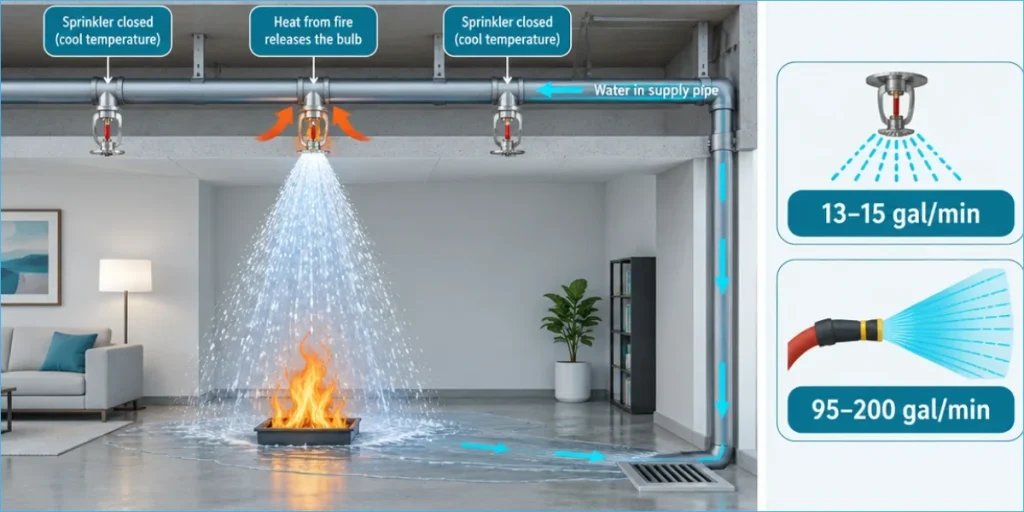
Movies get this wrong. In a real system, the heads don’t all go off at once. Each one reacts to heat on its own, and according to the City of Charleston Fire Department, only the sprinkler closest to the fire usually operates, typically once ceiling temperatures reach about 135 to 165°F.
That limits the damage. NFPA figures cited by the same department put a residential sprinkler at an average of 13 to 15 gallons per minute, compared with 95 to 200 gallons per minute from a fire hose.
The trade-off is that a sprinkler doesn’t shut itself off. Once a head opens, it keeps flowing until the control valve is closed. Left running for 20 minutes, one head can put close to 300 gallons on the floor.
Why Accidental Fire Sprinkler Activation Happens
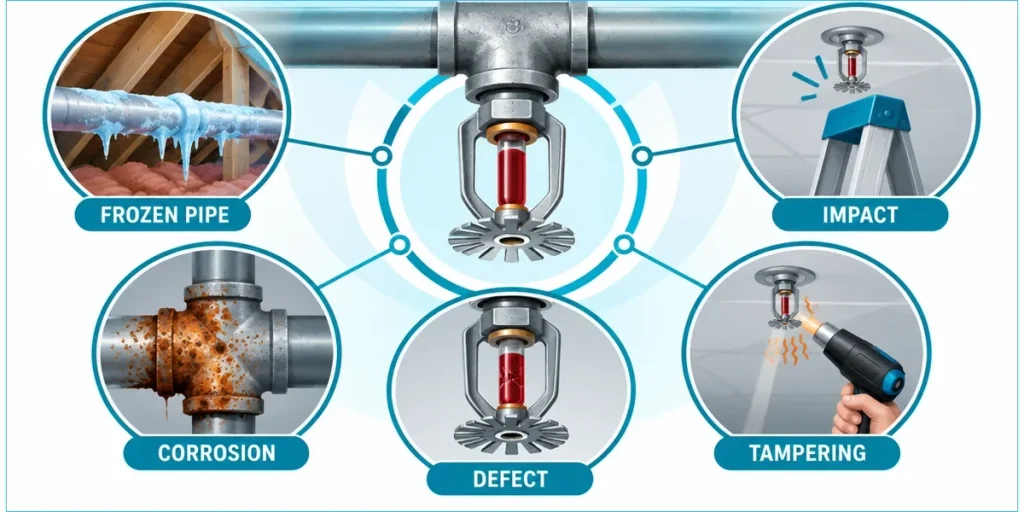
Not every activation involves a fire. An unplanned discharge can soak a building with no smoke anywhere, and the cause is usually mechanical or environmental. These are the most common culprits:
- Pipes freezing in unheated attics, garages, or stairwells
- A head knocked by a ladder, forklift, or moving furniture
- Corrosion weakening pipes or fittings over time
- Manufacturing defects in heads or components
- Tampering, such as holding a heat source near a head
Corrosion deserves more attention than it gets. An industry handbook cited by fire protection supplier QRFS estimated that microbially influenced corrosion is present in 40 to 60 percent of sprinkler system leaks. To the owner, it’s simply a fire sprinkler system failure, often in a pipe nobody has looked at in years.
Is Sprinkler Water Dirty?
Usually, yes. Water in a wet-pipe system can sit still for years. During that time it reacts with the steel pipe and picks up rust and sediment. Bacteria can grow as well, leaving slime on the pipe walls.
That’s why sprinkler water often comes out brown, black, or oily. Sulfate-reducing bacteria can turn it black, and hydrogen sulfide gives it a rotten-egg smell.
This changes the cleanup. Restoration crews rarely treat sprinkler water as clean. Soaked carpet, ceilings, and upholstery may need disinfecting or removal rather than simple drying, and the odor can linger in porous materials that aren’t handled properly.
Sprinkler vs. Fire Hose: How Much Water Each Puts Down
Seeing the numbers side by side helps. A sprinkler does cause water damage, but usually far less than the hose lines firefighters would need to put out the same fire. Here’s how typical flow rates compare in practice:
| Water source | Typical flow | What it means for damage |
| Residential sprinkler head | About 13 to 15 gallons per minute | Water stays concentrated near the fire if shut off quickly |
| Fire department hose line | About 95 to 200 gallons per minute | Large volumes spread through the structure |
| One sprinkler left running 30 minutes | Roughly 390 to 450 gallons | Water reaches lower floors, wall cavities, and subfloors |
Approximate figures based on NFPA averages for residential systems. Commercial systems, water pressure, and the number of heads that open will change the real volume in your building.
What to Do After Sprinkler System Water Damage
The first hour shapes the rest of the recovery. Sprinkler water moves quickly through ceilings, walls, and floors, so these steps should happen in roughly this order, starting with safety and ending with drying. Don’t skip ahead.
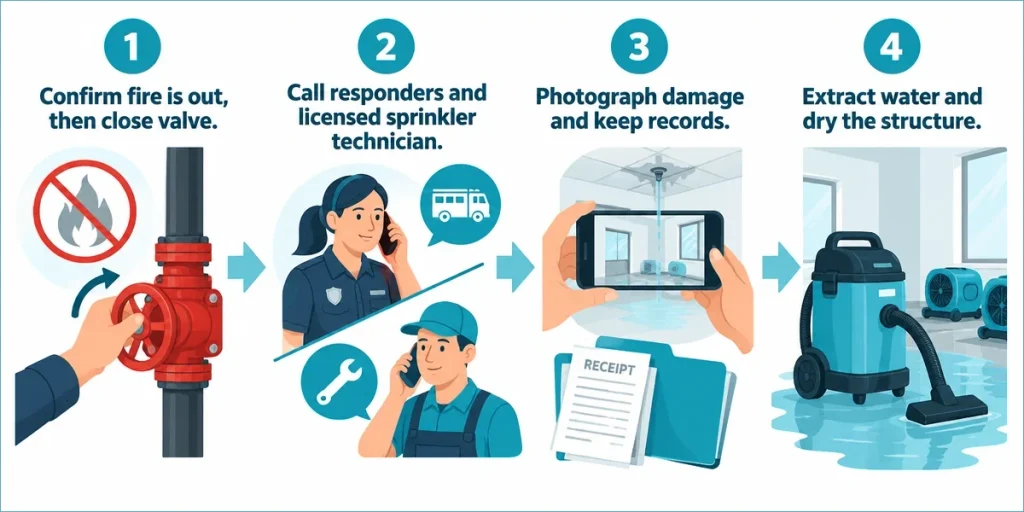
Make Sure the Fire Is Out, Then Stop the Flow
Never shut off a sprinkler system while there’s an active fire. If the fire department has responded, let them confirm it’s safe. Once it is, closing the main control valve stops the water. Building managers should know where that valve is long before they need it.
Call the Right People
Notify the fire department or alarm monitoring company if they aren’t involved already. A licensed fire sprinkler contractor needs to replace the activated head and return the system to service, since a building without working sprinklers has lost its protection.
Document Everything Before Cleanup
Photograph and video every affected area, including ceilings and contents. Keep receipts for emergency work. Claims guidance from Adjusters International also advises against throwing out damaged items until the insurer approves.
Get the Water Out and Start Drying
Standing water should come out as fast as possible. Professional water extraction pulls it from carpet and floors, and structural drying handles the walls and subfloor. The EPA notes mold can start growing within 24 to 48 hours, so drying can’t wait for paperwork.
Who Pays for Sprinkler System Damage?
That depends on your policy and the cause. Many property policies cover sudden, accidental discharge, and commercial policies may cover damage caused by freezing. Exclusions vary, though, and damage tied to poor maintenance can be harder to claim.
Read your policy closely, report the loss quickly, and keep a record of everything you do to limit the damage.
Recovering From Fire Sprinkler Water Damage the Right Way
A sprinkler that activates did its job, or at least tried to. The mess it leaves is real but manageable when the water is shut off fast, the dirty water is treated as contaminated, and drying starts right away.
The longer fire sprinkler water damage sits, the more it costs. Stained ceilings turn into sagging drywall, and wet carpet turns into a mold problem. If water has affected your ceiling, our guide to ceiling water damage explains the signs to watch for and what repairs may be needed.
FAQs
Most people have never thought about their sprinklers until one goes off, so the questions afterward tend to be the same. Short answers to four of them are below. For anything about your own system, a licensed sprinkler contractor has the final word.
Do all fire sprinklers go off at once?
No. Each head responds to heat individually, so usually only the one or two closest to the fire open. The all-at-once scene in movies doesn’t match how standard systems work.
Can a sprinkler head go off without a fire?
Yes. Freezing pipes, physical damage, corrosion, manufacturing defects, and tampering can all open a head or burst a pipe with no fire present.
How long does a sprinkler keep running?
Until someone closes the control valve. Heads don’t reset on their own, which is why knowing where the valve is matters so much.
Should sprinkler-soaked materials be thrown away?
Sometimes. Porous items soaked with dirty sprinkler water, like carpet pad and insulation, often need removal, while hard surfaces can be cleaned and disinfected. Document everything before anything goes out.
Sprinkler Went Off? Get the Water Out Before It Spreads
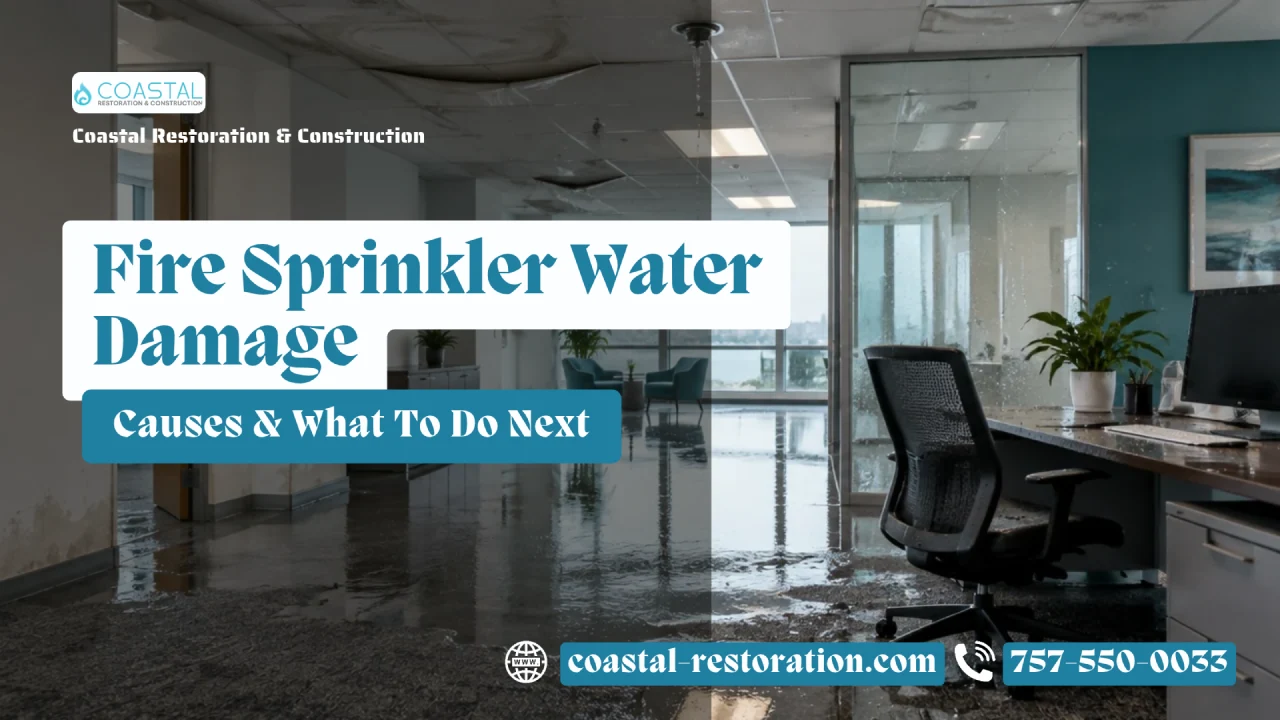
Water dripping through the ceiling tiles, or a sour smell coming from wet carpet? Coastal Restoration & Construction can pull out the sprinkler water, dry the walls and subfloor water, and clean up anything the dirty water touched. We’ll also document the damage for your insurance claim.