It usually starts as a smell. A damp, stale odor in the living room that you can’t quite place. Then you flip a cushion and find gray-green spots on the underside, or a fuzzy patch along a seam.
Mold on couch fabric is more common than people admit, especially in humid homes, basements, and anywhere a spill or leak didn’t dry properly.
Some of it can be cleaned. Some of it means the couch has to go. Knowing which is which saves you time, money, and a lot of pointless scrubbing. Understanding when professional mold remediation is necessary can also help prevent the problem from coming back.
Why Is There Mold on My Couch?
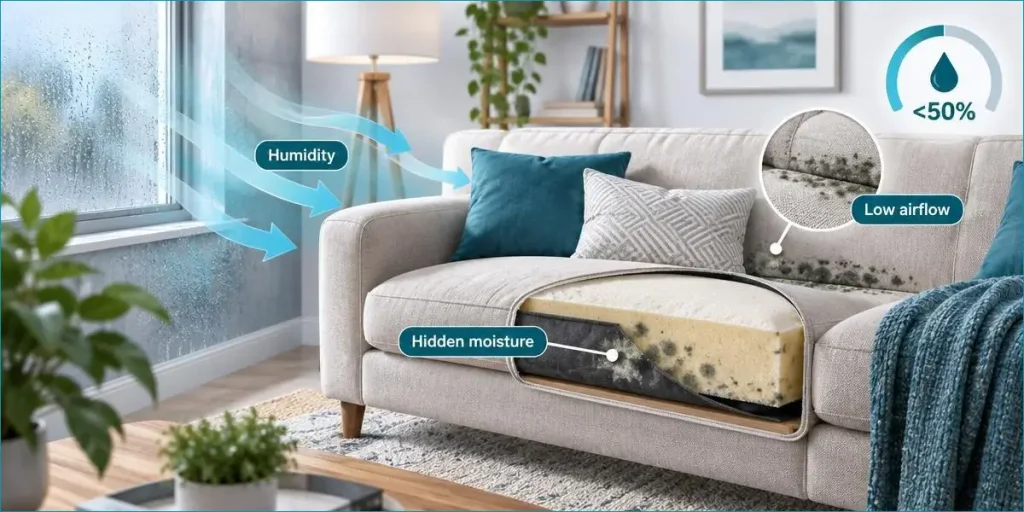
Mold needs moisture, mild temperatures, and something to feed on. A couch offers plenty of food in its fabric, foam, and the dust that settles into it, so the missing piece is almost always water. These are the usual sources:
- Humid air, especially in basements or homes without air conditioning
- Spills, pet accidents, or damp clothes left on cushions
- A couch pushed against a cold exterior wall where condensation forms
- A leaking window, roof, or pipe nearby
- Flooding or water damage that soaked the frame and padding
The CDC recommends keeping indoor humidity below 50 percent. Above that, upholstered furniture can stay damp enough for mold to grow, even if nothing was ever spilled on it.
What Does Mold on a Couch Look Like?
Mold on sofa fabric often shows up as clusters of small dots or fuzzy patches. Colors range from white and gray to green and black. It tends to start where air doesn’t move: under cushions, along seams, on the back facing a wall, and on the underside of the frame.
A light, powdery film is what most people call mildew on furniture. Fuzzy, raised, or dark growth is usually more established. Either way, a musty smell that stays after cleaning suggests growth inside the padding, not just on the surface.
Can You Save a Couch With Mold?
This is the hard part. Upholstered furniture is porous, so mold can spread into foam and batting where no brush will ever reach. Before deciding whether to clean or replace, use this as a rough guide:
| What you see | Likely outcome |
| A few small surface spots, caught early | Often cleanable |
| Spots on removable cushion covers only | Covers may be washable; check the foam inside |
| Growth that returns after cleaning | Likely inside the padding; replacement usually needed |
| Couch soaked by floodwater or sewage | Discard |
| Strong musty smell throughout | Usually means widespread growth inside |
A general guide, not a judgment on your furniture. Fabric type, how long the mold has been there, and what’s inside the cushions all affect whether a couch can be saved.
Public health guidance is fairly direct on this. The North Carolina Department of Health and Human Services says porous items like upholstered furniture with more than a small area of mold should usually be discarded, since growth can spread well beyond what you see. NC State Extension gives similar advice for upholstered furniture soaked by floodwater.
How to Get Mold Off a Couch
If the growth is small and on the surface, cleaning is worth a try. The goal is to remove the mold without soaking the fabric, because adding water to a couch is how mold problems start in the first place. Work slowly, in good light, with a fan running nearby.
Before You Start
Check the care tag. A “W” means water-based cleaners are fine, “S” means solvent only, “W/S” allows either, and “X” means vacuum only. Wear gloves and an N-95 mask, open the windows, and test any cleaner on a hidden spot first.
Cleaning Mold Off Couch Fabric
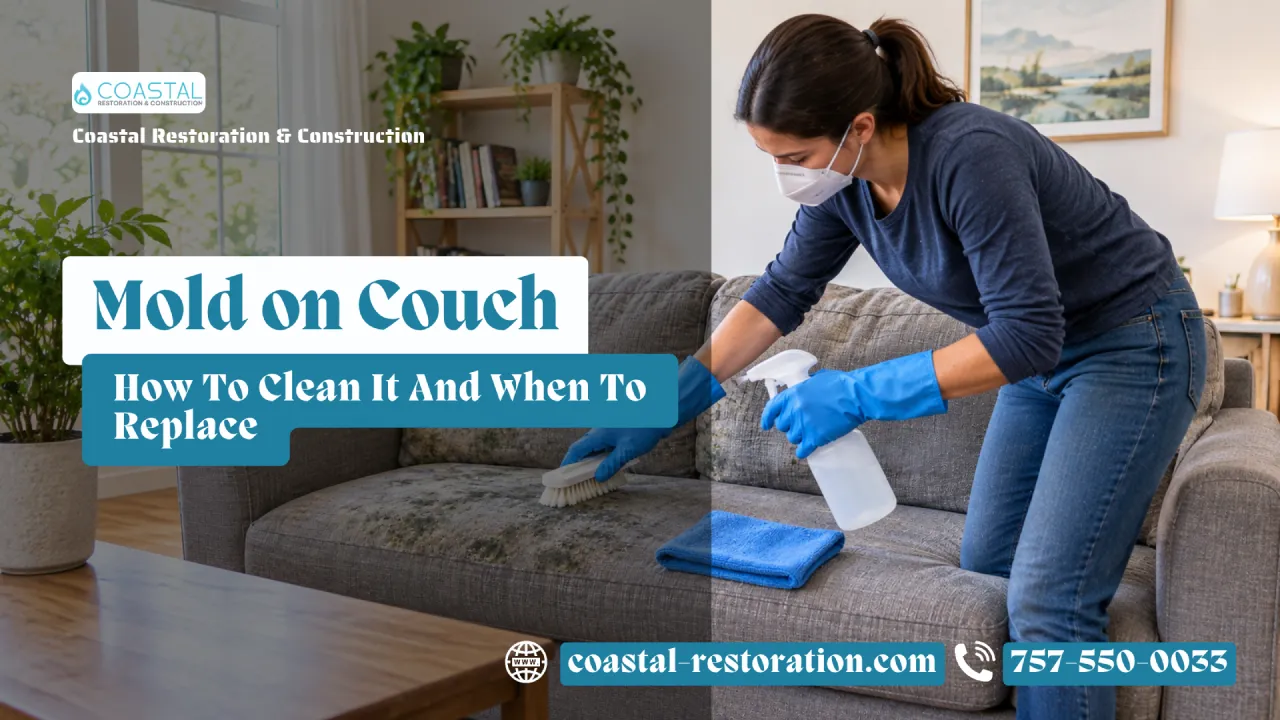
To clean mold off a couch, start with a HEPA vacuum to pick up loose spores. Then lightly dab the spot with a cleaner suited to the fabric, such as a mild detergent solution for W-coded upholstery. Don’t saturate it.
Blot with a clean cloth and dry the area quickly with fans. Skip bleach. It can discolor fabric, and it doesn’t reach growth in the padding underneath.
Mold on Sofa Cushions
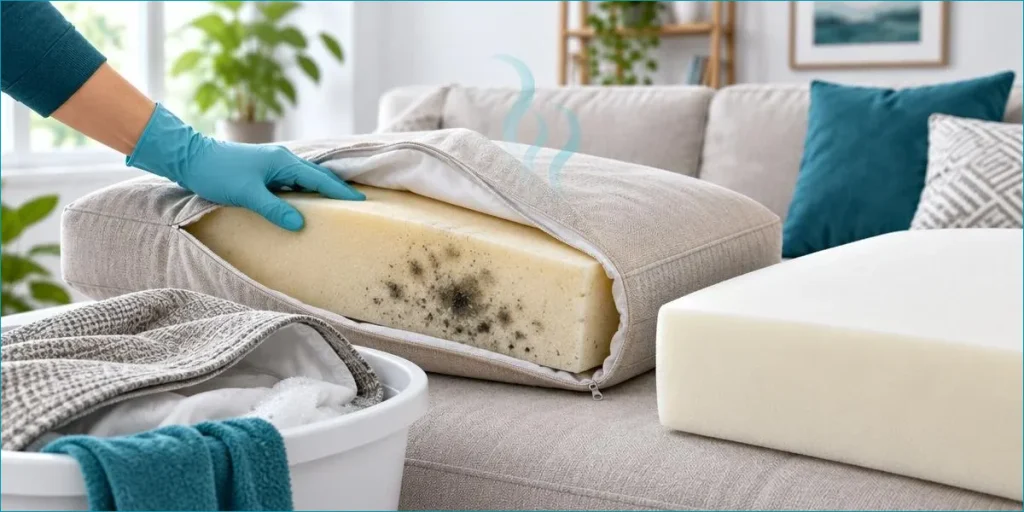
Cushion mold often goes deeper than the cover. If the covers zip off, wash them according to the label, then look at the foam. Foam with visible growth or a lingering smell generally needs replacing, since cleaning it all the way through is close to impossible. Understanding what mold remediation involves can help you determine when surface cleaning is no longer enough and professional treatment may be necessary.
How to Remove Mold From Wood Furniture
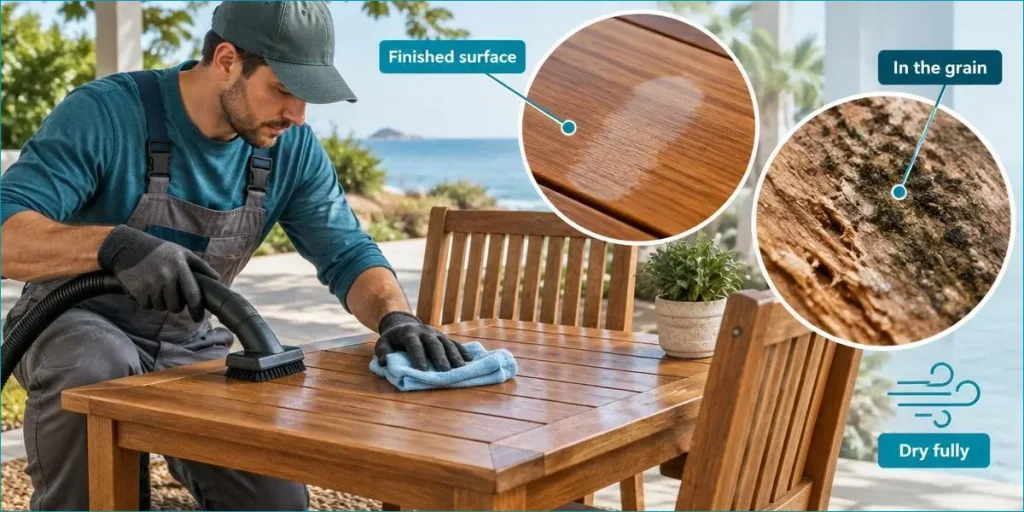
Wooden frames, legs, chairs, and tables are easier to save than upholstery, because a finished wood surface absorbs less. Saving a wood piece mostly comes down to whether the growth is on the finish or in the grain.
For surface mold, take the piece outside, vacuum loose spores, wipe with a detergent solution, and let it dry fully.
NC State Extension’s guidance for salvaging furniture frames lists disinfectants such as a diluted chlorine bleach solution or a phenol product. It also warns against drying wood in direct sun, which can warp it. If dark staining sinks deep into the grain or the wood feels soft, decay may have set in, and refinishing or replacement is likely.
How to Keep Mold Out of Your Furniture
Keeping mold in furniture from coming back is mostly about staying dry. A few habits do most of the work, especially through humid summer months or in rooms that don’t get much airflow. Keep these in mind:
- Run a dehumidifier or air conditioner to keep humidity under 50 percent
- Leave a few inches between the couch and any exterior wall
- Clean up spills and pet accidents right away, and dry them fully
- Don’t leave damp towels or clothes on cushions
- Flip and rotate cushions now and then so air reaches every side
Simple mold prevention at home does more for your furniture than any cleaner. learn how to prevent mold after water damage by addressing moisture problems before mold has a chance to grow.
When Mold on Your Couch Points to a Bigger Problem
Furniture rarely grows mold on its own. If your couch keeps getting moldy, the room around it probably has a moisture issue: a hidden leak, high humidity, poor ventilation, or old water damage that never dried out.
Look for other signs, like a musty smell in the room, mold on walls or baseboards, peeling paint, or damp carpet. If growth covers more than about 10 square feet, the EPA suggests getting professional help.
Professional mold removal finds the source and clears the room, not just the couch.
Dealing With Mold on Couch Fabric for Good
A small patch of mold on couch fabric, caught early, can often be cleaned. Widespread growth, a deep musty smell, or a flood-soaked frame usually means it’s time to let the couch go.
Either way, the couch is rarely the real problem. The moisture is. Fix the humidity or leak behind it, and the next couch stays clean. If mold has spread beyond your furniture, understanding what mold remediation involves can help you determine when professional treatment is necessary.
FAQs About Mold on Couch
Couch mold raises a lot of questions fast, usually right after the cushion gets flipped. Short answers to four of the most common ones are below. If the growth is widespread or keeps returning, a professional inspection is the better next step.
Is it safe to sit on a couch with mold?
It’s best avoided. According to the CDC, mold exposure can cause a stuffy nose, wheezing, and itchy eyes or skin, and people with allergies or asthma often react more strongly. Clean it or replace it before using it again.
Can you steam clean mold off a couch?
Steam adds moisture, which can push spores and dampness deeper into the padding. It’s risky unless the fabric allows it and the couch can be dried completely and quickly afterward.
Does vinegar kill mold on a couch?
Diluted white vinegar is a common choice for surface spots on water-safe fabric. It won’t reach mold in the foam, though, and you should always test it on a hidden area first.
Should you throw away a couch with mold?
Usually, if the mold covers more than a small area, keeps coming back, or the couch was soaked by floodwater. Health officials generally recommend discarding porous furniture in those cases.
Mold Keeps Coming Back to Your Couch? Check the Room Around It
Couch smelling musty again a week after you cleaned it? Spots on the wall behind it too? Coastal Restoration & Construction can find the moisture feeding the mold, check how far it has spread, and clear it from the room so your furniture stays clean.