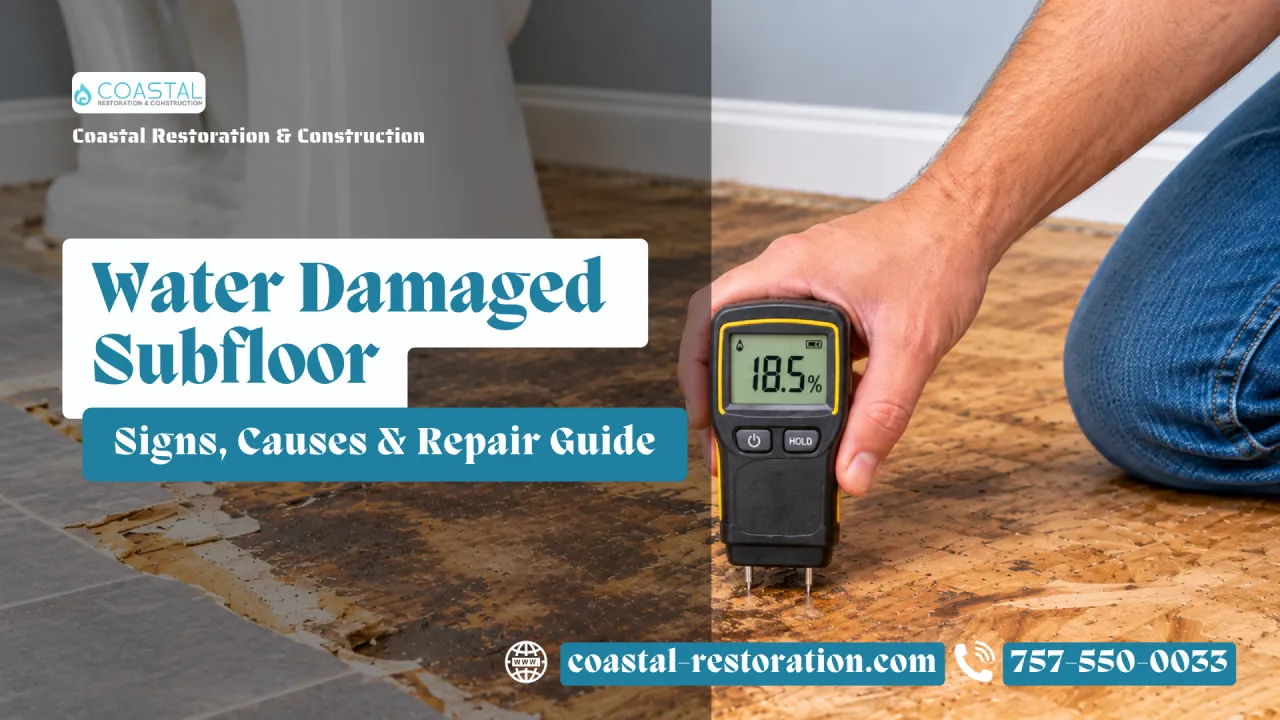
A lot of these calls sound alike. Somebody notices the toilet wobbles now. The vinyl by the tub keeps lifting. Then the flooring comes up, and the plywood under it is stained dark and soft enough to dent with a thumb.
That’s a water damaged subfloor. Chances are the leak had been running for months. Tile and sheet vinyl are good at keeping a secret like that.
Can it stay? Maybe. A moisture reading, the type of panel, and any sign of rot will settle it. The right water damage repair approach depends on whether the subfloor can be dried and restored or needs to be replaced.
What a Subfloor Does, and Why Trapped Water Ruins It
Under the finished floor sits a layer of plywood or OSB (oriented strand board), nailed or screwed to the joists. That’s the subfloor. Its job is simple enough: spread the weight around so a loaded fridge or a full tub doesn’t sag the floor between joists.
Wood handles a single soaking better than most homeowners expect. APA, The Engineered Wood Association, notes that wood construction will normally be structurally sound after severe exposure to moisture.
The trouble is the weeks after. Here’s where numbers help. Home Innovation Research Labs calls plywood and OSB dry below 16 percent moisture content. Twenty percent is its line for keeping decay from spreading. Under vinyl, a slow leak can keep a panel above that for months, and decay fungi like nothing better.
Where Water Damage to Subfloor Panels Usually Starts
Big floods ruin floors, sure. But most subfloors that end up in a dumpster were killed slowly, by a drip nobody heard behind a vanity or a dishwasher line that seeped for a year. Restoration crews tend to find the culprit in a short, predictable list of places:
- A worn-out wax ring under the toilet, which is why a wobbly toilet deserves attention
- The skinny supply lines behind a dishwasher, fridge, or ice maker
- Washing machine hoses, plus water heaters past their prime
- Shower pans and tub edges where the caulk let go years ago
- Crawl spaces that stay humid all summer
- Roof, window, or door leaks that travel down the inside of a wall
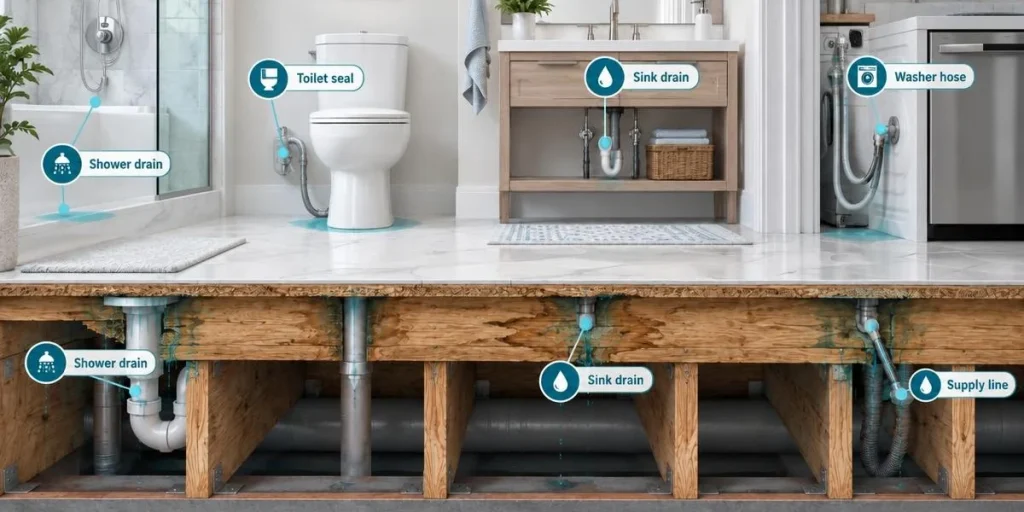
Signs of Subfloor Water Damage
Before any meter comes out, a technician looks and listens. Bathroom first, then kitchen and laundry, since pipes run there. Watch for these three clues.
Soft or Spongy Spots Underfoot
Start by just walking the room. Over sound framing, the floor feels rigid. Over a wet or rotting panel, it gives a bit, like a gym mat. Bathrooms? Check right in front of the toilet. A bad wax ring drips on the same few inches with every flush.
Changes in the Finished Floor
Hardwood curling at the edges is one tell. So are cracks running diagonally across a few tiles. Tile rarely breaks in a line unless the panel under it moved. Throw in a soft bubble in the vinyl and any squeak that’s new this year.
Clues From Underneath the Floor
With a basement or crawl space, you can see even more. Look up at the plywood around the toilet flange. A leak there usually leaves a dark ring, more or less centered on the pipe. Black streaks along a drain line tell the same story. And if the crawl space smells sour? That’s often the first clue of all.
OSB vs. Plywood: How Each Handles Water
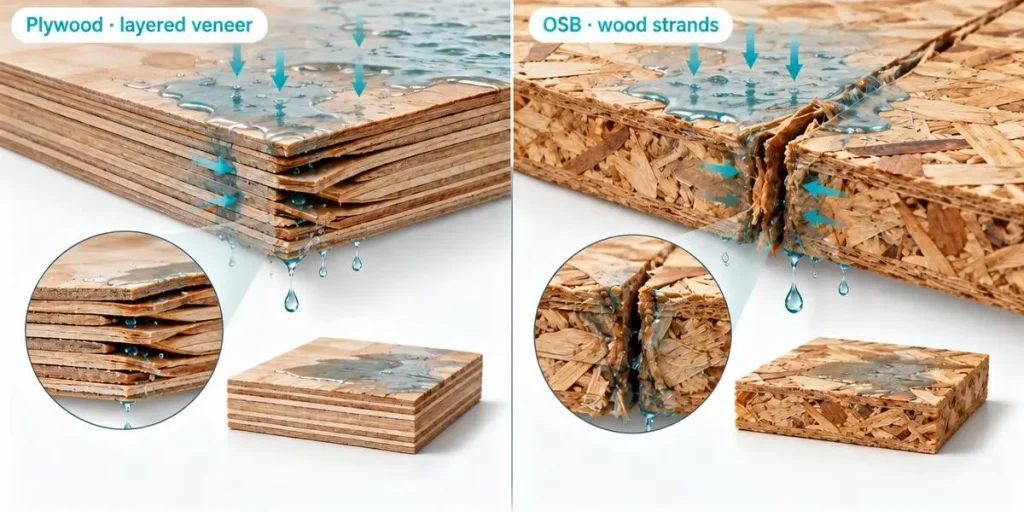
Newer homes mostly have OSB. Older ones often have plywood. Wet OSB swells mostly along its 4-foot panel ends, and two swollen panels can push into each other and leave a low ridge at the seam. The good news? That swelling often settles as the panel dries. Here’s how the two compare:
| Plywood | OSB | |
| How it takes on water | Takes on water through its face and edges; usually dries back fairly evenly | Panel ends absorb water fastest and can ridge at joints |
| After drying | Often returns close to its original shape after a brief soak | Swollen edges may not flatten fully again |
| Common failure | Layers can separate (delaminate) after long exposure | Strands can soften and crumble when wet for a long time |
| Typical fix | Let it dry, look for separated plies, sand down any high spots | Dry it first. Then lightly sand the ridges, or cut out whatever stays swollen |
Field patterns, not a lab result. Grade, age, and soak time all play a part. Let a moisture reading make the call.
Dry It or Replace It? What Decides It
It comes down to two things. How long did the wood stay wet? And what shape is it in once it’s dry? A same-day catch usually means drying is enough. A leak that ran for months often takes that option off the table. Here’s how each case tends to play out on a real job.
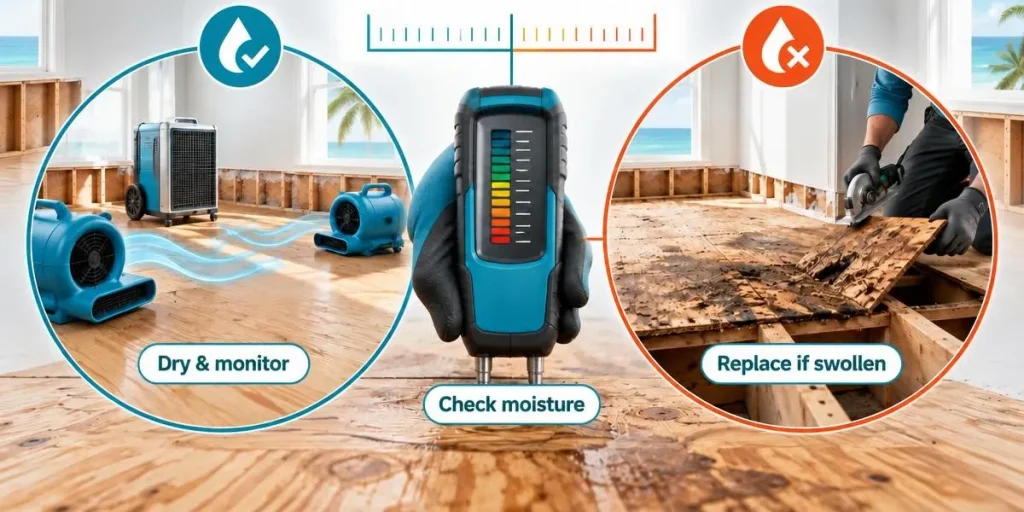
When Drying Can Save It
Picture a supply line that burst on a Saturday morning and got shut off within the hour. That subfloor will probably be fine, provided it dries completely before anything goes back over it. “Completely” has a number. APA’s flooring installation guidance caps wood subfloor at 12 percent moisture content before solid wood flooring goes down, and it wants the subfloor within 2 to 4 points of the new boards, depending on how wide they are.
A palm pressed to the plywood won’t tell you that. A moisture meter will. Professional structural drying, with air movers and dehumidifiers running for a few days, can pull that water out of panels and joists without tearing anything up. Learn more about the water damage drying process and how proper moisture removal helps prevent further damage.
When to Replace Subfloor From Water Damage
Some wood is past helping. Sanding will knock down a high spot. It won’t put strength back into broken-down fibers, and flooring laid over weak wood tends to give out early. Plan on replacement if any of these turn up:
- A screwdriver sinks in easily, or the wood crumbles around it
- Plies have peeled apart, or the panel has swollen too much to lie flat
- The joists underneath are soft or discolored too
- Mold has grown into the wood, and the leak was never fixed
- The water came from a sewage backup or outside flooding
A water-damaged, rotted subfloor won’t come back with drying. Rot is decay caused by fungi eating the wood, and once that starts, the lost strength stays lost.
Water Damage Black Mold on Subfloor Panels
Wet wood and mold go together like a leaky faucet and a water bill. The EPA puts the start of mold growth at 24 to 48 hours after a surface gets wet, and that dark, airless gap under sheet vinyl is close to ideal for it.
Black blotches under a panel could be mold. They might also be plain water staining. Color won’t settle it, and the species matters less than how far the growth has spread.
EPA mold cleanup guidance puts the line at about 10 square feet. Below that, most homeowners can deal with it. Anything larger, or growth that’s gotten into porous material, is better handed to professional mold remediation, mainly because containment keeps spores from spreading while the bad wood is cut out.
How Water Damage Subfloor Repair Works
Order matters on this job. Floors that fail early were usually closed up before anyone took a moisture reading, or before anyone checked the joists. A proper job tends to unfold in this order:
First, the leak. Patching wood that’s still getting wet is money thrown away. Next, the flooring comes off, a good foot or two past the stain, since water creeps farther underneath than it shows. Then it dries. Not until it feels dry, either, but until the meter says so.
Soft or moldy sections are then cut back to sound wood, with the new seams landing on joists. Joists that took damage get reinforced or replaced at this point too. New panels are glued and screwed down with whatever expansion gap the manufacturer calls for, and there’s one more round of readings before the finished floor goes on. For a closer look at each stage, read our guide to the water damage restoration process.
Why Speed Decides If a Water Damaged Subfloor Can Be Saved
Most of the cost difference between a cheap fix and a big one is how long the water had. A water damaged subfloor caught the same week can often be dried right where it sits. Let the leak run a whole season, though, and the same job can grow into new panels, joist repair, and mold cleanup.
FAQs
Here are the questions people ask most once the carpet’s been pulled back. Short answers follow. Your own floor may differ, so get a meter reading.
Does wet subfloor need to be replaced?
Not always. Plenty of floors get torn out that could have been kept. How long it sat wet matters most, then how it looks once it’s dry. Get it dry fast, and a lot of panels survive. Some are too far gone by the time anyone notices, and no fan on earth changes that.
Will a wet subfloor dry out by itself?
Maybe. Under carpet, in a room with some airflow, it has a fair shot. Under sheet vinyl or tile? Much less likely. Trapped moisture can keep the panel above 20 percent moisture content for weeks, and the floor on top won’t look any different.
What are the signs of a rotted subfloor?
Try a screwdriver. Press it into the suspect spot, then into a sound area a few feet away. Healthy wood barely gives. Rot lets the tip sink, the surface crumbles, and there’s usually a musty smell.
Can new flooring go over a damaged subfloor?
Not until it’s dry and solid. APA’s limit is 12 percent moisture before solid wood flooring goes down. Go over wetter panels, and you’ll likely see gaps, cupping, loose tiles, or mold within months.
Is a damaged subfloor covered by homeowners insurance?
Sometimes. Coverage usually follows the cause. A supply line that bursts overnight is commonly covered. A leak that dripped for a year often isn’t, since insurers tend to call that maintenance. Read the water damage section of your policy, and take photos before anything gets torn out.
Get Your Water Damaged Subfloor Checked Before It Gets Worse
Floor feeling soft? Lifting at an edge, or smelling musty? Coastal Restoration & Construction can find the water, measure the panels and joists, and handle the drying or replacement the readings call for.