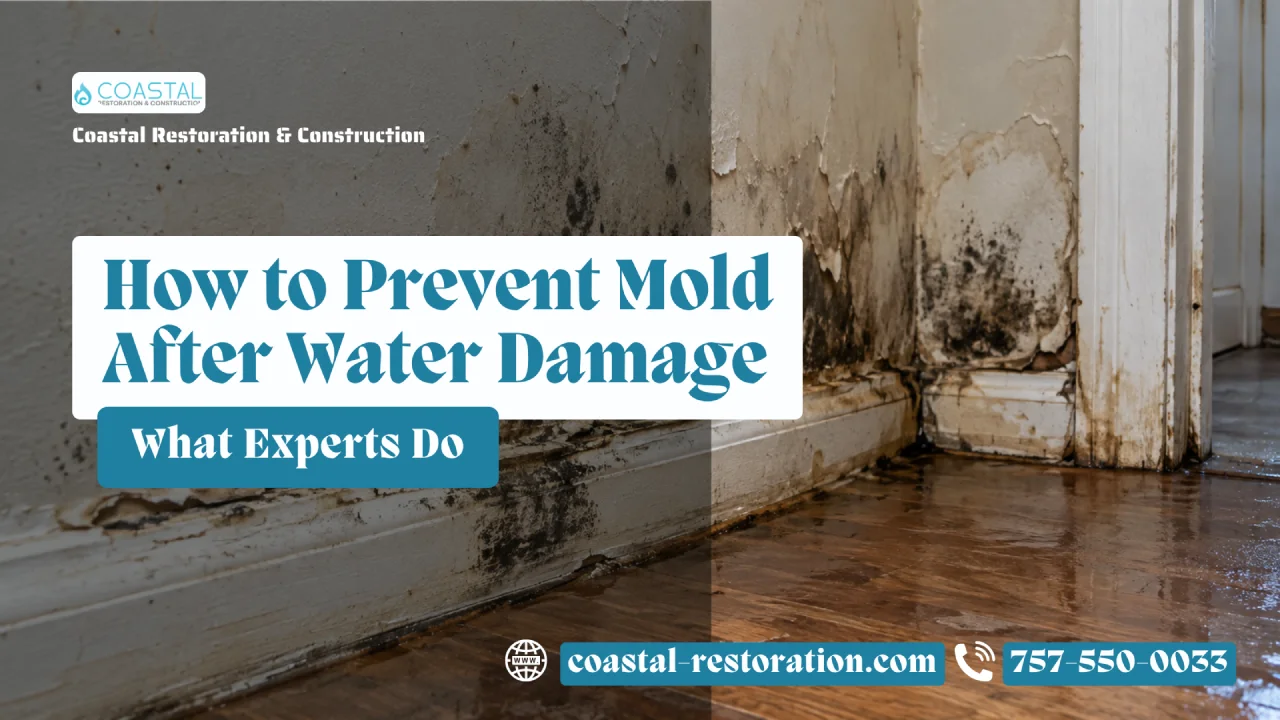
Water damage is one headache. Mold is the one that shows up a few days later. A room sits wet for a day or two, the spores already drifting around your house find a damp surface to settle on, and before the week is out they’re spreading behind baseboards and up inside walls where nobody can see them.
Mold has one weakness you can use: it can’t keep going without steady moisture. Dry the place out in time and mold from water damage never gets its chance. Leave it too long, and it does. That’s the whole thing: how fast you move and how far you take the drying. What follows is how to prevent mold after water damage, from the scramble of the first few hours to the quieter weeks afterward, when a patch of damp you missed can still come back on you.
Why Mold Grows After Water Damage
Mold doesn’t ask for much. Give it moisture, a little warmth, and something organic to live on, and it grows, and a soaked house checks all three boxes at the same time. Warmth is a given indoors. The feeding is easy too, because so much of a house qualifies as food, from the framing and drywall right down to the carpet padding, the insulation, and the film of dust across your shelves. The moisture part is whatever water you’re now standing in.

What trips people up is the clock. The EPA puts mold’s head start at 24 to 48 hours from the moment a surface gets wet. Two days. That’s the whole race. So mold after water damage isn’t some far-off maybe; it’s a problem for this week, and mold growth after flooding has a nasty habit of beating homeowners to it.
The First 24 to 48 Hours Decide Everything
Speed is the whole game here. Dry the place out before that 48-hour mark and the spores never find the calm, damp conditions they need to settle in. Wait a day or two longer than you should, and odds are you’ll be cutting mold out of a wall cavity a week later instead.
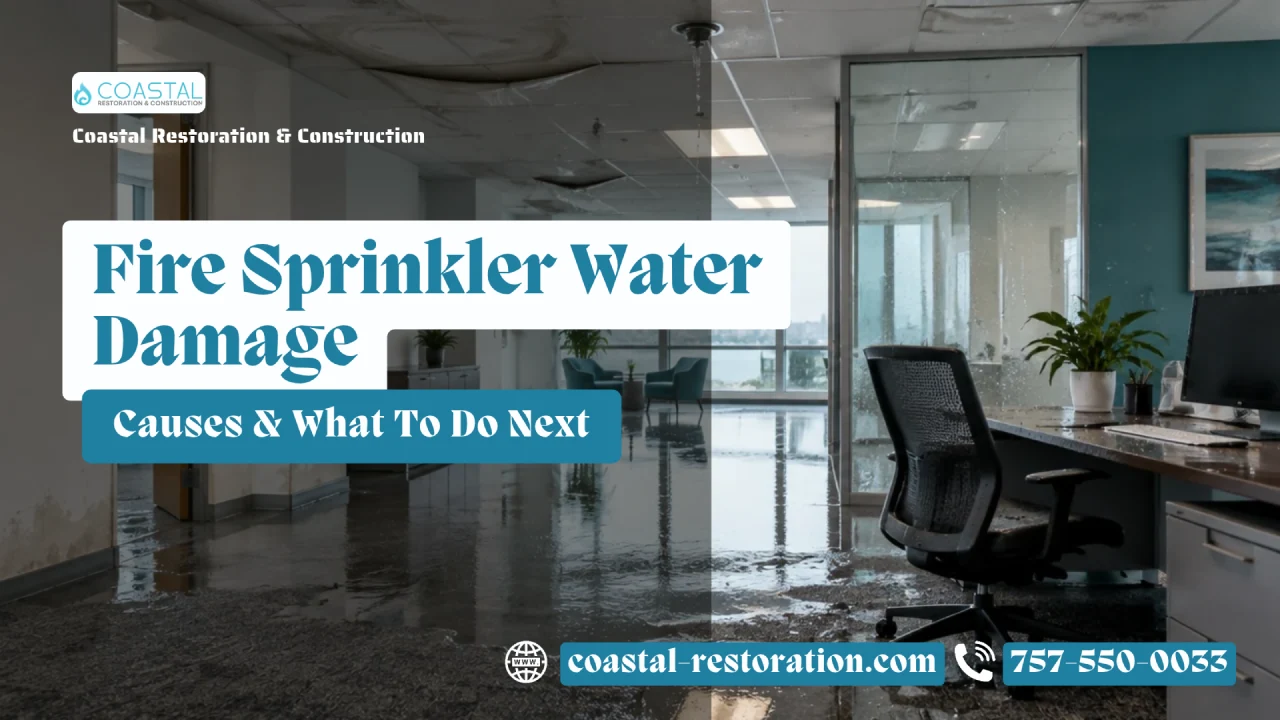
When the water’s coming from a burst pipe or a split washing-machine hose, the first step in how to stop mold after water leak trouble isn’t the mop at all. It’s the shut-off valve. Find it, turn the supply off, and only then start drying, since there’s no sense mopping a floor that’s still filling up. From there, catching mold after a water leak issue is mostly about getting that wet patch dry inside two days.
How to Prevent Mold After Water Damage, Step by Step
With the source shut off, drying runs in a rough order. Follow it start to finish and you’ve got the bones of how to prevent mold growth after water damage. The earlier you begin, the more of it you head off.
Stop the Water and Protect Yourself
Water that has reached outlets, switches, or wiring turns the whole area into a shock risk, so the power to it should go off before you step in. Those two are a dangerous pairing. It’s also worth pulling on gloves and a mask, especially when the water looks murky or carries a smell.

Remove the Standing Water
The standing water needs to go, and the sooner the better. A household wet/dry vacuum will manage a minor spill, but a serious flood really calls for pumps and proper water extraction, because every hour the water lingers, it soaks a little further into materials that turn stubbornly hard to dry once they’re saturated all the way through.
Dry Everything, and Mean It
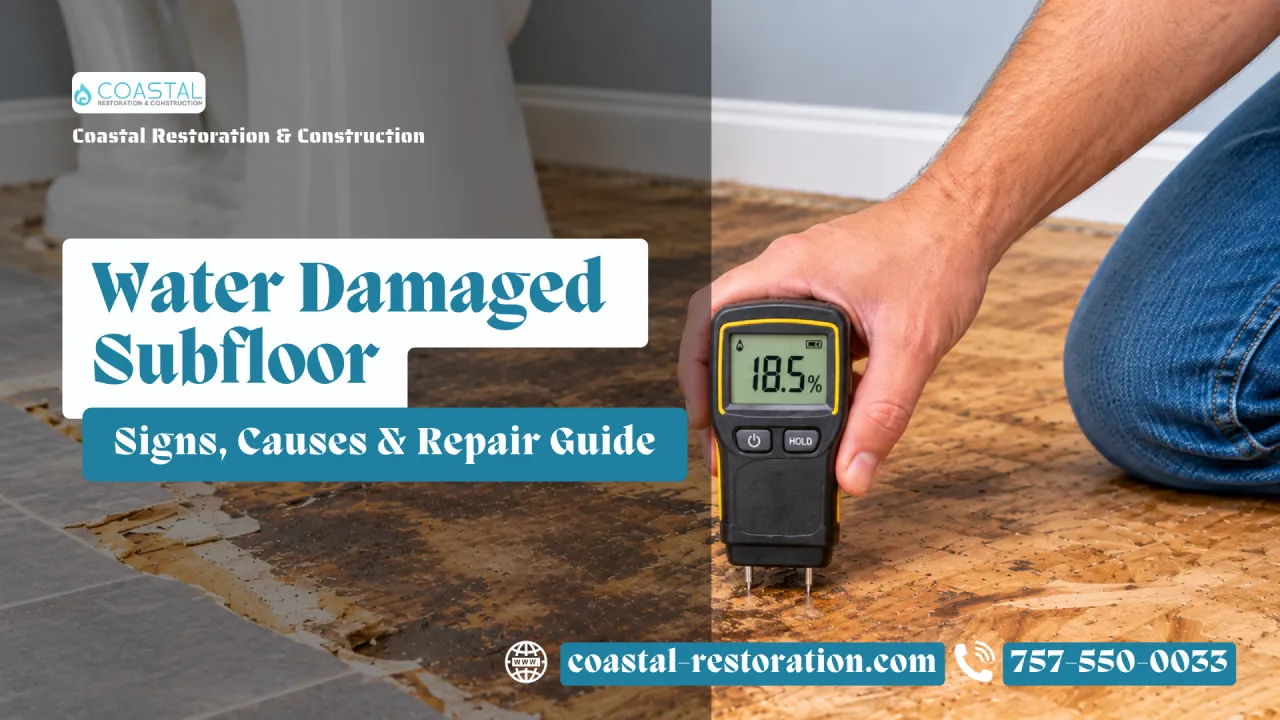
Drying is the part that settles the whole thing. If the outdoor air is dry, you can open the windows; fans help by keeping air moving over the wet surfaces, and a dehumidifier goes after the moisture still sitting in the air. The stubborn part is the water you can’t see, down inside a wall cavity or trapped under the floor, which is why a professional structural drying setup leans on industrial air movers and moisture meters rather than trusting the eye. What you’re after is a space that reads fully dry inside 48 hours.
Control the Humidity
Soggy materials aren’t your only enemy. The damp air hanging around them feeds mold just as well. Bathrooms are especially vulnerable to excess moisture, which can lead to mold in the shower. The CDC says to keep indoor humidity below 50%, while the EPA recommends a 30% to 50% range. A dehumidifier plus steady airflow helps lower humidity and prevent mold growth.
Toss What Can’t Be Saved
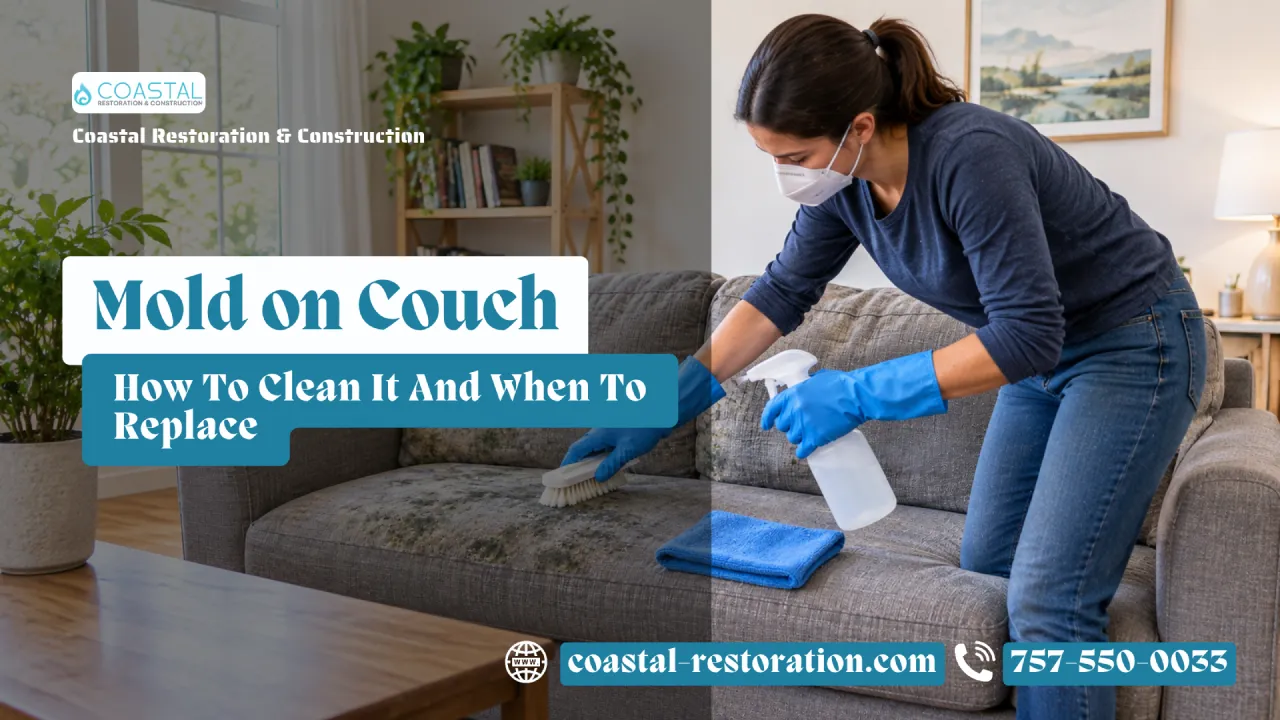
Some things never really dry. They just sit there wet and grow mold from the inside out. Soaked carpet padding, saturated drywall, sopping fiberglass insulation, water-logged ceiling tiles (most of that is landfill now). Upholstered furniture can also be difficult to salvage when mold spreads into its foam and padding. Learn more about mold on a couch and when cleaning or replacement is the better option. Painful, yes. But leave one moldy stretch of drywall in the wall, and it cancels out every other thing you did right.
Clean and Disinfect What Stays
Anything that survived wants a proper clean before it disappears back behind a wall, and that covers the framing studs along with any concrete, metal, or sealed wood. Detergent and water handle the first pass, then a mold-control product keeps anything from taking root in the dampness left behind. Clean water usually needs no more than this, while dirty water is another story that calls for a far stronger disinfectant.
Keep Watching for Weeks
Mold likes to surface weeks later, long after the water’s forgotten, tucked away in a wall cavity or under the floorboards where nothing shows at first. So it pays to keep half an eye on the spot for a while. A smell that won’t lift, a dark stain seeping through fresh paint, a bit of paint peeling where it used to sit flat (each one is telling you moisture stayed behind), and something found it.
Preventing Mold After a Flood vs. a Small Leak
Water isn’t all the same, and where it came from changes the whole job. A clean supply-line drip is nothing like flood water that pushed in off the yard. Knowing which one you’re dealing with tells you how hard your mold prevention after water damage has to work.
| Water type | Where it comes from | Mold risk and handling |
| Clean water | Supply lines, rain, melting ice | Lower risk if dried fast; usually DIY-manageable for small areas |
| Gray water | Appliances, sink drains, showers | Moderate risk; disinfect thoroughly, limit contact |
| Black water | Sewage, flood water, groundwater | High risk and a health hazard; professional cleanup strongly advised |
(This is general guidance, not a ruling on your particular situation. The moment the water is contaminated, or the wet area is large, treat professional help as the default and not the fallback.)
It’s why how to prevent mold after a flood is a far taller order than a slow drip beneath the sink. Flood water shows up dirty, pushes into everything in its path, and carries its own spores and bacteria with it.
That makes sound mold prevention after flood damage a matter of getting the water out fast and disinfecting hard, because the water is the hazard, and any mold after flooding cleanup has to start with clearing all of it.
A small, clean spill you get to early is the opposite case, where handling how to prevent mold after a leak on your own makes good sense. With a flood, moving fast still counts for a lot, but it’s professional cleanup that keeps both the house and the people in it safe.
When to Call a Professional
Some jobs are over your head from minute one. A big flood, contaminated water, water that’s been sitting for days, or mold you can already see or smell- all of that is a job for a certified crew.
Serious water and mold damage is not a weekend project, full stop. By then you’re into mold remediation after water damage, containment, HEPA filtration, tearing out affected materials, clearance testing (the full process), done by people trained for exactly this.

If you’re there, professional water damage restoration is the safe call, and it tends to cost less than chasing a mold problem that spread while you waited. For serious growth, professional mold remediation services can help remove the source and prevent it from returning.
FAQs About Mold Prevention After Water Damage
Have questions about preventing mold after water damage? These frequently asked questions cover how quickly mold can grow, effective drying methods, cleaning tips, and when to call a professional. Learn how to protect your home from mold growth and avoid costly repairs after a leak or flood.
How soon does mold grow after water damage?
Faster than most people expect. A wet surface can start growing mold somewhere inside that 24-to-48-hour window, which is the entire reason drying quickly outranks every other step. The sooner the area is properly dry, the less likely you are to see any growth at all.
What should you spray to prevent mold after water damage?
Cleaning first with detergent and water does most of the work, and a mold-control or inhibitor spray applied afterwards helps slow regrowth in any remaining dampness. On its own, though, a spray achieves very little if the material underneath is still wet, so the order is drying first and treatment second.
Can you prevent mold yourself, or do you need a professional?
A small spill of clean water that you caught early is usually something careful drying and disinfecting can handle at home. Once you’re dealing with flooding, contaminated water, or anything that has been left wet for several days, a crew with commercial-grade drying equipment becomes the safer option.
Does homeowners insurance cover mold from water damage?
Sometimes, though it depends a great deal on the cause and the exact wording of your policy. Plenty of policies will only cover mold when it follows a sudden, covered water event, and not when it grows out of a slow leak or maintenance that was put off. The safe move is to read your own policy closely and keep documentation of everything.
Staying Ahead of Mold After Water Damage
Reduce the whole thing, and you’re left with one rule: dry fast, dry all the way, and keep the damp down while you do. Reach the water early, part with whatever won’t dry, disinfect what you keep, and watch the area for a few weeks after. Do that much and most mold never starts.
Knowing how to prevent mold after water damage puts the odds firmly on your side, and when you weigh it up, preventing mold after water damage wins over cleaning it up later on time, money, and worry alike.
When the damage runs deep, the water’s dirty, or you’re honestly not sure you can dry the place fast enough on your own, it’s not the moment to gamble. Get in touch with Coastal Restoration & Construction for fast water extraction, thorough drying, and the kind of hands-on experience that keeps mold from ever settling into your home.