You wipe a gray film off the bathroom windowsill on Saturday. By the next weekend, it’s back. So, mildew or mold? Most people think of mildew as the harmless one and mold as the one to worry about. But knowing the difference can help you decide whether simple cleaning is enough or mold remediation is needed.
Not quite. The EPA calls mildew certain kinds of mold or fungus. The word mostly gets used for mold that grows flat on a surface.
So the mildew vs mold question isn’t about two different things. It’s really about the spot in front of you. How does it look? Has it gone deeper than the surface? And how long has it been there?
Is Mildew the Same as Mold?
Inside your house, pretty much. The difference between mildew and mold comes down to stage and depth. Early growth that’s flat and wipes right off usually gets called mildew. Thick, fuzzy growth, or growth that’s soaked into drywall, gets called mold.
Gardeners mean something else entirely. Their powdery mildew looks like flour dusted on leaves, per Penn State Extension. And downy mildew? That one’s a water mold, and it grows in fuzzy patches under the leaf instead of on top. None of that is happening on your shower grout. Indoors, treat mildew like mold. To better understand what mold is and how it grows, explore the different types of mold and the conditions that allow it to develop indoors.
What Does Mildew Look Like Compared to Mold?
Looking alone won’t settle it. When a pro needs a definite answer, a sample goes to a lab. Most of the time, though, you can make a decent guess. Color and texture help. So does checking whether it sits on the surface or has grown into it.
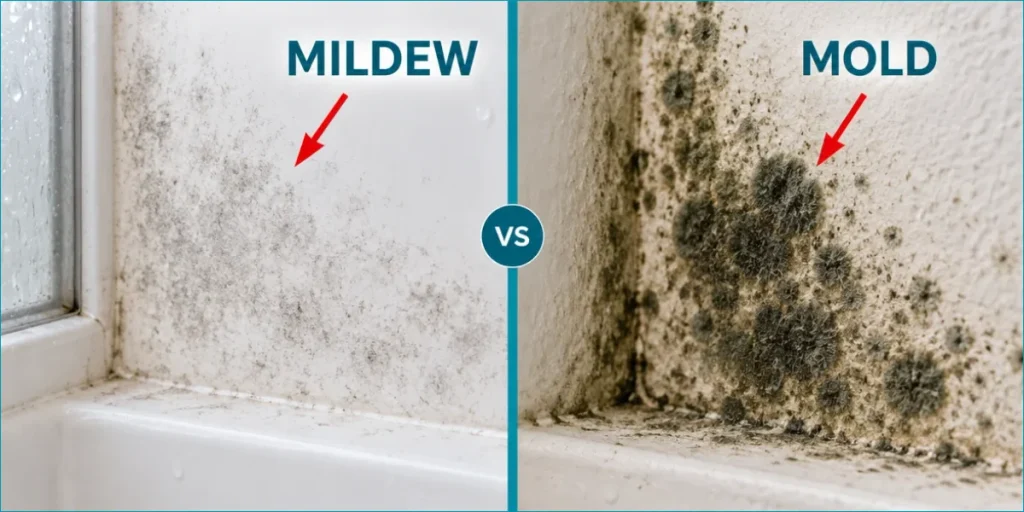
Mildew
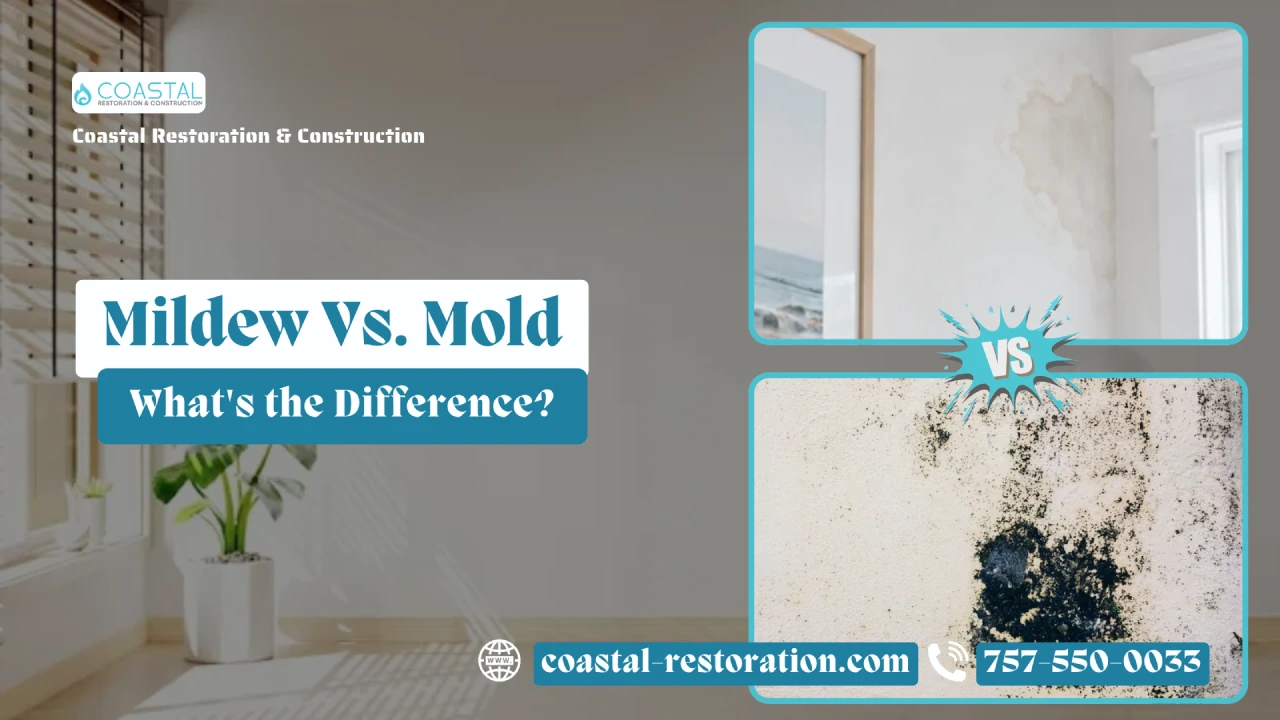
Mildew is mostly white or gray, sometimes a pale yellow. It’s flat, and it can look a little like dust. You’ll spot it on shower walls and windowsills, and on old fabric or boxes of paper in a damp basement. A wet rag usually gets it off without much effort.
Mold
Mold tends to be darker. Green, black, blue, and brown are all common. It shows up in spots or patches, fuzzy or slimy, kind of like what grows on bread that’s been sitting too long. Indoors, the CDC says the usual suspects are Cladosporium, Penicillium, and Aspergillus. On anything soft or porous, like drywall, wood, or a couch cushion, it won’t stay on top for long. It grows into the material.
How to Tell the Difference Between Mold and Mildew
Still not sure what you’re looking at? Run through a few quick checks. They’re no substitute for an inspection, but they’ll show you if this is a five-minute cleanup or something that needs a closer look. The table below sums up the usual differences:
| Trait | Mildew | Mold |
| Color | White, gray, pale yellow | Green, black, blue, brown |
| Texture | Flat, powdery | Fuzzy, slimy, or raised |
| Depth | Sits on the surface | Can grow into porous materials |
| Common spots | Grout, sills, fabric, damp paper | Drywall, wood, ceilings, inside walls |
| Cleanup | Usually wipes off with a cleaner | May need the material removed |
(This is only a visual guide, not a lab result. Growth on tile can look nothing like growth on drywall, so take it as a starting point.)
Where Mold and Mildew Show Up Around the House
Where you find it tells you a lot. A gray patch on the tub is usually just from shower steam. That same patch on a bedroom ceiling could mean there’s a leak somewhere above it. These three spots come up more than any others.
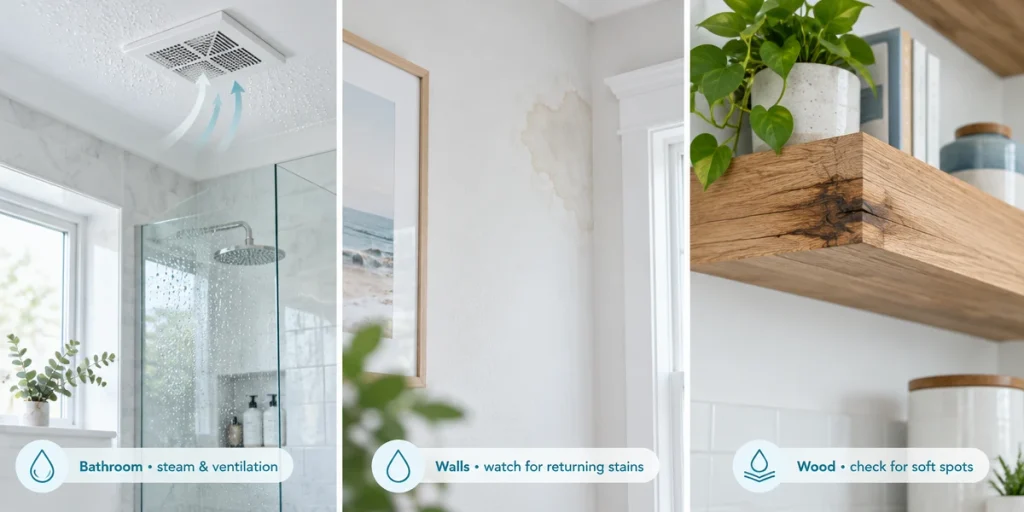
Bathroom Mold vs. Mildew
The bathroom is where most of these questions start, since it gets steamy every day. Flat gray spots on grout or caulk are usually mildew from all that moisture. Black spots that keep coming back in the same corner are another story. So is a stain spreading across the ceiling. Both usually mean moisture is getting in deeper. If you’re dealing with persistent growth around shower surfaces, learn more about mold in showers and how to address it.
Your exhaust fan plays a big part here. The U.S. Department of Energy’s Building America Solution Center says a bathroom fan should move at least 50 cubic feet of air per minute and vent outside, not into the attic. Hold a square of toilet paper up to the grille while it runs. If it doesn’t stick, the fan probably isn’t doing its job.
Mold vs. Mildew on Walls
Painted walls can pick up a light film of mildew too, especially in humid rooms or on outside walls that get cold in winter. That film usually cleans up fine. Watch out, though, for growth that bleeds back through the paint, for drywall that’s gone soft or started to bubble, and for a musty smell that hangs on after you clean. Don’t paint over it, either. The EPA says paint applied over mold is likely to peel.
Mildew vs. Mold on Wood
On a dresser, the trim, or a closet shelf, a white or gray layer is often just mildew. It usually wipes off. Before you call it done, though, press your thumbnail into the wood. Does it feel soft? Has a dark stain soaked into the grain? Then there’s probably mold or rot underneath.
Can Mildew Turn Into Mold?
Strictly speaking, mildew already is mold. What you probably want to know is whether that light film can turn into a bigger problem. It can.
The EPA says to dry anything wet within 24 to 48 hours. Leave it damp longer, and the growth spreads into anything porous. That’s how a quick wipe turns into crumbling caulk you have to cut out.
The fix is the same at any stage. Clean it off, then fix the moisture.
Are Mold and Mildew Harmful to Your Health?
They can be. Some people get a stuffy nose, a sore throat, a cough or wheezing, burning eyes, or a skin rash, according to the CDC. Others don’t react at all. But for someone with asthma or a mold allergy, the reaction can be severe.
The CDC doesn’t give mildew a pass, either. You don’t need to know what kind of mold it is, the CDC says. Whatever it is, it has to go. And whatever moisture let it grow needs fixing too.
Cleaning Up Mold and Mildew Safely
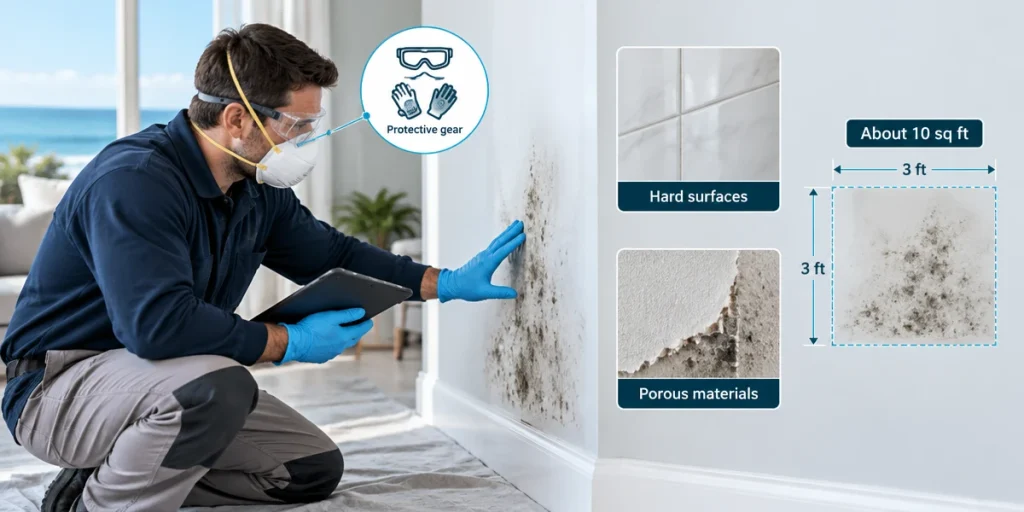
You clean mildew and mold the same way, since they’re the same kind of organism. What changes is how much material has to go. Before you grab a sponge, here’s what the EPA tells homeowners:
- Fix the leak or moisture problem first, or the growth just comes back
- Put on long gloves, goggles, and an N-95 respirator
- Scrub hard surfaces with detergent and water, and let them dry all the way
- Bag up moldy ceiling tiles, carpet, and other porous stuff, since they usually can’t be saved
- Call a pro if the moldy area is bigger than about 10 square feet
That 10-square-foot number comes from the EPA’s mold cleanup guidance. It works out to about a 3-by-3-foot patch. Anything bigger, or anything growing inside a wall, is better left to professional mold removal. Pros seal off the work area so spores don’t spread through the house. If you’re unsure what professional treatment involves, learn more about what mold remediation involves and how specialists handle mold safely.
Mildew vs. Mold: Why Moisture Matters More Than the Name
Call it what you like. In the end, mildew vs. mold is a water problem. Both the flat gray film and the fuzzy black patch need moisture, and both come back if it’s still there.
The CDC suggests keeping indoor humidity at or below 50 percent, all day long. An air conditioner or a dehumidifier helps a lot with that. To check, pick up a humidity meter. The EPA says they run about $10 to $50 at most hardware stores. After that, it’s mostly small stuff. Run the bath fan when you shower, wipe condensation off cold windows, and fix leaks as soon as you find them. Simple mold prevention habits like these keep most mildew from ever becoming a bigger job.
FAQs About Mildew vs. Mold
A lot of mold vs. mildew questions begin in the bathroom and end with bleach. Here are short answers to four that come up all the time. For growth that won’t stay gone, though, an inspection will tell you more than any article can.
Is mildew less dangerous than mold?
Not really. It’s still mold, and the CDC says any mold growing indoors should come out, whatever kind it is. Mildew is easier to clean since it stays on the surface, but it can bother people with allergies or asthma just the same.
Does vinegar kill mold and mildew?
Plenty of people use straight white vinegar on tile and grout, and plenty reach for bleach instead. The EPA sticks with detergent and water for hard surfaces, and it doesn’t recommend bleach for routine cleanup. One detail people miss: dead mold can still cause allergic reactions, according to the EPA, so it has to be removed, not just killed. And once growth has soaked into drywall or wood, no spray will fix it.
Why does mildew keep coming back?
The moisture is still there. Steam that lingers after showers, a slow drip behind the vanity, or humidity over 50 percent will keep it growing, no matter how often you scrub.
When should you call a professional for mold or mildew?
Call when it covers more than about 10 square feet, comes back after cleaning, or shows up after water damage. A musty smell from inside a wall or ceiling is another good reason. And if sewage or other dirty water was involved, the EPA says to bring in a professional.
Get Recurring Mold Checked Before It Spreads
Still seeing it come back, or spreading over a big area? That usually means there’s a water source you can’t see. Coastal Restoration & Construction can track it down, provide professional mold remediation, and remove the mold safely.