
Ever turn on the AC for the first hot stretch of summer and catch a little puff of dust coming off the vent? Or notice the air smells a bit stale when the system kicks on, in a way it didn’t last year?
That’s usually the moment people start thinking about their ducts. Here’s the thing about the air duct cleaning process: it’s a lot more than running a vacuum over the vent cover.
A real cleaning gets the dust, debris, and gunk out of the whole heating and cooling system, not just the parts you can reach.
So how does air duct cleaning work, exactly? Let’s go through it step by step and sort out whether your home even needs it in the first place.
What Is Air Duct Cleaning?
Air duct cleaning clears dust, dander, pollen, debris, and sometimes mold out of the ductwork and the rest of your forced-air HVAC system. People tend to assume it’s just the ducts. It isn’t. A proper job, the kind the EPA lays out, goes after the entire HVAC system, not only the parts in plain sight. That includes:
- The supply and return air ducts
- Registers, grilles, and diffusers
- The heat exchanger and the heating and cooling coils
- The condensate drain pan
- The fan motor, fan housing, and air handler housing
Put simply, proper ductwork cleaning reaches every surface that moving air touches on its way through your home. What it does for you is clear away the buildup that restricts airflow and can circulate back into the rooms you live in. Skip half those parts, and you’ve only done half the job.
Should You Have Your Air Ducts Cleaned?
This is where honesty matters more than a sales pitch. The EPA does not recommend cleaning your ducts on a fixed schedule, and no study has proven that routine cleaning prevents illness. Much of the dust in ducts clings to the surfaces and never reaches your living space.

So should I clean my air ducts? The agency points to three clear situations where it’s worth doing:
- There is substantial visible mold growth inside the hard-surface ducts or on other system components.
- The ducts are infested with vermin, rodents, or insects.
- Ducts are clogged with so much dust and debris that particles are actually puffing out of the registers.
If none of those apply, a cleaning probably won’t do much beyond adding to your bill. When one of them does apply, though, a thorough professional cleaning is the fix, and the method used decides whether it works.
The Air Duct Cleaning Process, Step by Step
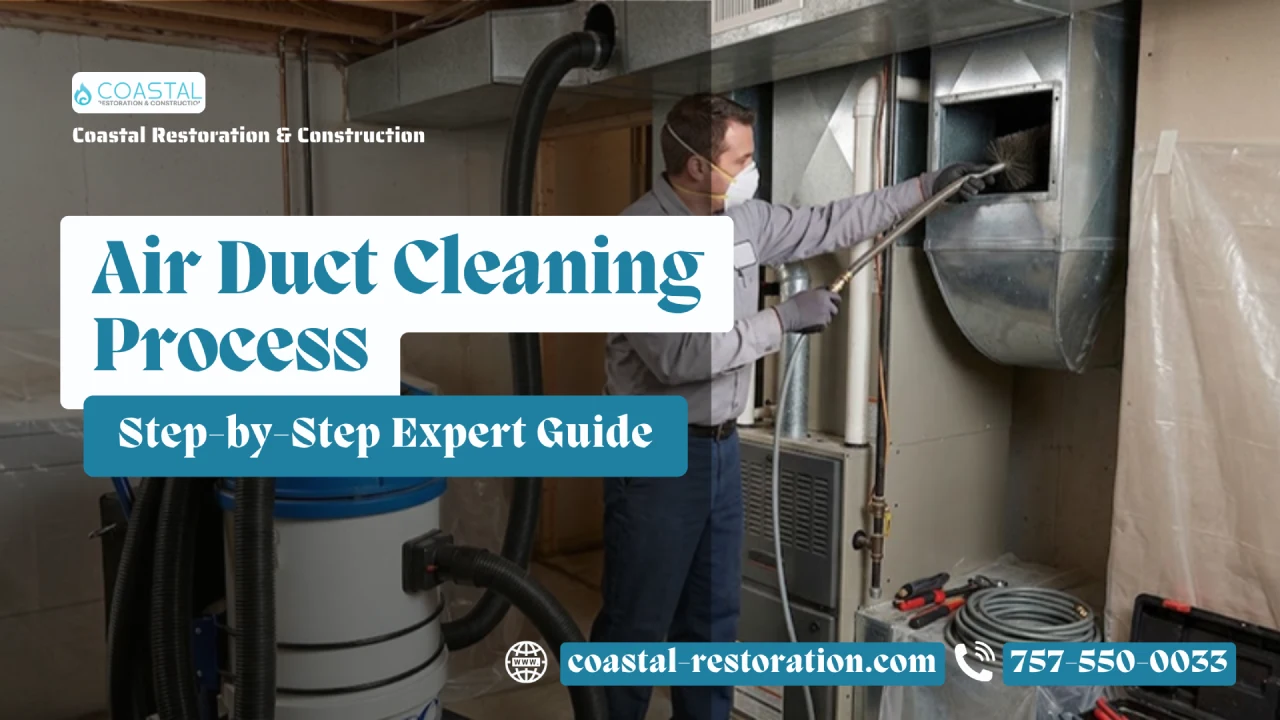
When you hire a qualified crew, the air duct cleaning process follows a consistent order built to trap every particle it loosens. The exact tools vary by company and system, but any legitimate job that follows the duct cleaning process step by step moves through the same core stages.
Inspection
The technician surveys your whole system, often running a small camera into the ducts to document dust, blockages, mold, or damage before touching anything. This is where the scope of work gets set.
Preparation
Floors and furniture get covered, access points are opened, and the registers are sealed so nothing blows back into your rooms. The HVAC system is switched off for the duration.
Setting negative pressure
A high-powered vacuum, either truck-mounted or a portable HEPA unit, connects to the main duct line near the air handler. It puts the whole system under suction, so any loosened debris has one way out: into the sealed collection tank.
Agitation
With the vacuum running, the crew works through the ducts using brushes, rotary tools, and compressed-air whips that knock caked-on dust off the interior walls. Loosening and extraction happen at the same moment, which is the entire point.
Cleaning the components
Beyond the ducts, technicians clean the registers, grilles, blower motor, and the coils and drain pan where they can reach them. These are the spots where mold and grime tend to settle.
Verification and closing up
A final camera pass or visual check confirms the surfaces are clean. Access points are resealed, a fresh filter goes in, and the workspace is tidied.
Air Duct Cleaning Methods: How the Pros Get It Done
Not every company cleans the same way, and the method matters far more than the marketing. The gold standard among air duct cleaning methods is source removal, which the NADCA ACR Standard treats as the only fully accepted approach. How professionals clean air ducts also shifts a little depending on what is stuck inside.
Here is how the main methods compare:
| Method | How it works | Best for |
|---|---|---|
| Source removal (dry) | Brushes, air whips, and compressed air dislodge debris while a negative-pressure vacuum extracts it at the same time | Standard dust, dander, and loose buildup |
| Wet cleaning | Coil cleaners, washing, or steam lift grime that has stuck to surfaces, usually after a dry pass | Greasy or caked-on deposits |
| Sanitizing | An EPA-registered antimicrobial product is applied to treat microbial growth | Confirmed mold or bacterial contamination only |
(The method should match the actual contamination, not a flat package price. Ask any contractor to justify wet cleaning or sanitizing with what the inspection actually found.)
One caution is worth repeating. A low-powered vacuum or a careless technician can push more dust into your home than it removes. That is exactly why continuous negative pressure, and not just a brush and a shop vac, separates a real cleaning from a mess.
Can You Clean Your Air Ducts Yourself?
You can absolutely vacuum a dusty return register or wipe down a grille yourself, and you should, between professional visits. A full air duct cleaning is another matter entirely. Reaching deep into the system and pulling debris out safely takes equipment most homeowners simply don’t own.

A household vacuum can’t generate the continuous negative pressure that keeps loosened dust from scattering through your home, and without a camera you can’t confirm what is actually in there or whether you missed mold hiding around a bend. DIY attempts also risk denting flexible ducts or knocking insulation loose.
So keep the surface dusting on your own list, but leave anything past the register to a trained crew with source-removal gear. It’s the safer call for your system and your air.
Frequently Asked Questions
How often should you clean your air ducts?
There’s no set schedule for how often to clean your air ducts. The EPA says to clean only when you’ve got a real problem, like visible mold, pests, or heavy debris blowing into the house. Plenty of homes go years between cleanings, and some never really need one. It comes down to condition, not the calendar.
What does air duct cleaning include?
A full service hits the supply and return ducts along with the registers, grilles, diffusers, coils, drain pan, blower motor, and air handler housing. If a company’s only cleaning the vents you can see, they’re leaving most of the system, the part you’re actually paying for, untouched.
How long does the air duct cleaning process take?
For most single-family homes, figure two to four hours. It depends on how big the system is, how many vents you’ve got, and how much has piled up in there. Bigger homes, or ones with a lot of buildup, can take longer.
Final Thought
Duct cleaning earns its keep when there’s a real reason for it, and mostly just costs you money when there isn’t. Get a proper inspection first. Ask for source removal under negative pressure. And check that the crew is doing the whole system, not just the handful of vents you can see. Noticed mold, pests, or dust blowing out of your registers?
Our team can take a look and handle the full air duct cleaning process from start to finish, right across our service area, with the equipment and paperwork to back up the work.


