Say you are in the middle of a remodel in a house from the 1960s. You lift a piece of old vinyl flooring and a neighbor steps over the fence and says the word no one wants to hear: asbestos. That worry is reasonable. Plenty of American homes built before the 1980s still have asbestos sitting in their flooring, pipe wrap, and textured ceilings, and it’s the disturbing of that material that turns it into a hazard. Abatement is the answer to that problem.
So what is asbestos abatement, exactly? Stripped down, it’s the careful work of sealing off or taking out asbestos so the fibers never reach the air you breathe. Here’s how the abatement of asbestos really works, and how to tell when your home needs it.
What Is Asbestos Abatement?
Asbestos abatement is the catch-all term for any professional method that keeps asbestos-containing materials, known as ACM, from shedding fibers into the air.
It isn’t one fixed procedure. A licensed crew looks at where the material sits and what shape it’s in, then picks the approach that handles the risk while disturbing as little as possible. Four methods make up the bulk of the work:
- Removal. Physically taking the asbestos material out of the building. It’s the most involved option, and the right call when the material is damaged or friable, meaning it crumbles under light pressure.
- Encapsulation. Coating the material with a sealant that locks the fibers in place. This works when the material is still solid and in good condition.
- Enclosure. Building an airtight barrier around the material. It stays put, but it’s permanently sealed off from your living space.
- Repair. Patching a small spot of damage so an otherwise stable material stays intact.
All four aim at the same thing: no loose fibers, nothing to breathe in. A material only counts as ACM once it holds more than one percent asbestos, and the more friable it is, the sooner it needs attention.
Why Asbestos Abatement Matters
Builders loved asbestos because it shrugged off heat, fire, and corrosion, which is how it wound up in floor tiles, insulation, siding, and popcorn ceilings for most of the last century. If you’re working with older flooring, learning how to tell if floor tiles contain asbestos is a smart first step. Sitting there undisturbed, it usually poses little danger. The problem starts the second someone cuts, sands, drills, or snaps that material during a renovation.

Once those microscopic fibers are airborne, you breathe them in, and they settle deep in lung tissue. Where they can set off serious disease years down the road: mesothelioma, lung cancer, asbestosis.
The cruel part is the lag. Symptoms often don’t surface until roughly two decades after exposure, so by the time anything feels wrong, the damage is long done.
That delay is the whole reason abatement gets treated so seriously. You don’t necessarily need it the day you discover asbestos, but pros usually flag these situations:
- The material is damaged, deteriorating, or friable.
- A planned renovation or demolition will disturb it.
- Lab testing confirms ACM in an area you intend to alter.
- You’re selling and need to disclose or resolve a known hazard.
Asbestos Abatement vs. Removal: What’s the Difference?
Plenty of homeowners treat these two words as interchangeable. They aren’t. Removal is a type of abatement, not a stand-in for the whole thing. Asbestos abatement is the full category of fiber-control methods, and removal is just the one that physically hauls the material out. Put another way, to abate asbestos doesn’t always mean removing it.
That difference hits your wallet and your calendar. Asbestos that’s in good shape and tucked out of the way can be sealed or enclosed for a fraction of the mess and cost of a full tear-out. Before deciding which option makes sense for your home, it’s worth understanding the cost of asbestos abatement and how factors like the material’s condition, location, and removal method can affect the total expense.
Removal makes sense when the material is damaged, friable, or sitting right where your project has to happen. Here’s the quick side-by-side:
| Criteria | Asbestos Abatement | Asbestos Removal |
|---|---|---|
| Scope | Umbrella term for all fiber-control methods | One specific abatement method |
| Includes | Removal, encapsulation, enclosure, repair | Physically extracting the ACM |
| Best when | Any confirmed ACM that poses a risk | Material is damaged, friable, or in the way |
| Result | Fibers controlled by whatever method fits | Material and its risk gone for good |
(These are general distinctions, not a substitute for a certified inspector’s judgment. The right method for your home depends on the material, its condition, and your local rules.)
There’s a third word you’ll run into: remediation. It’s broader again, covering the entire arc from that first inspection through cleanup and prevention, with abatement as the physical step tucked inside it.
The Asbestos Abatement Process, Step by Step
A professional asbestos abatement process runs on one rule: keep every fiber contained, start to finish. The specifics shift with the size of the job and the type of material, but a well-run project hits the same core stages in the same order.
Inspection and testing
A certified inspector pulls samples from the suspect materials and ships them to an accredited lab. Nothing else happens until the results confirm asbestos and pin down where it is.
Planning and notification
The contractor draws up a site-specific plan and, where the law demands it, notifies the right state agency before anyone lifts a tool.
Containment
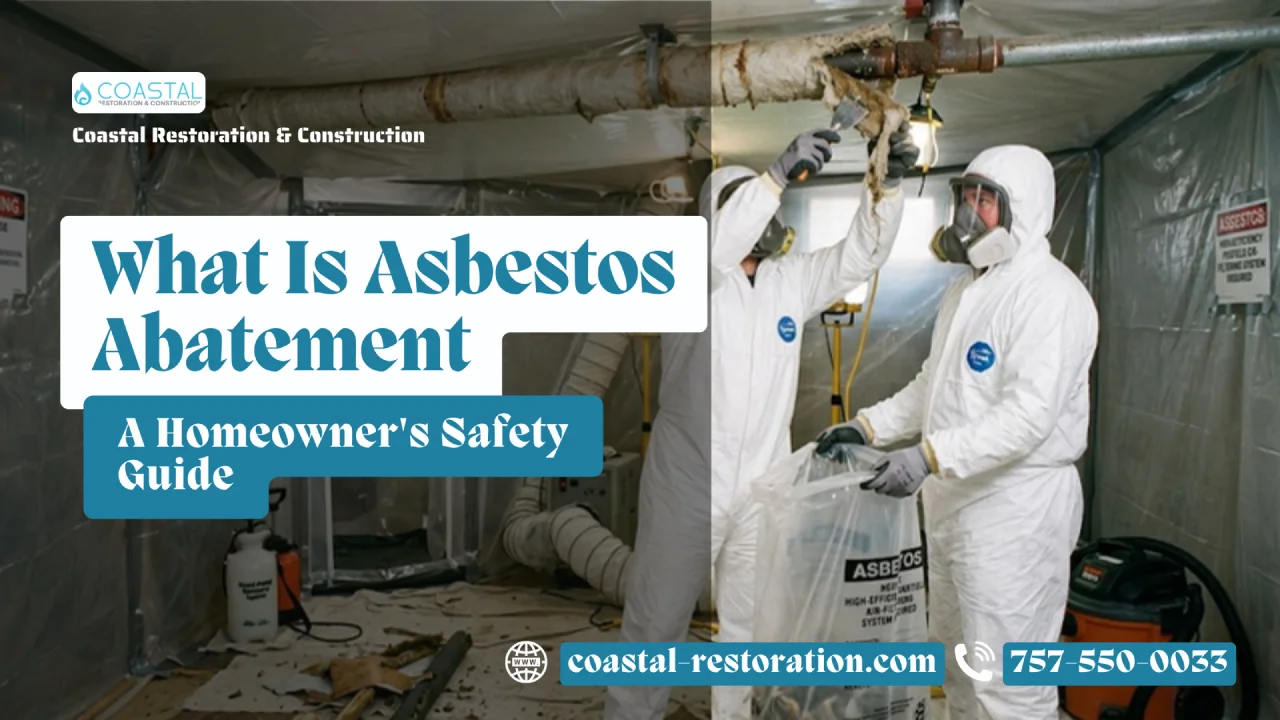
The work zone gets sealed behind heavy six-mil plastic and put under negative air pressure with HEPA-filtered machines, so air is pulled in and never pushed out. A decontamination chamber controls every entry and exit.
Wet removal or encapsulation
Crews soak the material with amended water to hold the dust down, then remove or seal it with hand tools instead of anything that grinds or tears.
Cleaning
Every surface inside the containment is HEPA-vacuumed and wiped down wet to catch the stray fibers.
Clearance testing
An independent inspector runs a final round of air sampling. The containment stays up until the fiber count drops inside the cleared limit.
Disposal
The waste goes into double, leak-tight six-mil bags, gets labeled, and travels to an approved facility under a tracked manifest.
EPA and OSHA Rules You Should Know
Asbestos work answers to two federal agencies, and usually a layer of state rules stacked on top. Knowing the basics lets you spot a compliant contractor before you sign anything.
On the environmental side, the EPA runs the show through the Clean Air Act’s NESHAP rule, which spells out how asbestos gets handled during renovation and demolition and where the waste can go.
One quirk trips people up: single-family homes and buildings with four or fewer units sit outside the federal notification requirement. Don’t read too much into that, though, because plenty of states run tougher programs that pull residential work straight back in.
Your local rules get the last word. The federal picture is laid out in the EPA’s own rundown of asbestos laws and regulations and its guidance for building owners.
OSHA covers the other half of the equation, the workers. Its construction asbestos standard sets exposure limits, spells out respirator and training rules, and lays down the decontamination steps you’ll see on any real job site.
A contractor worth hiring meets EPA disposal rules, OSHA worker-protection standards, and state licensing all at once, and hands you the paperwork without being chased for it.
Can You Remove Asbestos Yourself?
Saving money on a small job sounds good until you look at what’s involved. Asbestos abatement work isn’t a weekend DIY project. Disturbing friable asbestos without real containment can scatter fibers through your whole house, and in regulated situations, doing it yourself is flat-out illegal.

Even the tiniest professional jobs lean on engineered controls: a sealed glovebag for a short stretch of pipe insulation, a full negative-pressure enclosure for anything bigger. Most homeowners don’t own the gear, hold the training, or have the licensed disposal access to pull this off safely. The playbook doesn’t change. Suspect it, get it tested by a certified inspector, and let a licensed crew touch anything that has to be disturbed. And if the material is solid and out of the way? Often the smartest move is to leave it alone and keep an eye on it.
Frequently Asked Questions
What is an abatement of asbestos?
An abatement of asbestos is any controlled method a licensed pro uses to keep asbestos-containing materials from releasing fibers, whether that’s removal, encapsulation, enclosure, or a repair.
Is asbestos abatement the same as removal?
Not quite. Removal is one form of abatement, but what is an asbestos abatement really points to a wider menu. If the material is stable, sealing or enclosing it can control the risk just as well as tearing it out, and with a lot less upheaval at home.
Do I need to move out during asbestos abatement?
For small, contained work, you can stay, since the sealed enclosure walls off the area. For bigger jobs, or anything in the rooms you actually live in, the contractor will normally ask everyone to clear out until clearance testing says the air is safe again.
How much does lead abatement cost?
Lead abatement costs vary based on the size of the affected area, the type of lead hazard, and the abatement method required. Smaller projects often cost less, while larger projects with extensive lead hazards cost more.
Final Thought
Asbestos came by its reputation fairly, but a confirmed problem is a solvable one once the right people step in. Every abatement of asbestos chases the same outcome: get the fibers under control so the home is safe to live and work in again. If you think there’s asbestos in an older property, or a renovation is about to disturb something you can’t identify, get it tested first and then call in a licensed team. Our asbestos abatement services crew works with homeowners across our service area, handling the inspection, the plan, and the code-compliant work from the first sample all the way to the final clearance test.