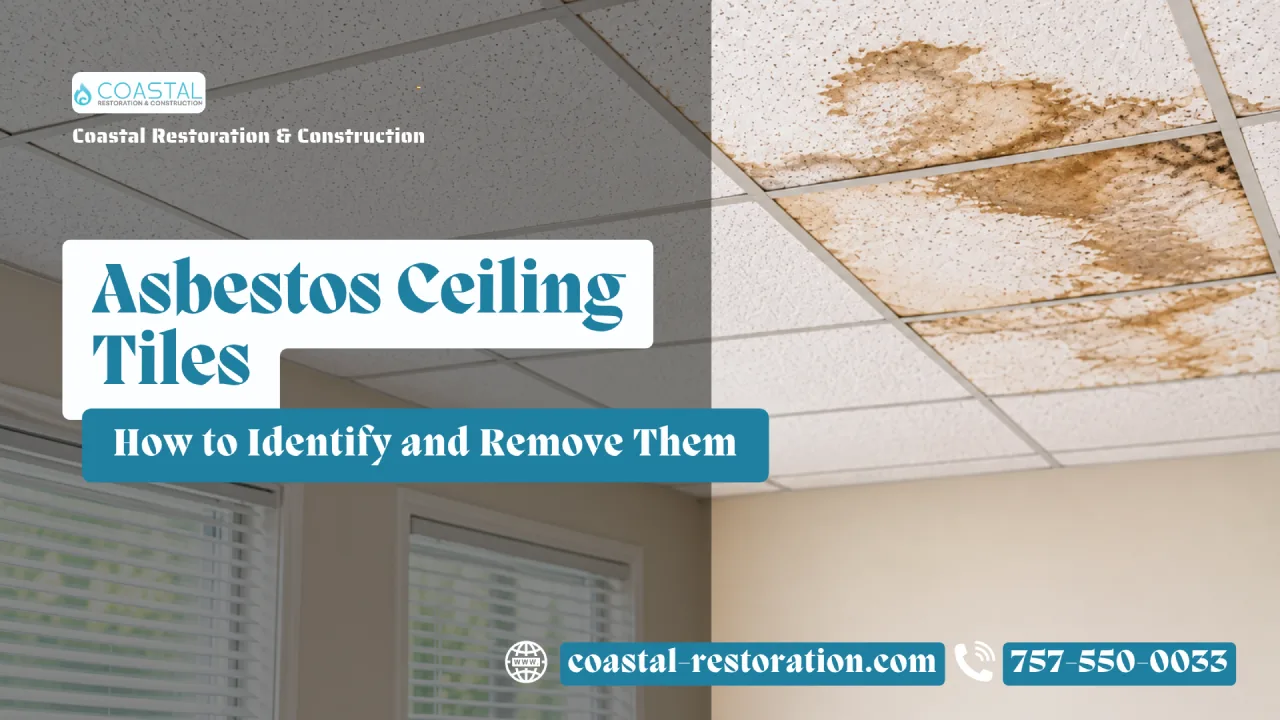
If you live in an older property, chances are you’ve looked up at the popcorn ceiling or rows of stained tiles and wondered what they’re made from. This is usually the case when you’re looking to redo them, which will involve scraping, sanding, or pulling them down. This is a good time to check, as while asbestos ceiling tiles and textured ceilings aren’t usually an issue when left undisturbed, they can cause issues when disturbed.
This guide tells you which ceilings are most likely to contain asbestos abatement, what older tiles look like, how to test for asbestos, and your options if you find that it does contain asbestos.
Do Popcorn Ceilings Have Asbestos?
Some do, and some don’t. The EPA states that textured paints and fillers for walls and ceilings are a common place where asbestos was used. It also states that spray-applied asbestos surfacing material was gradually banned between 1973 and 1978.
To answer the question ‘does popcorn ceiling have asbestos’, it really depends on when the ceiling was installed. If you have a property built before the 1980s, it is much more likely that there is asbestos in popcorn ceilings like yours; however, even properties built after this could have older materials due to some being used after the bans were in place and some ceilings being updated. The same answer applies if you’re asking ‘is popcorn ceiling asbestos’ or ‘is asbestos in popcorn ceiling’ in your own home.
What Do Asbestos Ceiling Tiles Look Like?
One of the most common questions is ‘what does asbestos tile look like?’ or ‘what do asbestos tiles look like?’. Unfortunately, unless labeled, there isn’t a reliable way to tell by eye. The EPA states:
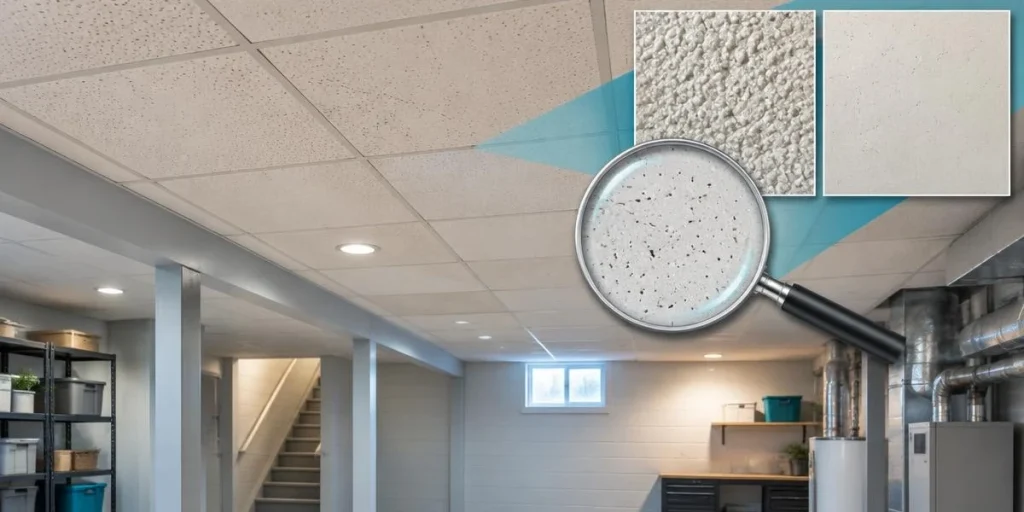
“Generally, you can’t tell whether a material contains asbestos simply by looking at it, unless it is labeled.”
However, when people are worried about old ceiling tiles asbestos risks, they will usually be looking at a few types. Older properties may have 12-by-12-inch tiles stuck or stapled to the ceiling. These are usually white or off-white and have little holes or cracks in the surface. In basements and office spaces, asbestos drop ceiling tiles were sometimes used in the grid systems. Popcorn ceilings have a bumpy, cottage cheese-like texture and were sprayed onto the ceiling.
You can find plenty of asbestos ceiling tile pictures online, but they cannot confirm whether your ceiling contains asbestos. Asbestos and non-asbestos tiles can look identical. Similarly, knowing how to identify asbestos floor tiles can help you understand the risks associated with other older building materials.
How to Check if Your Popcorn Ceiling Has Asbestos
When it comes to how to identify asbestos, the only reliable way is to send samples away to be analyzed. This applies to popcorn textures and any suspected ceiling tile with asbestos. The EPA recommends that these samples be taken by a trained and accredited asbestos professional. It also advises against doing it yourself, as incorrect sampling can be more dangerous.
In Virginia, asbestos inspections for regulated projects must be carried out by a licensed state inspector. For a private property, it’s better to go with a licensed inspector. They’ll take small samples with the correct safety measures, seal the area, and send them off to the lab.
Many people search for how to tell if popcorn ceiling has asbestos or how to test popcorn ceiling for asbestos and end up looking at DIY kits. However, you would still need to scrape some off, which the EPA advises against.
Is Asbestos on the Ceiling Dangerous?
As long as your ceiling is in good condition and no one is touching it, asbestos on ceiling surfaces shouldn’t be an issue. The EPA advises:
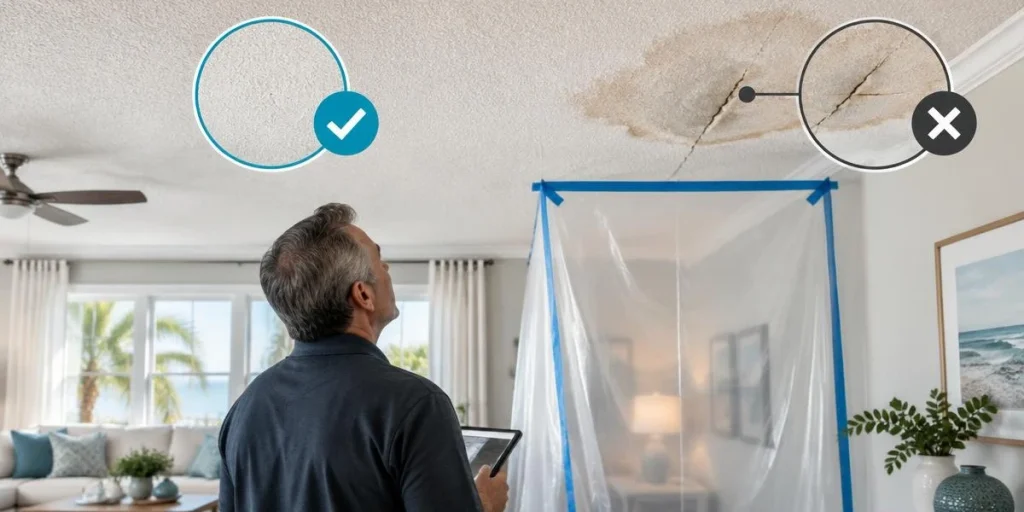
“Material that is in good condition and will not be disturbed (by remodeling, for example) should be left alone.”
However, damage can change that. Water leaks, cracks, crumbling, sanding, scraping, and drilling can all cause the fibers to become airborne. According to the EPA, exposure to asbestos can cause lung cancer, mesothelioma, and asbestosis (a long-term lung disease). If your popcorn ceiling has been damaged, you should take the risk of asbestos from popcorn ceiling material seriously, especially if the texture is starting to flake.
If you have a damp spot or sagging area, you should try not to touch it and get it checked out.
Asbestos Popcorn Ceiling Removal
If your tests show that your ceiling does contain asbestos, there are a few options. If it’s in good condition, you can leave it. It can also be repaired, which usually involves encapsulation (sealing) or enclosure (covering). You can also have it fully removed.
Asbestos popcorn ceiling removal isn’t a weekend DIY project. The EPA states that it is a complicated process and should only be carried out by a trained and accredited professional. It advises against cutting, sanding, scraping, or drilling into asbestos materials. A proper job includes sealing the room, keeping the material moist to reduce dust, using HEPA filtration, disposing of waste properly, and air testing before reopening the area. Learn more about the professional asbestos abatement process and what to expect during removal.
We offer asbestos abatement services in the Hampton Roads area.
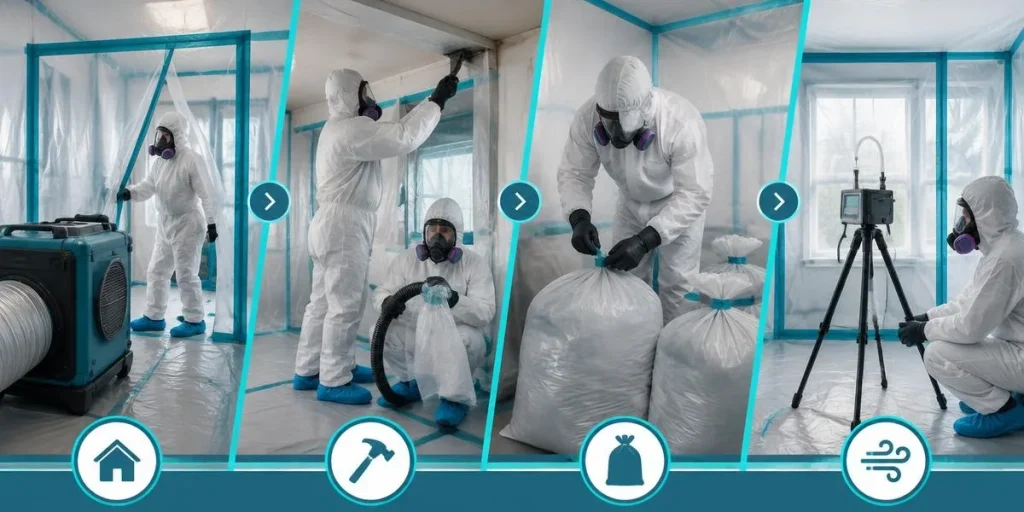
How to Safely Deal With Asbestos Ceiling Tiles
The main thing to remember with asbestos ceiling tiles and popcorn ceiling asbestos is not to disturb them until you know what they contain. If they’re in good condition and you’re not going to do anything, it’s usually okay to leave them. If you’re going to redo them, or they’re damaged, get them tested. Let a professional deal with anything that needs to come down.
FAQs
In case you could not read the full article, here are short answers to some of the most common questions that people ask about asbestos ceiling tiles:
Do All Popcorn Ceilings Have Asbestos?
No. Many new ones won’t contain asbestos. An older ceiling may or may not contain asbestos. Asbestos in popcorn ceiling texture is mainly a concern in older properties, so these would be the ones to test.
How Do I Know If My Popcorn Ceiling Has Asbestos?
You’ll need to have it tested in a lab. A licensed inspector can safely take a sample.
Is It Safe to Live in a House With Asbestos Ceiling Tiles?
In most cases, yes, as long as they’re in good condition and not being disturbed. It becomes a problem if they become damaged, if water leaks onto them, or during renovation.
Planning a Remodel? Have Your Ceiling Checked First
If you have an older popcorn ceiling or ceiling tiles to remove, it’s best to find out what they contain first. Coastal Restoration & Construction can help you decide what to do next and safely remove any asbestos.