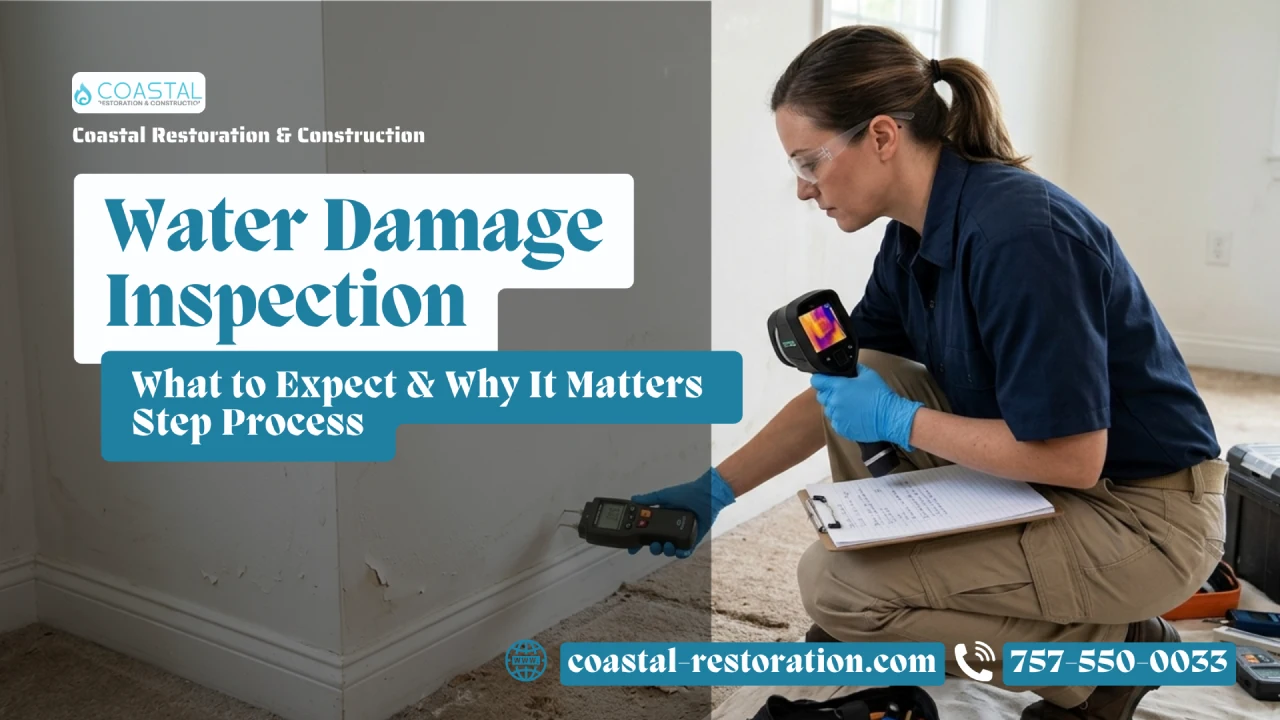
After water damage, most of the people don’t ask technical questions first. They ask practical ones. How bad is it? What needs repair? Is the damage limited to this room? Is the flooring ruined? Will insurance ask for proof? Before anyone talks about rebuilding, drying equipment, or repair estimates, those questions need answers.
That is where a water damage inspection becomes valuable.
A proper explanation of water damage is not about finding a leak and leaving. It’s about collecting information that helps people make decisions.
Contractors need it. Property owners need it. Insurance representatives need it. Without reliable information, every conversation becomes a guess.
A professional water damage inspection creates a clearer picture of the property before restoration plans start taking shape.
How Water Damage Assessment and Inspection Takes Place
Many inspections begin with assumptions. A homeowner points to damaged flooring and says that it is probably the worst area. A business owner focuses on a stained wall near an office entrance. Sometimes they are right. Sometimes the inspection shifts attention somewhere else entirely.
A water damage assessment and inspection start with understanding the situation.
When did it happen?
Where did the water come from?
How long did it remain inside the property?
Those answers help inspectors understand what they are looking at before they start documenting the conditions. The inspection is not there to confirm opinions. It is there to verify them.
Looking Beyond the Signs
The most obvious damage gets attention first. A swollen baseboard stands out. A stained ceiling gets photographed immediately. Buckled flooring becomes difficult to ignore.
That is one reason a water damage assessment goes room by room, not only stopping where the damage looks worst. Inspectors compare conditions, document changes, and look for connections between affected areas.
A room with dramatic visual damage may turn out to be relatively straightforward. Another room with very few visible signs may deserve closer attention after inspection. The goal is not to chase the biggest stain. It is to understand the entire situation.
Checking Structural Materials and Building Components
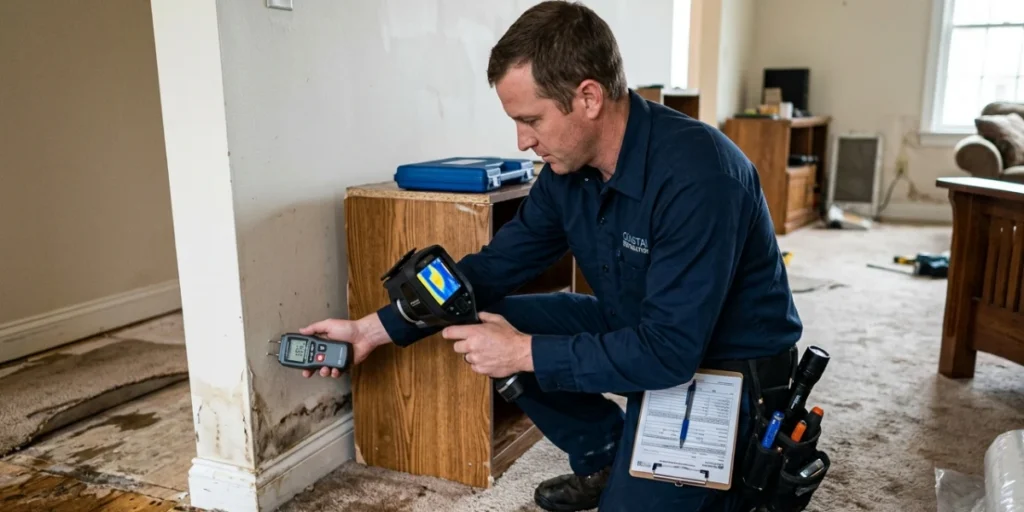
Some concerns become obvious the moment someone walks into a room. A floor feels different underfoot. A section of drywall no longer sits flat. Trim starts separating from the wall. Cabinet panels lose their original shape. These are the details inspectors pay close attention to during a structural water damage assessment.
Every building contains materials that serve different purposes. Some provide appearance. Others provide support. Inspectors look at both.
A floor may still look acceptable while movement underfoot tells a different story. A wall may appear normal until measurements and observations reveal changes that are not immediately visible during a casual walkthrough.
This stage focuses on condition, not appearance. A room can still look presentable while parts of the structure require further attention.
Ceiling Inspection Needs a Different Approach
Ceiling stains create a lot of confusion as people naturally focus on the spot where the stain is visible. But the inspection usually focuses somewhere else.
A stain marks where water finally became visible. It does not automatically reveal where the problem started. During a ceiling water damage assessment, inspectors work backward. They look at roofing, plumbing, upper floors, mechanical tools, and other areas before drawing conclusions.
Is Water Damage and Mold Inspection Important?
Generally, a water damage and mold inspection focuses on evaluating different conditions and documenting what is present at the time of the inspection.
Inspectors are not looking for reasons to create alarm. They are looking for evidence. That evidence may come from visible growth, environmental conditions, previous water events, building history, or other observations gathered during the inspection. The purpose is to provide information that supports accurate recommendations rather than assumptions.
What Inspection Tools Actually Tell Us
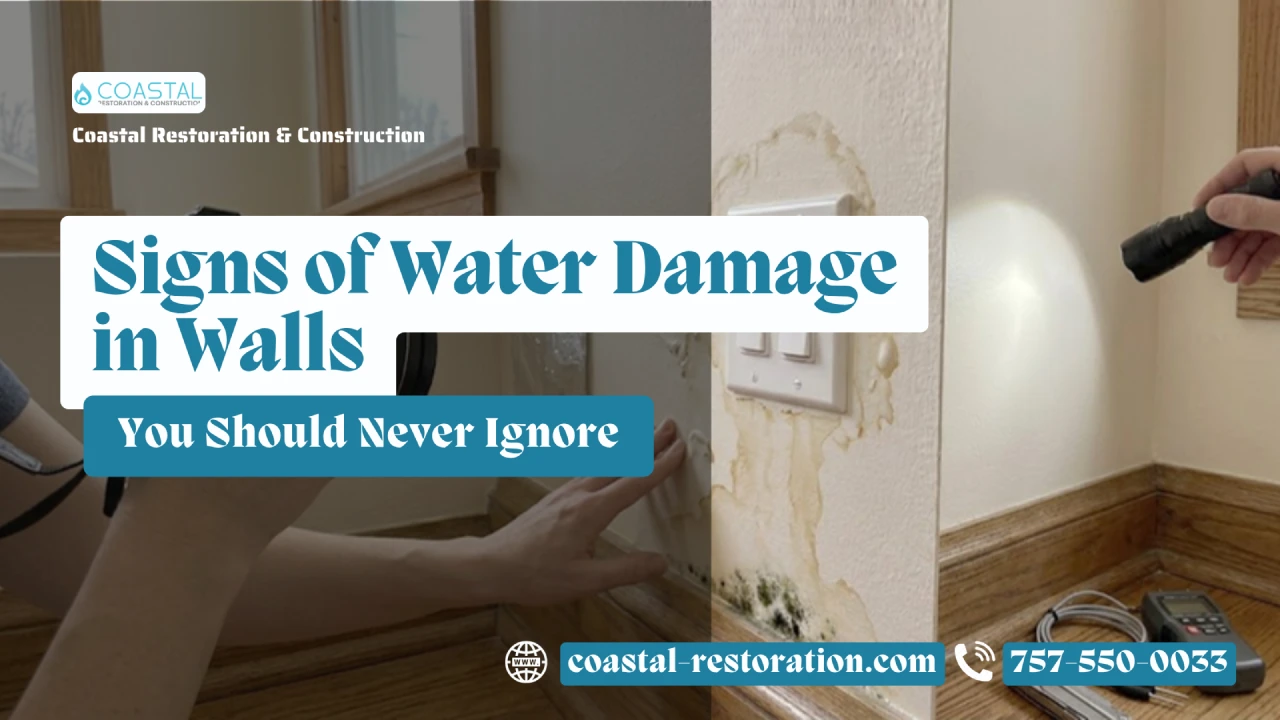
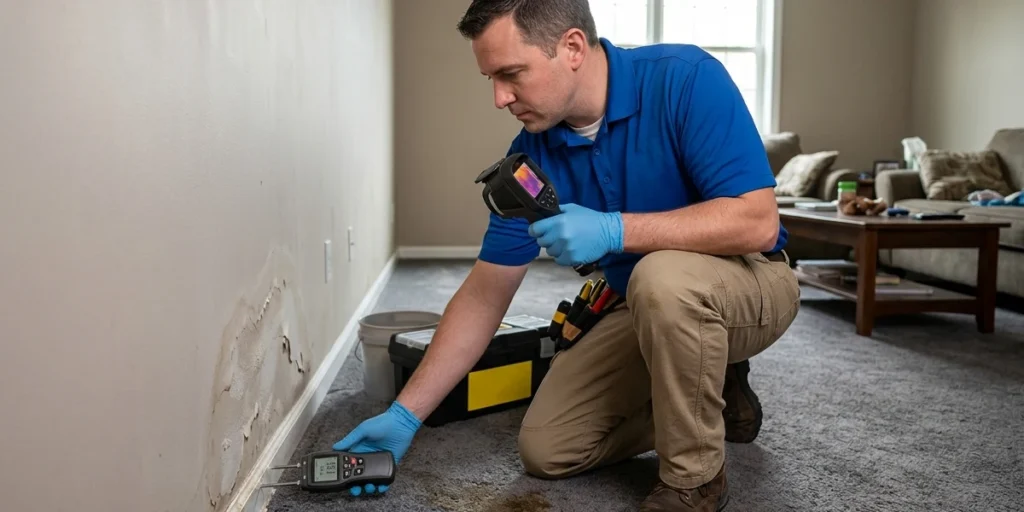
People normally trust what they can see, but inspectors cannot rely on that. A dark stain suggests something happened. A moisture reading gives effective measurable information. Besides, a thermal image highlights differences that deserve specific attention. Each tool has different purposes, like a different piece of the puzzle.
The assessment of water damage becomes stronger when all these support one another. A visual sign may raise a question. Equipment helps determine whether that question deserves further investigation. Good inspections are built on evidence, not guesswork.
What Goes Into an Inspection Report
By the end of an inspection, dozens of observations may have been collected. Photos. Notes. Measurements. Room-by-room findings. Material conditions. Potential concerns. A water damage assessment report organizes those findings into a format that property owners, restoration contractors, insurance representatives, and other parties can review where necessary.
Why Inspection Findings Change Restoration Plans
Two contractors can walk into properties that look nearly identical and leave with very different recommendations. That surprises many people. One room may need limited repairs. Another room with similar visible damage may require a larger scope of work. The difference usually comes from what the inspection reveals after measurements, documentation, and evaluation are complete.
A comprehensive water damage assessment helps separate assumptions from actual conditions. It gives restoration teams a clearer picture of what they are dealing with before labor, materials, timelines, and budgets start getting assigned.
The inspection does not create the damage. It reveals the details that influence the plan.
Residential and Commercial Inspection
In a house, attention usually centers on living spaces, belongings, and repairs. In a business, the conversation changes quickly. Employees need access. Customers need safe areas to enter. Equipment may need protection. Inventory may need relocation.
That is why a water damage assessment service looks at more than damaged materials. Inspectors also consider how people use the property and what interruptions might affect day-to-day activities.
The building matters. The people using the building matter too.
Commercial Properties Require Additional Evaluation
A wet floor inside a warehouse does not create the same concerns as a wet floor inside a medical office.
The damage may look similar. The consequences are not.
A water damage assessment contractor reviewing a commercial property may spend time examining work areas, customer pathways, storage spaces, equipment locations, and operational concerns. Business owners usually want answers to questions that extend far beyond repairs.
Who Performs the Inspection?
Experience changes what people notice. One person sees a stain and moves on. Another sees a stain and starts asking questions about roofing systems, plumbing routes, building history, and previous repairs.
That difference matters.
Many rely on water damage assessment experts because they observe, evaluate, and make documents. A good inspector does not rush toward conclusions; they collect evidence first.
Nowadays, inspectors use a professional water damage assessment mobile system to capture photos, measurements, room notes, and observations directly from the field. Information moves faster, reports become easier to share, and documentation stays more organized.
For property owners, that usually means fewer delays and quicker access to inspection findings.
Inspection Results Guide the Next Stage
People sometimes view inspections and restoration as separate services.
In practice, one leads the other. The connection between water damage assessment and mitigation becomes clear once planning begins. Inspection provides direction. Mitigation follows that direction. Understanding the water damage restoration process helps explain how those early findings shape the work that follows.
What Happens After the Inspection Is Complete?
At some point, the questions become easier to answer. The source has been evaluated. Conditions have been documented. Measurements have been recorded. Recommendations have been discussed.
This is where another water damage inspection reaches its most useful stage. Instead of guessing about repairs, restoration, or costs, property owners now have information that helps guide those decisions.
Conclusion
Water damage creates uncertainty before repairs begin. You may want to know how serious the problem is, what needs attention, and what happens next.
In that case, a proper water damage inspection provides the information through documentation, evaluation, testing, and observation; inspectors help turn uncertainty into a clearer plan of action.
From structural concerns to commercial operations and inspection reports, every finding contributes to a larger picture. When an inspection takes place early, restoration decisions become clearer, and planning becomes more accurate.
If you’re dealing with water damage and need a clear picture of what’s really going on, Coastal Restoration offers professional water damage inspections to help you understand what comes next, from the initial assessment through the water damage restoration steps that follow.
Frequently Asked Questions
How long does an inspection usually take?
It depends on the size of the property, the number of affected areas, and the complexity of the situation.
Can an inspection help support an insurance claim?
Inspection reports and documentation can provide useful records when discussing damage with an insurance carrier.
Does every water issue require professional evaluation?
Not every situation requires extensive restoration, but an inspection helps determine the actual condition of the property.