Air duct cleaning is the removal of dust, dirt, and debris from the ductwork in your building. If you have ever asked, “What is air duct cleaning?” That is the short answer. A technician cleans the air ducts connected to your HVAC system and, when it makes sense, other parts of the system they can reach.
You may hear it called HVAC cleaning. HVAC stands for heating, ventilation, and air conditioning. Your system moves air through the building all day, and the ducts carry that air from room to room. Over time, the ducts collect what the air carries.
An air duct cleaning service cleans what you already have. It does not replace your furnace, your AC, or the ducts themselves. The goal is a cleaner system, not a new one.
Wondering why people book it? Here are the benefits of air duct cleaning.
What Are Air Ducts and How Do They Work?
Air ducts are the metal or flexible tubes that run through your walls, ceilings, attic, and floors. They move air between your heating and cooling system and every room.

Two sets of ducts do the work:
- Supply ducts carry heated or cooled air from the air handler to your rooms. The air comes out through supply registers.
- Return air ducts pull air from your rooms back to the equipment. The air enters through return vents.
Together, they keep air circulation steady. The equipment heats or cools the air. The supply side handles air distribution. The return side brings the air back to start again. Your air vents are only the visible ends. Most of the system sits out of sight.
Since you can’t see inside the ducts, it’s hard to tell what’s hiding in there. If you’re trying to judge your own system, here are the key warning signs your air ducts need cleaning.
What Does Air Duct Cleaning Usually Include?
The service mainly covers the ductwork. Many providers clean more when the parts are reachable. What gets cleaned depends on your system, what the technician finds, and what you agree on.
Common items on the list:
- Supply duct cleaning and return duct cleaning
- Your air filter, checked at the visit
- The blower assembly
- Evaporator coils
- The air plenum
- The drain pan
- An air cleaner, if your system has one
That last group is HVAC component cleaning. Not every item comes with every job. Some jobs cover the ducts only. Others add parts. Ask before you book.
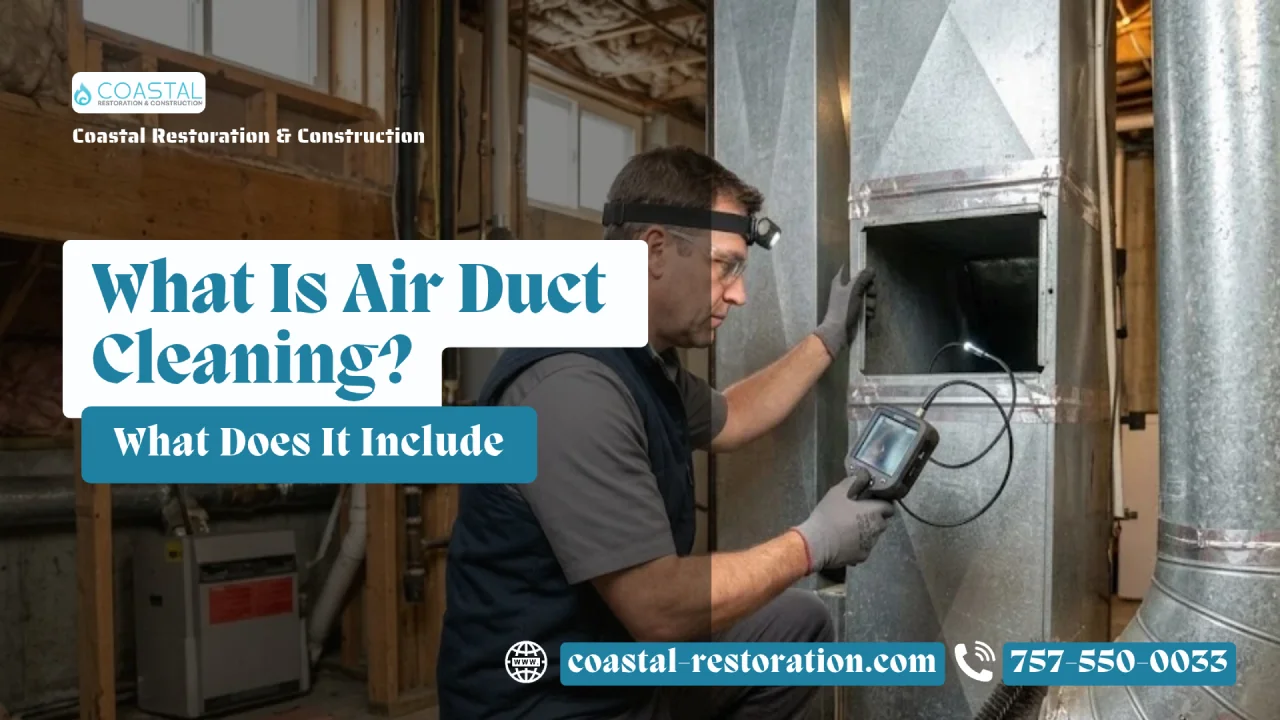
Most services start with an air duct inspection. A ductwork inspection shows the technician what’s inside. An HVAC system inspection shows which parts need attention. Then the scope is set.
Want to see the steps in order? Read about the professional air duct cleaning process.
What Can Accumulate Inside Air Ducts?
Mostly dust. Dust accumulation is slow. Dust particles and other airborne particles move through the system, and some settle on the duct walls. Over months and years, that becomes dust buildup.

Here is what usually collects:
- Dirt and debris pulled in from your rooms
- Pet hair and pet dander
- Everyday household dust
Building work adds more. Construction dust slips into open vents and ducts. Renovation debris does the same. If you had recent construction or a recent home renovation, your ducts may hold more than usual. These contaminants are a common reason people call.
Moisture and pests are a different story. Water near the system or animals in the ducts need a closer look, and a standard cleaning may not cover them. For more on damp ducts, see mold in air vents.
If you’re wondering about timing, read about how often air ducts should be cleaned.
What Is the Difference Between Air Duct Cleaning and HVAC Cleaning?
Air duct cleaning focuses on the ductwork. HVAC cleaning is broader. It can cover the ducts plus other reachable parts of your heating and cooling system, like the coils and the blower. That is HVAC component cleaning.
Companies use these terms in different ways. One may say “HVAC cleaning” and mean ducts only. Another may say “air duct cleaning” and add the coils. The name tells you little. The written scope tells you more. Ask what’s covered and get it in the estimate.
Both fall under air duct maintenance, which means keeping your HVAC system clean over time.
Frequently Asked Questions About What Air Duct Cleaning Is
Here are short answers to the questions people ask most about what the service covers.
Does Air Duct Cleaning Include Supply and Return Ducts?
Yes. A complete job covers both. Supply ducts push air out and return ducts pull it in. Check that both are listed in your estimate.
Does Air Duct Cleaning Include Air Vents and Registers?
Often, yes. Vents and registers are the visible openings, and many crews remove and clean the covers. Confirm this in your scope.
Is Air Duct Cleaning the Same as Vent Cleaning?
Not quite. Vent cleaning usually means the covers and openings you can see. Air duct cleaning goes into the ducts behind them.
Does Every Air Duct Cleaning Service Include the Same Components?
No. The scope changes from one provider to the next, and from one system to the next. Some clean ducts only. Others add the blower, coils, and drain pan. Ask for the list in writing.
Is Air Duct Cleaning Available for Both Residential and Commercial Buildings?
Yes. Homes, offices, shops, and other buildings all have ductwork. System size and layout differ, so the job differs too.
What Is the Difference Between Air Duct Cleaning and HVAC Maintenance?
Cleaning removes dust and debris from the ducts and reachable parts. HVAC maintenance covers the working condition of the equipment, like tune-ups and part checks. They are two different jobs.
Conclusion
Air duct cleaning means cleaning the ductwork connected to your building’s HVAC system. What it includes depends on your system and your provider, so ask for the scope up front.
If you want a clear look at your ducts, Coastal Restoration & Construction can schedule an air duct cleaning inspection and give you an estimate.