Water is tricky as it rarely gives its presence away before it has made its mark. The brown ring on your living room wall may seem to appear out of nowhere, but the truth has been hiding in the cavities long before you knew it was there, soaking the frame and drywall, encouraging mold to grow.
By the time you know to act, the cheap repair has long come and gone. If you know the pain of having to pay excessive amounts to a contractor, you can avoid it by knowing the early signs of water damage in walls and dealing with the problem before it escalates.
The article discusses the early signs, advanced signs, and some water damage checks that one can perform in less than ten minutes.
What Water Damage in Walls Really Is (and Why It Gets Missed)
The phrase water damage in walls is used mainly to refer to the damage brought about in drywall, plaster, framing, or insulation by moisture that works its way into the cavity behind the surface.
In most cases, the signs of such damage are hidden from human eyes, as the material siphons water like a sponge until it has had plenty of exposure to moisture. This is why the tell-tale sign of water damage inside walls is not the staining on the surface of the drywall but the rot and mold in the cavities inside.
The early signs tend to appear as stains on the surface. However, most of them are easily dismissed or mistaken for normal occurrences. Here are the four signs that you must learn to recognize to know if your walls suffer from water damage in their cavities.
Early Signs of Water Damage in Walls
The early signs of water damage in walls are subtle because they appear on the wall surfaces. However, they stand out as the drywall, plasterboard, or paint begins to react adversely to the presence of moisture.

Faint Stains and Discoloration
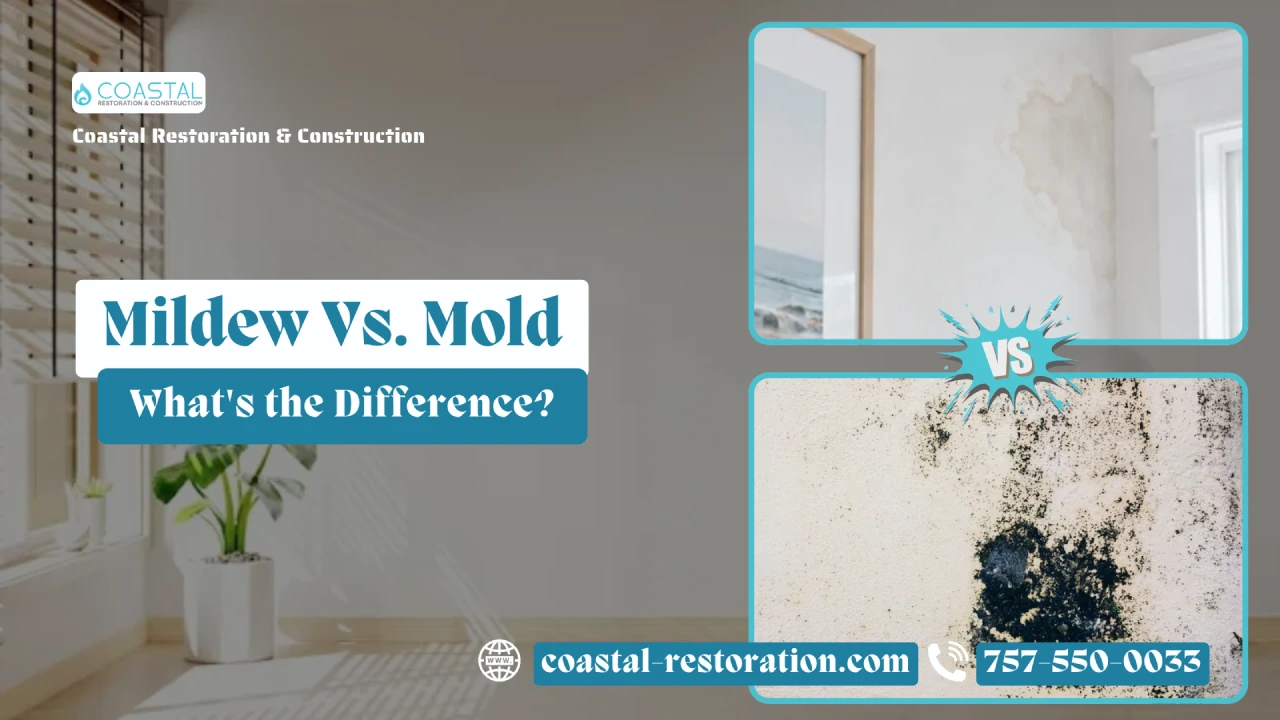
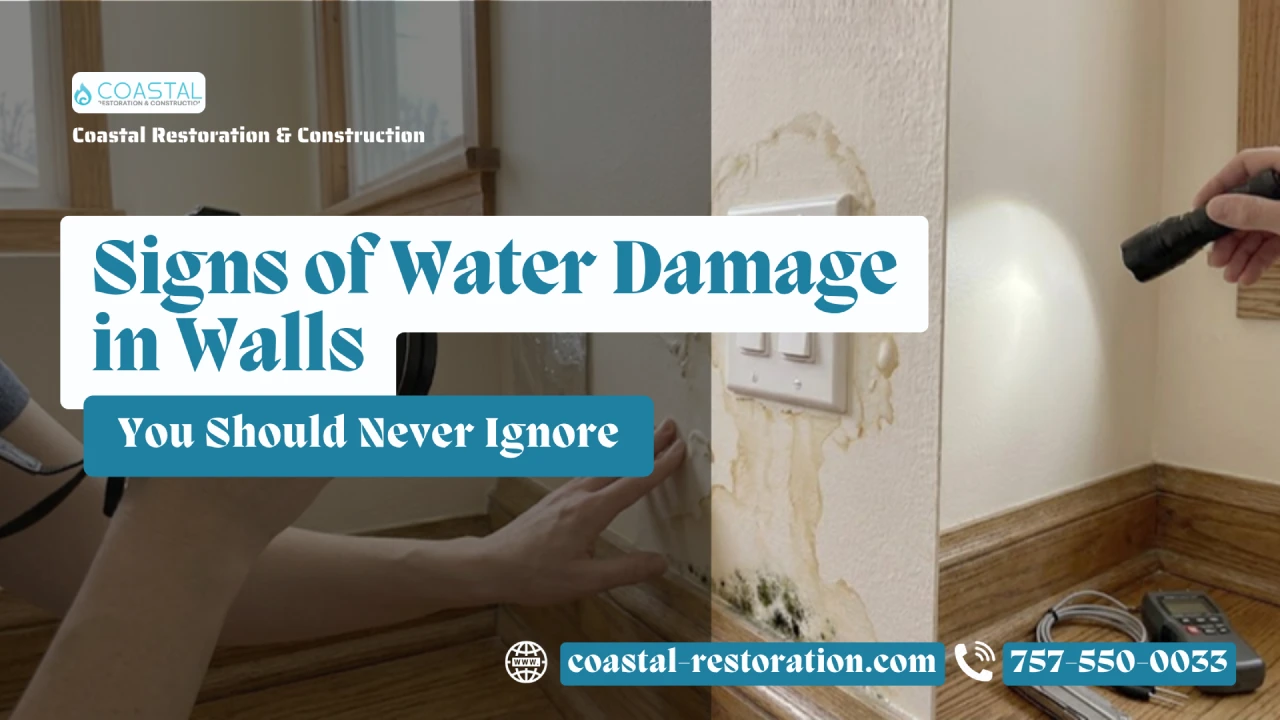
The most common early sign of water damage in walls is the discoloration or staining of the wall surfaces. On pale walls, it presents as yellowish or beige spots, and on darker tones, it appears as a patchy, dull, and uneven region that seems to dip slightly compared to the rest of the wall. The odd-colored spots are unlikely to remain still, and as such, the size of a suspicious mark on the wall is a reliable indicator of water damage.
Bubbling, Peeling, or Flaking Paint
When paint is compromised, the reaction it exhibits usually consists of bubbling, peeling, or flaking. Wallpaper responds to the presence of moisture in a similar way, only it tends to peel at the edges and corners before detaching in large sheets. Any abnormal bubbly or flaky section of the paint is a solid indication of water damage in the walls.
A Musty Smell With No Clear Source
Most people will agree that the human nose has been the most reliable tool in detecting water damage in walls. A musty, damp, or earthy odor is a strong indication that the walls have suffered water damage. You should be especially wary of such a smell if it persists after cleaning the room where the odor is emanating.
Soft or Spongy Drywall
A section of the drywall that is soft, spongy, or indented upon pressure is strong proof of the presence of moisture in the cavities. A soft board is one of the clearest drywall signs of water damage in walls, and of all the signs of water damage in drywall, it is the most reliable.
Advanced Wall Water Damage Signs You Shouldn’t Ignore
Unlike the early signs, the advanced signs appear when the damage has become quite severe. The wall water damage signs below are red flags that you must watch out for, and they call for a professional to evaluate the situation. These are the water damage signs that mean the problem is no longer minor.
Warping, Bulging, or Sagging Walls
When moisture compromises the internal structure of the walls, they begin to bulge, sag, or warp. A sagging wall is a serious cause for concern as it can add extra strain to a structural wall and compromise a building’s stability. The advanced signs of water damage in walls include bulging or sagging sections that present as waves.
Cracks in Drywall or Plaster
Moisture in the walls causes cracks in the structural surfaces. As such, the drywall or plaster will exhibit signs of cracking, with the hairline cracks usually found along the edges of the walls, corners, or near the ceiling.
Efflorescence and Chalky Residue
It is not surprising to spot efflorescence in brick, concrete, or basement walls, as the trapped moisture in them evaporates. The mineral structure of the bricks will exhibit a white chalky residue, which is an indication of water damage.
Visible Mold Growth
When mold runs rampant in the walls, it presents as black, green, or brown speckles that stick out on the surface of the drywall. It is highly likely to grow along the seams, corners, and where the wall and ceiling meet. The presence of mold on the walls is an infallible sign of water damage in the cavities, as it cannot thrive in the absence of moisture. Mold also brings real health risks, especially for anyone with allergies or asthma.
Warped Baseboards and Buckled Flooring
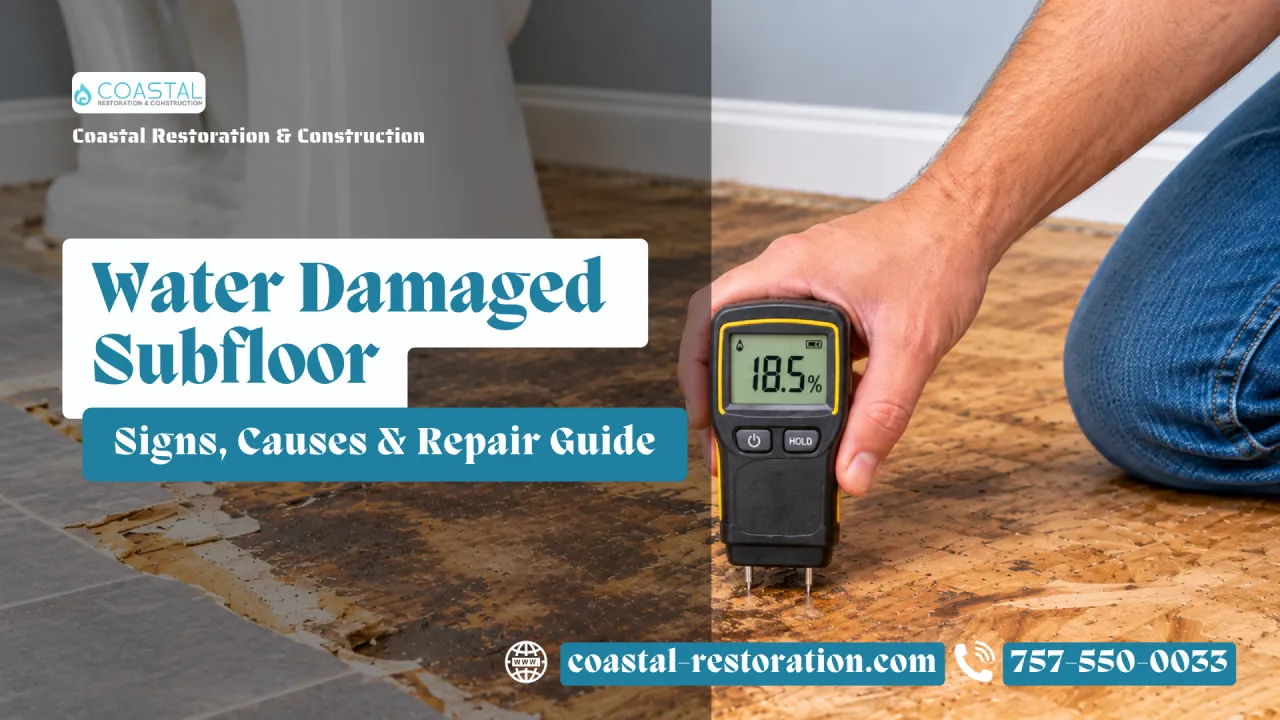
Water has a habit of running downwards, and as such, the bottom portion of the walls is the most likely region to sustain water damage. One of the advanced signs of water damage in walls is the presence of warped baseboard molding and buckled or wet-looking floorboards. Water damage can also spread beneath finished flooring, affecting the plywood or OSB subfloor underneath. Learn how to identify water damaged subfloors and determine whether drying or replacement is necessary.
Signs of Water Damage Behind the Wall
The signs of water damage behind wall surfaces are the hardest to detect, as they are hidden by the paint. The best way to know for sure if there is water damage in your walls is to look for these signs behind the surface:
- Trickling or dripping sounds from the cavities behind the walls when all the water sources in the house have been turned off.
- Stains that never seem to fade no matter how many coats of paint one applies.
- Warm or cold patches on the walls, which are a byproduct of moisture trapped in the cavities.
- A sudden increase in the water bill with no identifiable source.
Since the water damage inside walls can be difficult to detect and hidden behind the surface, the listed signs point to trouble in your walls. If you notice the presence of two or more of the signs mentioned above, it is time to contact a professional.
Where Wall Water Damage Starts: Interior vs Exterior
Although it is impossible to say which side of the wall one must inspect, the interior and exterior walls have distinct sources of water damage.
Interior sources of water damage include plumbing leaks in the walls or faulty caulking in bathrooms and showers. In most cases, water damage in interior walls occurs when the home’s humidity levels are unreasonably high for an extended period. Appliances such as washing machines, dishwashers, and water heaters placed adjacent to the walls can also be the source of water damage.
The signs of water damage from the exterior wall, on the other hand, usually trace back to damaged roofing, clogged gutters and downspouts, and cracks in the foundations of the house. The cracks allow groundwater to seep into the walls, and the same is true for the gaps between the windows and doors. You should inspect both sides of the walls to look for signs of water damage, and if the walls are not internal-facing, you can check the exterior side of the house.
How to Detect Water Damage in Your Walls
It is not necessary to have a degree in construction engineering to perform a spot assessment. Here is how to detect water damage in walls.
The first step is to conduct a visual inspection for water damage under bright lighting. A good place to start is by inspecting the wall with a flashlight at an angle, as it allows the detection of slight color variations, deformities, and irregularities that are difficult to observe at a perpendicular angle, which is the quickest way to spot water damage early.
The next step involves knocking on the walls, as a hollow sound is emblematic of water damage.
Lastly, the owner will need a moisture meter to detect water damage. The pin-style moisture meters are ideal for flat surfaces like drywall. These checks are part of the initial water damage restoration process and help determine whether further assessment or professional restoration is needed.
As a rule of thumb, the drywall is considered to have had moisture exposure if the meter reads higher than 15 percent. If a moisture meter is unavailable, one could stick a piece of aluminum foil on the surface of the drywall or plaster. If beading develops on the foil after spending the day adhering to the surface, the moisture in the wall is not airborne.
What to Do When You Find Water Damage on Walls
Those who understand how to deal with water damage on wall surfaces take swift action. Here is a step-by-step guide on what to do when you find water damage on walls.

The first and most crucial step is to cut off the water source so that the wall can dry out. If the leak is from a plumbing source, shutting the water off and calling a plumber will resolve the issue. You can also plug the opening if the problem is caused by rain.
The next step is to photograph the scene for insurance purposes, and it is always best to avoid painting over water damage, as it only serves to trap moisture in the cavities and encourage mold growth.
The professionals will ensure the wall dries out sufficiently and deal with the issue from within, rather than trying to eliminate the problem from the outside. After all, a household fan may not be sufficient in eliminating moisture from the interior of the drywall.
How to Protect Walls From Water Damage
Knowing how to protect walls from water damage comes down to a few habits that significantly reduce the risk. First and foremost, a homeowner should always ensure that the gutters are clean and that the caulk around the bathtub and shower is not compromised. The other measures are as follows:
- The regular use of exhaust fans in the bathrooms and kitchens.
- A periodic inspection of the appliances for signs of leaks and irregularities.
- Keeping the indoor humidity at appropriate levels.
The Environmental Protection Agency recommends that homeowners take measures to eliminate any source of moisture, as it can contribute to mold development in as short as 24 to 48 hours.
Frequently Asked Questions
How can I tell if my walls have water damage?
The usual signs are yellow or brown stains, paint that starts peeling or bubbling, and spots that feel soft or puffy when you press on them. A musty odor points to it too. Every so often you’ll catch a faint trickle running somewhere inside the wall.
How can I check if a house has water damage?
Go over the walls, ceilings, and baseboards, and give the bathrooms, kitchen, and anywhere pipes run a closer look. You’re hunting for stains, cracks, bumps, or damp patches. One more tell: a small square of newer-looking paint usually means someone painted over a problem.
Is water damage in walls dangerous?
Sometimes, yes. Wet drywall is a breeding ground for mold and fungus, and that’s rough on anyone with asthma or allergies. Once water reaches wiring or an appliance, though, the stakes jump, so leave that one to a pro.
Final Thoughts
Water damage in walls has a tendency to present itself as something it is not, and the signs may be ignored until it is too late. As discussed, the signs of water damage in walls are easy to detect with a trained eye, and the faster the process is, the lower the repair cost.
Water damage is among the most frequent and expensive home insurance claims, and the early stages of water damage are what determine the final cost of repairs.
Have you observed any of the signs of water damage? Coastal Restoration & Construction is more than happy to help you inspect and mitigate water damage before it becomes too late. Contact us today to schedule an inspection.