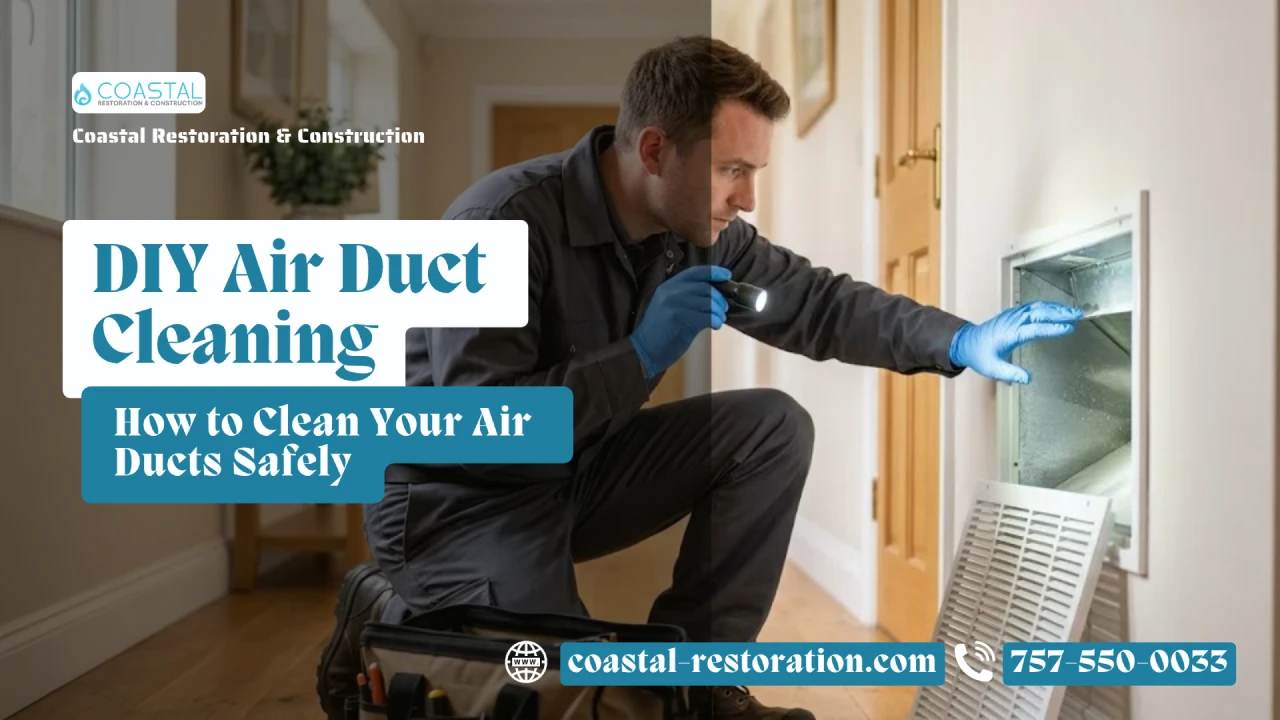
Can you clean your own ducts? Partly, yes. DIY air duct cleaning works for the parts you can see and reach, like vent covers and the loose dust sitting at the openings. It does not reach the full inside of your duct system.
Cleaning air ducts yourself all the way through is a bigger job. Long runs, bends, and hidden branches need tools most homes do not have. Do not expect the same result as a professional whole-system service.
Can You Clean Your Own Air Ducts?
Yes for some parts, no for others. Check which one you are dealing with before you pick up a tool.
There are two different jobs. One is cleaning the parts you can reach, like air vent covers, supply air registers, and return air registers. The other is cleaning the duct interior, which sits behind your walls, floors, and ceilings.
Homeowners can handle the first job. The second is harder. Whether DIY makes sense depends on four things:
- How easy the duct sections are to reach
- What the ducts are made of
- What kind of dust or contamination you find
- The condition of your HVAC system
A household vacuum has limits. The hose is short, the suction drops in bends, and you cannot see what is happening inside. These air duct cleaning limitations matter more the farther you go.
Visible dust on a register does not mean the whole system needs cleaning. Some dust near a vent is normal. Look at the full picture before you decide on a bigger job.
Tools and Materials Needed for DIY Air Duct Cleaning
Keep the list short. Basic tools handle basic jobs, and a rented machine will not turn a surface clean into a deep one.

Basic DIY Duct Cleaning Tools
Most DIY duct cleaning tools are already in your home. Here is what you need and what each one does:
- Screwdriver for vent covers: Removes covers held by screws.
- Household vacuum cleaner with hose attachments: The brush and crevice attachments pick up loose dust near openings.
- Microfiber cleaning cloths: Wipe dust off covers, registers, and nearby surfaces.
- Stiff-bristle brush: Scrubs removable covers that have stuck-on dust.
- Cleaning supplies: Mild dish soap, warm water, and clean towels are enough.
You may see a DIY duct cleaning kit for sale with a long brush and hose. Check what it covers before you buy. Skip any long brush meant for sections you cannot see. It can tear a flexible duct without you knowing.
Vacuum Equipment and Specialized Cleaning Tools
A household vacuum is built for floors. It works on vent covers and the first area behind them. It struggles with long duct runs.
Professional crews use a duct cleaning vacuum and a rotary brush made for ductwork. These tools reach farther and collect more debris, but they take training. Used the wrong way, a rotary brush can damage flexible ducts and loosen insulation.
Air duct cleaning equipment rental is easy to find. Renting a machine does not make whole-system cleaning safe or effective. You still need to know where the duct runs, what it is made of, and how to use the tool without harming it.
A shop vac can help with debris near an opening. Its hose only reaches so far, and a basic filter may let fine dust pass back into the room. Check the filter before you use one.
Stick to the surface. Leave agitation tools inside hidden or fragile ducts to trained technicians.
Protective Equipment and Safety Supplies
Dust gets in the air during cleaning. Wear basic protection:
- Protective gloves for sharp edges on covers and screws
- Dust masks to cut down on what you breathe in
- Safety goggles to keep dust out of your eyes
Protective equipment helps with dust. It does not remove the hazards from mold, pests, contaminated insulation, or electrical parts. If you find any of those, stop. Air duct cleaning safety starts with knowing when to quit.
How to Clean Air Ducts Yourself: Step-by-Step Guide
Six steps, and all of them stay on the surface. Clear furniture and belongings from the work area first. For a full checklist, read how to prepare for air duct cleaning.

Step 1: Turn Off the HVAC System and Prepare the Work Area
Set your thermostat to off. A running system pulls air and dust through the vents and blows loose dust around the room. It has moving parts you do not want near your hands, too.
Follow your equipment maker’s instructions for shutting the system down. Do not touch wiring or internal electrical parts. Do not open panels or flip breakers. If a step calls for any of that, it is not a DIY step.
Then clear the area. Move furniture away from the vents. Lay old sheets or drop cloths on the floor. Keep pets and children out of the room.
Step 2: Remove Accessible Vent Covers and Registers
Use a screwdriver to take off vent covers that come off easily. Put the screws and small parts in a cup or bag so nothing gets lost. A strip of tape on the back of each cover, marked with the room name, helps you put it back in the right spot.
Remove only what is easy to remove. Do not force a stuck cover. Do not take off anything that needs specialist access.
This step is the base of DIY vent cleaning. Most homeowners can do it safely if they take their time.
Step 3: Clean the Vent Covers and Registers
Wipe each cover with a microfiber cloth to pick up loose dust accumulation. For a metal or plastic cover that comes off, wash it in warm, soapy water. Painted or wood covers need a gentler wipe with a damp cloth.
Let every cover dry fully before you put it back. A damp cover holds dust and can spot the finish.
Do not spray liquids into the duct openings. Keep water and cleaners on the covers only. That is how to clean supply and return air vents the safe way.
Step 4: Remove Loose Dust From Accessible Duct Openings
Use your vacuum’s brush or crevice attachment to pick up loose dust at the opening. Work only in the area you can see.
Do not push tools far into the duct. Do not pull on flexible ducts, scrape insulation, or bump parts you cannot see. The goal is ductwork damage prevention, not depth.
This step is not full duct cleaning. It clears dust from the first part of the duct and nothing more.
Step 5: Check the Furnace Air Filter
Find your furnace air filter using your equipment maker’s instructions. Pull it out and look at it. If it is dirty, replace it with the same size and type printed on the frame.
A new filter does not clean your ducts. It slows new dust from building up. Do not open the blower compartment or other inside parts to reach the filter. If you cannot get to it without tools, leave it alone.
Step 6: Reinstall Covers and Check Your Work
Screw each cover back on firmly. Pick up your sheets, cloths, and debris. Return the HVAC system to normal operation using your equipment maker’s instructions.
Listen to the system when it starts. A rattle often means a loose cover screw. If you hear unusual noises, see damage, or notice anything that worries you, stop and call a qualified technician.
What Are the Limitations of DIY Air Duct Cleaning?
DIY has a ceiling, and most homeowners hit it fast. Basic tools clean the surface well. They do not clean what they cannot reach.
Household Vacuums Cannot Reach Every Part of the Duct System
Ordinary vacuums have short hoses and weak reach. Long duct runs, bends, and branches are out of range. You can only clean the accessible duct sections near an opening.
Dust you loosen but cannot collect can drift back into the room. That is why deep duct cleaning and whole-system duct cleaning need different equipment. Professional crews use a different setup. Read about the professional air duct cleaning process to see how it works.
Flexible Ductwork and Insulation Can Be Damaged
Flexible ductwork has a thin inner liner. Aggressive brushing or too much force can tear it. Duct insulation and liners can come loose too. The result may be duct leaks that waste heated and cooled air.
Do not push tools into sections you cannot inspect. If you think a duct is damaged, ductwork repair and sealing need a qualified technician. Not sure whether to clean or replace? Read about air duct cleaning vs. replacement.
DIY Cleaning Does Not Resolve Every Contamination Problem
Surface cleaning does not replace an inspection. If you suspect mold, rodent activity, heavy debris, moisture damage, or contaminated insulation, stop.
Signs like rodent droppings, insect debris, and unpleasant odors point to a problem that wiping a cover will not fix. This guide gives no mold cleanup method. A DIY attempt can spread the problem or damage the duct.
DIY vs. Professional Air Duct Cleaning
Two options, two different jobs. Pick based on what you see in your ducts.

What DIY Air Duct Cleaning Can Accomplish
DIY covers the basics: cleaning vent covers, removing loose dust near openings, and checking the filter. Think of it as DIY maintenance for the parts you can reach.
It makes no promise about indoor air quality or HVAC efficiency. Do not expect more from it than it can give.
What Professional Duct Cleaning Can Address
What Professional Duct Cleaning Can Address
Professional duct cleaning uses specialized equipment to remove dust and debris from deeper sections of your ductwork that household vacuums cannot reach. The results depend on the condition of your ducts and the service provided.
Check these air duct cleaning before and after results to see the visible differences professional cleaning can make.
How to Decide Which Option Is Appropriate
Think about when to hire a professional duct cleaner if:
- Dust or debris looks heavy
- Many vents or duct sections are hard to reach
- Your ducts look damaged or disconnected
- You suspect mold or pests
If none of these apply, a DIY surface cleaning may be enough. If cost is a concern, compare air duct cleaning costs before making your decision.
When Should You Stop DIY Cleaning and Get Professional Help?
Some finds mean stop. Put the vacuum down and call someone.
Get a qualified ductwork inspection if you see any of these:
- Suspected mold: Dark spots or a musty smell don’t necessarily confirm mold in air vents. Have the area inspected by a professional and leave any necessary mold cleanup to the experts.
- Pest signs. Rodent droppings, chewed material, or insect debris need a trained eye.
- Damaged insulation. Loose or torn duct insulation is not a DIY fix.
- Disconnected ducts or duct leaks. These need repair, not cleaning.
- Signs of moisture. Damp spots or water stains point to a source you need to find.
- Sections you cannot reach. Do not force tools into hidden parts of the system.
Never spray chemicals or household products into the ductwork to address a problem. If you’re unsure whether your ducts need attention, look for common signs that indicate your air ducts may need cleaning.
Frequently Asked Questions About DIY Air Duct Cleaning
Here are short answers to questions the steps above leave open.
Can I Spray Vinegar or Other Household Cleaners Into Air Ducts?
No. Liquid can soak insulation and liners and sit in places you cannot reach. Wet spots can lead to moisture problems later. Keep cleaners on removable covers only. Spraying inside the ducts needs product-specific and system-specific guidance from a qualified technician.
Can I Rent Professional Air Duct Cleaning Equipment for a DIY Job?
You can, but it does not guarantee a good result. A rented machine does not give you access to hidden duct sections. It does not teach you how to use it safely, either. A professional-grade vacuum or a rotary brush can damage flexible ducts if used the wrong way.
Does DIY Air Duct Cleaning Improve Indoor Air Quality?
It depends on where the dust comes from and what you clean. Cleaning vent covers removes dust at the openings. It does not promise a change in indoor air quality. Airborne dust particles come from pets, carpets, outdoor air, and many other sources.
Can DIY Duct Cleaning Reduce Energy Bills?
Do not count on it. Savings are not guaranteed, and duct cleaning alone should not be assumed to cut energy use. Utility bills depend on insulation, equipment age, filters, and leaks, among other things.
Is DIY Air Duct Cleaning Recommended for Every Type of Ductwork?
No. Material, condition, access, and contamination all change what a homeowner can clean safely. Rigid metal ducts near an opening are easier to work with than flexible ducts. Check your ductwork integrity before you start, and stop if anything looks damaged.
Conclusion
DIY air duct cleaning is a good fit for vent covers, registers, and loose dust near the openings. It is not a full duct cleaning. Clean what you can reach, use the right tools, and stay out of the hidden parts of the system.
If you find mold, pests, damaged insulation, or sections you cannot reach, stop. Coastal Restoration & Construction can inspect your ducts and give you a clear estimate.