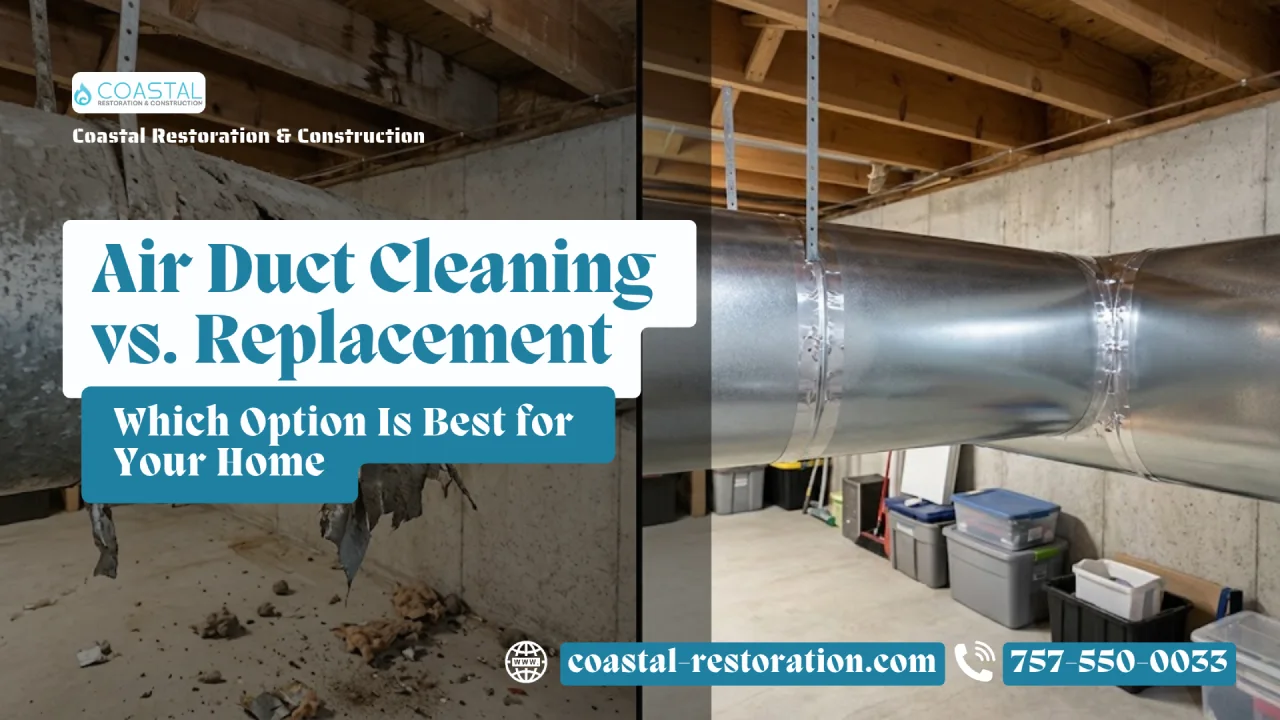
Dust at the vents. A musty smell. Do you clean the ducts or replace them? That is the air duct cleaning vs replacement question, and the answer depends on the condition of your ductwork, not its age or the amount of dust you see.
Air duct cleaning removes buildup from ducts that are still in good shape. Air duct replacement fixes ducts that are damaged or worn out. Some homes need neither. A ductwork condition assessment shows which one fits yours.
Cleaning, repair, sealing, and replacement are four different fixes. Good HVAC maintenance starts with picking the right one.
What Is the Difference Between Air Duct Cleaning and Replacement?
One job takes dirt out. The other takes damaged ducts out. They solve different problems.

Ductwork cleaning removes dust and debris buildup from ducts that are sound enough to clean. Ductwork replacement swaps out ducts that are damaged, worn, or no longer fit to use. HVAC duct cleaning will not fix a torn duct, and HVAC duct replacement is a heavy fix for a system that only needs a clean.
If you are asking when to clean air ducts or when to replace air ducts, start with what each option does.
What Air Duct Cleaning Can Address
Air duct cleaning removes accumulated dust and debris from ducts a technician can reach. That is air duct debris removal and dust removal from ducts in homes where the ducts are in good condition.
Cleaning does not fix physical damage. It does not seal leaks or repair failed insulation. Duct cleaning suitability depends on the shape the ducts are in, and duct cleaning effectiveness depends on the same thing.
What Air Duct Replacement Can Address
Replacing duct sections, or the full system, solves problems that cleaning cannot. Think of deteriorating ducts, torn runs, and badly damaged insulation.
Damaged air duct replacement may mean a few sections. Complete ductwork replacement is for a system that has failed throughout. Old duct replacement makes sense when the ducts are worn past repair, not just old.
Signs Your Air Ducts May Need Cleaning
A few signs are worth a closer look. None of them prove the ducts need cleaning.
Look for these:
- Visible dust inside accessible duct sections
- Dirt and debris at or near the vents
- Persistent odors that come back after you clean the room
- Allergen accumulation you can see around registers
These signs may point to indoor air pollutants moving through the system. They do not mean your ducts are dirty all the way through. An inspection tells you for sure. For a fuller list, read the signs your air ducts need cleaning.
Signs Your Air Ducts May Need Replacement
Damage looks different from dust. Torn, crushed, or leaking ducts are signs air ducts need replacement that cleaning cannot fix.

Look for ductwork structural damage, aging ductwork in poor shape, leaking ductwork, and failed duct insulation. If you are asking when to replace air conditioning ducts, these are the clues to check first.
Not every one of these needs a full replacement. Some can be repaired or sealed.
Crushed, Torn, Brittle, or Deteriorating Ducts
Physical damage matters most in flexible ducts. A crushed or torn duct can restrict airflow or let conditioned air escape.
Brittle flexible ducts crack and fall apart. Torn flexible ducts leak. Minor damage in a spot you can reach may be fixable. Heavy damage is a replacement job. The duct repair vs. replacement call depends on how far the damage runs.
Persistent Leaks and Failed Duct Insulation
Air leakage wastes conditioned air. A disconnected joint, damaged insulation, or a leak that keeps coming back can all cause it.
Some of these need duct sealing with duct sealant or mastic. Others need duct insulation repair. A few need new ducts. Look at duct joints, overlapping duct joints, and any exterior duct insulation that has come loose. Replacement is not always the answer.
Severe Contamination or Moisture-Related Damage
Heavily dirty or wet ducts need a specialist’s eye. Moisture accumulation and condensation buildup can damage insulation and the duct itself. Signs of mold growth call for a professional assessment before anyone decides to clean or replace.
A specialist can tell whether the ducts can be cleaned or whether the affected sections should go.
Can Your Type of Ductwork Be Cleaned or Should It Be Replaced?
The answer changes with the material. Metal ductwork, flexible ductwork, and insulated metal ducts all behave differently.
Material, access, condition, and the cleaning method all matter. A professional ductwork evaluation looks at each one. Duct material and durability shape how long a system lasts and how safely it can be cleaned.
Metal Ductwork
Sound metal ducts can often be cleaned. Cleaning metal ducts is usually a safe job when the metal is in good shape.
Corrosion, damaged joints, big leaks, or other wear may call for repair or replacement. Duct sealing fixes some joint problems. Several duct cleaning methods suit metal. The right one depends on the duct’s condition.
Flexible Ductwork
Flex ducts need careful handling. Rough cleaning can damage the inner lining or the duct body.
Cleaning flexible ducts takes the right tools and a light touch. Duct cleaning safety matters here. Ducts that are crushed, torn, or brittle may be better candidates for replacement than for cleaning.
Insulated Ductwork
Not all insulation is the same. Exterior duct insulation wraps the outside of a duct. Internal duct insulation sits on the inside, often as fiberglass insulation.
Damaged, wet, or crumbling insulation inside a duct needs a careful look before anyone cleans it. Air duct insulation damage can change the plan from cleaning to repair or replacement. Ask a technician to check insulated metal ducts before work starts.
How to Decide Between Air Duct Cleaning, Repair, Sealing, and Replacement
Should I clean or replace my air ducts? Match the fix to the problem. Look at what is wrong, then pick the option that solves that one thing.

A professional duct inspection is the best starting point. A duct system evaluation shows whether you are dealing with buildup, a leak, damage, or all three. That is how to decide between duct cleaning and replacement without guessing.
When Professional Air Duct Cleaning Is Appropriate
Choose cleaning when the ducts are structurally sound and hold removable dust or debris. That is duct cleaning suitability in plain terms.
If the ducts are intact and the buildup is the only problem, dust removal from ducts and contaminant removal may be all you need. Duct cleaning effectiveness is highest on ducts that are in good shape.
When Duct Repair or Sealing Is the Better Option
Disconnected joints, one damaged section, or leaks you can reach may be fixable. Air duct repair and duct sealing can handle these without replacing the system.
The method depends on where the problem sits and how big it is. A seal with mastic or duct sealant works for some leaks. Air leakage prevention starts with finding every leak. For many homes, duct repair vs. replacement comes down to how many problems there are, not just one.
When Partial or Complete Ductwork Replacement Makes Sense
Replace ducts when the damage is widespread, the insulation has failed, or the same problems keep coming back after repairs. Duct replacement necessity is clear when repair no longer holds.
Sometimes only a section needs to go. Other times, complete ductwork replacement is the better call. Both support air duct system longevity when the old ducts are past saving.
Why a Professional Ductwork Inspection Matters
An inspection finds where the contamination, damage, leaks, and insulation problems are, and how bad they are. A ductwork inspection replaces guessing with facts.
Do not decide by age or symptoms alone. A HVAC technician can run a ductwork condition assessment and tell you what fits. That inspection should come before any cleaning, repair, or replacement.
Does Duct Cleaning or Replacement Improve Indoor Air Quality and HVAC Efficiency?
Maybe. It depends on what was wrong in the first place. Neither option is a sure fix for indoor air quality or HVAC system efficiency.
Each option can help in different ways. Neither promises results in every home.
How Cleaning May Help With Dust and Debris
Cleaning removes suitable buildup from inside the ducts. That is the main job of air duct cleaning benefits.
It does not remove every source of household dust, indoor allergens, or indoor air pollutants. Pets, carpets, and outdoor air bring dust in all the time. Indoor air quality improvement depends on the real source of the problem.
How Repair or Replacement May Help With Airflow and Energy Loss
Fixing leaks, blocks, or failed insulation can cut conditioned air loss. That may help heating and cooling efficiency and support air duct system performance.
New ducts do not automatically lower your bills. They do not improve airflow efficiency in every home. Long-term energy savings depend on how bad the old problem was and how well the repair or install is done.
Air Duct Cleaning Cost vs. Duct Replacement Cost
The two jobs have different scopes, so they cost different amounts. Cleaning handles buildup. Replacement means removing and installing ducts.
Prices depend on system size, access, material, damage, and labor. Air duct cleaning cost and air duct replacement cost can both change from one home to the next. Ductwork repair costs fall somewhere in between.
The cheapest option today is not always the best one over time. Cleaning damaged ducts may cost less now, but the problem is still there. Repairing vs. replacing ductwork is a better call when the ducts are in poor shape.
Is Replacing Old Ductwork Worth the Cost?
Sometimes yes, sometimes no. It depends on the shape of what you have and how much life it has left.
Ductwork age and condition both count. So do duct material and durability, ductwork installation quality, moisture exposure, and upkeep. No single number fits every system, so how long does residential ductwork last? has no one answer.
Replacement may be worth it when repairs keep failing or the damage is widespread. Think about air duct replacement benefits next to ductwork maintenance costs. If the ducts are sound, repair or cleaning may be the better spend. Is replacing old ductwork worth the cost for your home? A technician can tell you after an inspection.
How to Maintain Ductwork After Cleaning or Replacement
Good habits keep ducts in shape after the work is done. Air duct maintenance is simple.
- Check accessible ductwork by eye every so often.
- Fix leaks and moisture problems fast.
- Follow your HVAC maintenance recommendations.
Keep an eye on duct sealing and duct insulation repair needs as they come up. A professional duct inspection now and then catches problems early and may keep ductwork maintenance costs down.
No schedule fits every home. To plan visits, read about how often air ducts should be cleaned.
Frequently Asked Questions About Air Duct Cleaning vs Replacement
Here are quick answers to a few points worth a closer look.
Can damaged air ducts be cleaned?
Sometimes. Some damaged ducts can be cleaned after repairs. Severe structural damage or ruined insulation may call for replacement.
Can duct cleaning damage flexible ducts?
Yes, it can. Rough methods or the wrong tools can harm the lining and body of flexible ductwork. That is why a technician should check the duct type and condition before choosing a method.
Why inspect ductwork before cleaning?
An inspection finds damage, leaks, moisture, and unsuitable materials before work starts. A ductwork inspection helps pick the right method and avoids damage to ducts that cannot take it.
Conclusion
Not every duct problem calls for new ducts. If your ducts are sound and the only trouble is dust and debris, cleaning may be all you need. Damaged, leaking, or worn-out ducts are a different story. Those need repair or replacement, and cleaning will not fix them.
Know what you are dealing with before you pick a fix. If buildup is the problem, Coastal Restoration & Construction offers professional air duct cleaning to clear it out.